Use mode-first thinking to solve Bubble Word Jam transport puzzles faster: separate air, water, rail, and road before spotting parts, hubs, and tricky clues.

Guide By Liam Stone
Updated on July 13, 2026
Liam Stone has been playing Bubble Word Jam since the mobile app first launched on the Apple App Store. He knew this game would pop, so he enjoys playing every level, collecting the answers, and running this site for other players. He loves mobile puzzle games and sometimes publishes his walkthroughs on his YouTube channel Puzzle Game Answer. Follow his channel if you are a puzzle game lover too.
Transportation puzzles in Bubble Word Jam look friendly at first. Car, bus, bicycle, truck—easy, right? Then the game starts mixing ships with harbors, airports with stations, bicycles with parts, and suddenly the whole board feels like rush-hour traffic.
That’s the fun little trap. Transport categories in Bubble Word Jam don’t just ask, “Is this a vehicle?” They ask where it moves, how it moves, what parts belong to it, and which travel hub supports it. Once I started solving these puzzles by mode first—air, water, rail, road—the whole loop became much cleaner. Less guessing. Fewer wasted moves. More of that crunchy “aha” feeling.
The best transport-solving habit is simple: before touching individual bubbles, sort every travel word by movement mode.
Ask yourself:
Is it air? Is it water? Is it rail? Is it road? Is it a vehicle part? Is it a travel hub?
That order matters. In Bubble Word Jam, transportation words often nest inside one another. A “ship” might belong to water transport, but “dock” might belong to harbor. “Train” might belong to engine transportation, while “tracks” points to railway. If you merge too early, you can tank the board with a category that looked obvious but wasn’t the deepest match.
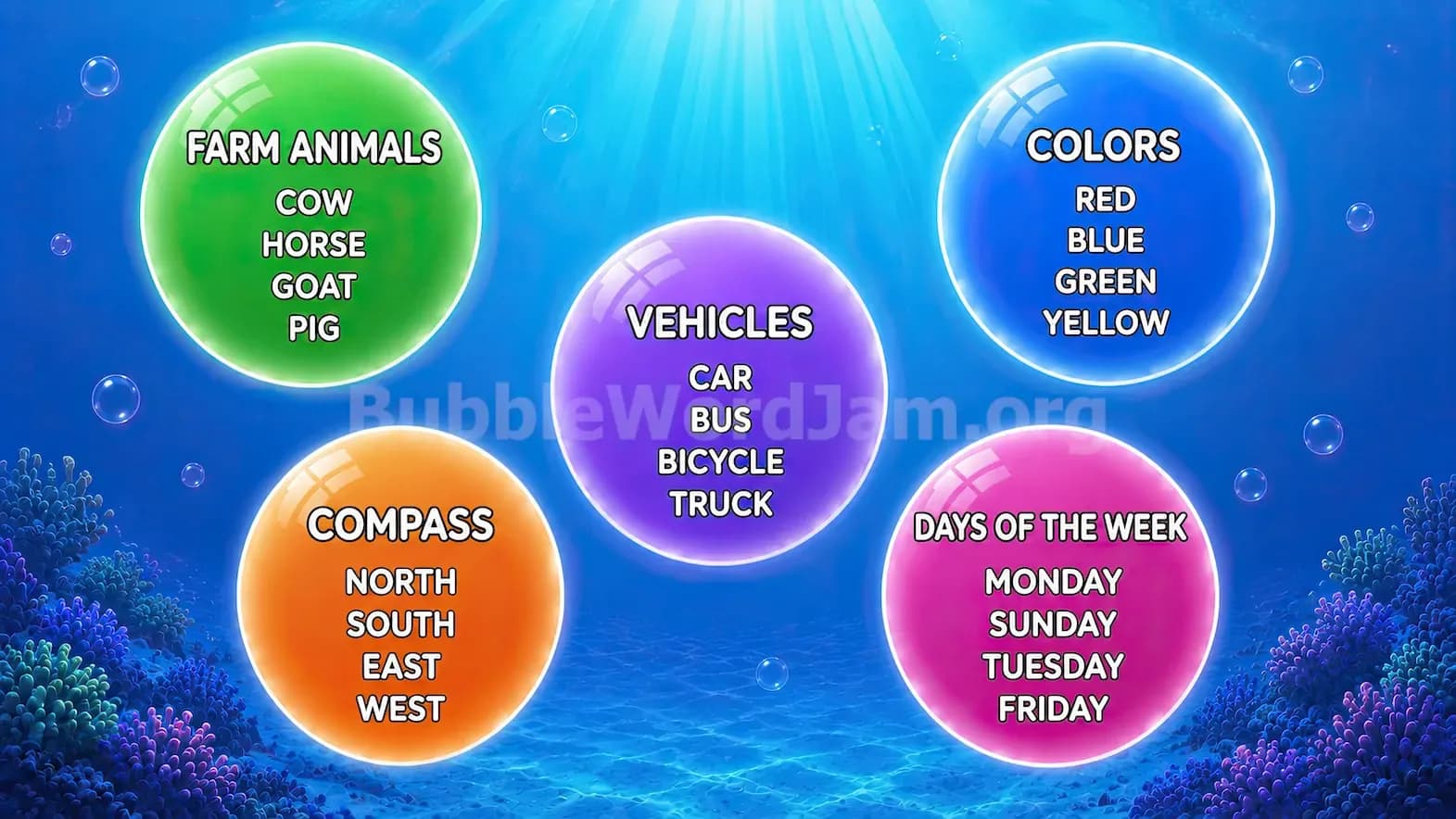
Level 1 gives players the clean starter version with vehicles like car, bus, bicycle, and truck. It’s a rock-solid tutorial for recognizing the root category. These are all things that move people or goods, and there isn’t much trickery yet.
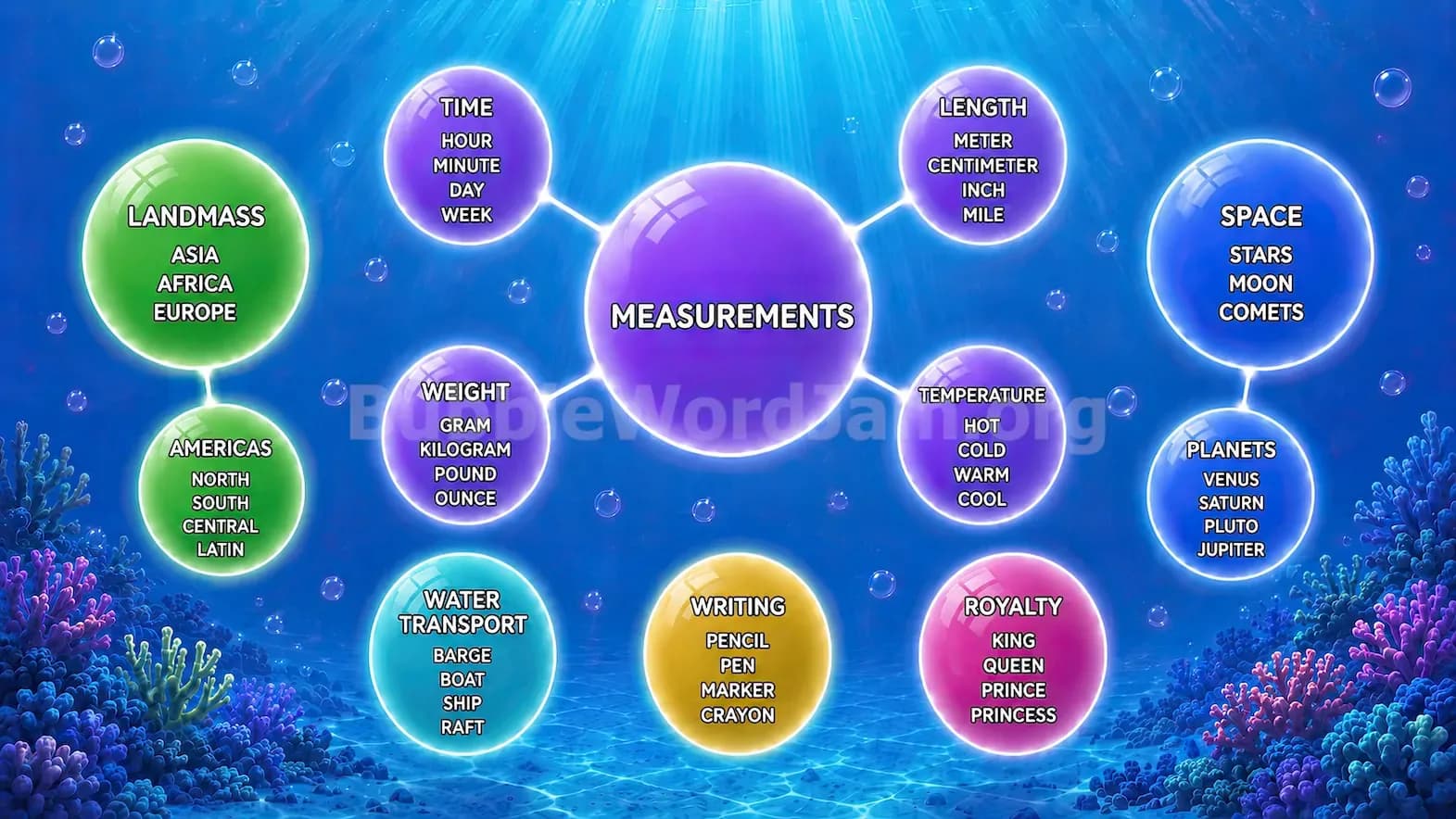
But by Level 7, the vibe shifts. Water transport shows up with barge, boat, ship, and raft. That’s still a clean category, but it teaches a key rule: don’t just think “vehicle.” Think “where does this vehicle operate?”
Water categories are some of the easiest to recognize and some of the easiest to over-merge. Boat, ship, raft, and barge clearly belong together. But once harbor words enter the puzzle, you need to separate vehicles from locations.
Level 7 focuses on water transport itself: barge, boat, ship, raft. These are the moving objects. Level 39 introduces harbor clues such as dock, pier, lighthouse, and wharf. That category is not about vehicles; it’s about the place where water travel happens.
That distinction is huge. If I see “ship” and “dock” together, I pause. They’re related, sure, but Bubble Word Jam usually rewards tighter categories. Ship belongs with other water vehicles. Dock belongs with harbor infrastructure. Related is not always mergeable.
A useful test is this: can all four words perform the same role? Boat, raft, ship, and barge all move across water. Dock, pier, wharf, and lighthouse do not. They support travel, but they aren’t vehicles. That’s the difference between a clean solve and a mediocre guess.
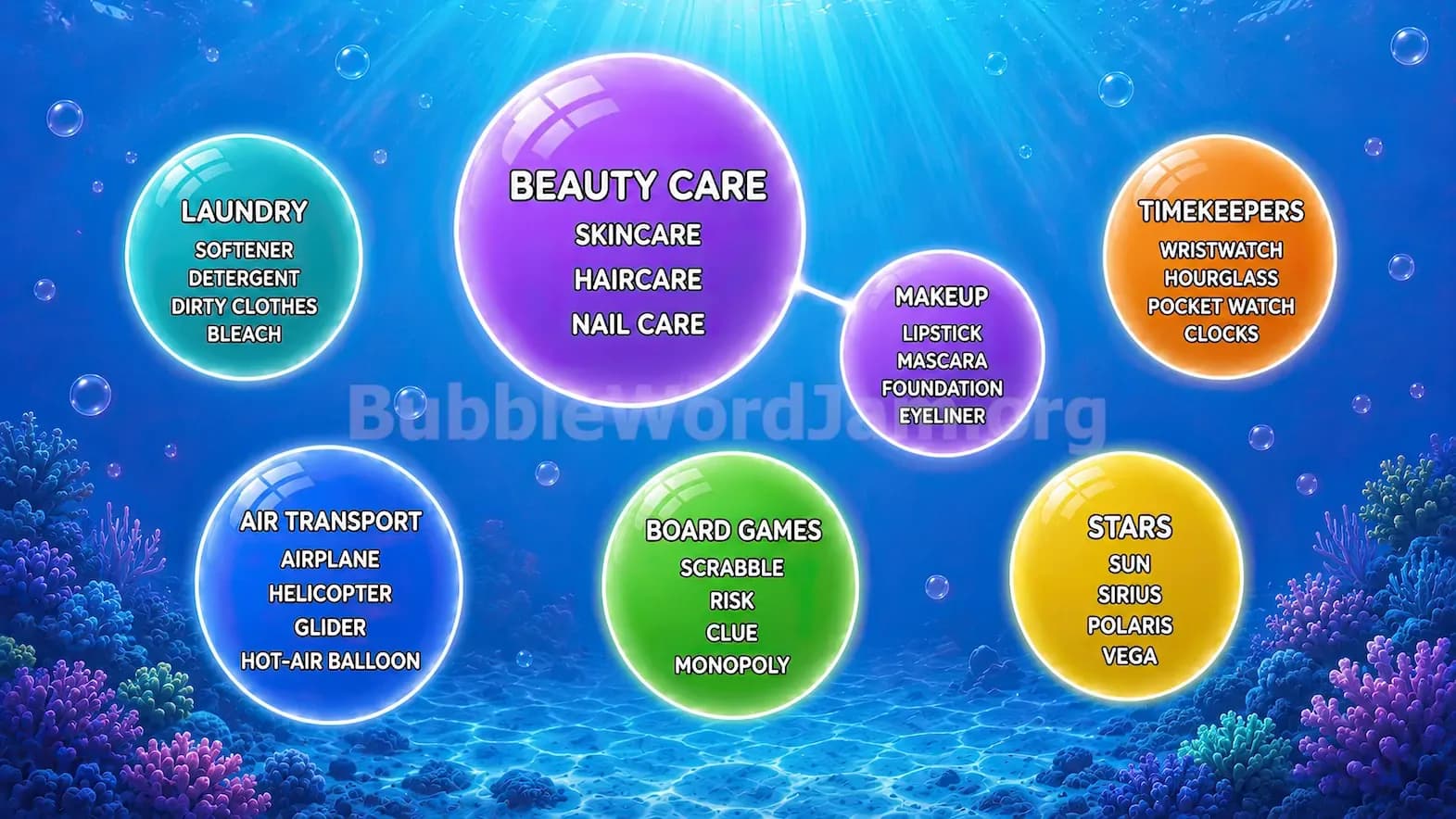
Air categories follow the same logic. Level 15 gives a straightforward air transport group: airplane, helicopter, glider, and hot-air balloon. These all fly. Easy banger category.
Then the game adds travel hubs later. Level 39 includes airport words like runway, control tower, baggage claim, and customs. Again, these are not air vehicles. They’re airport features.
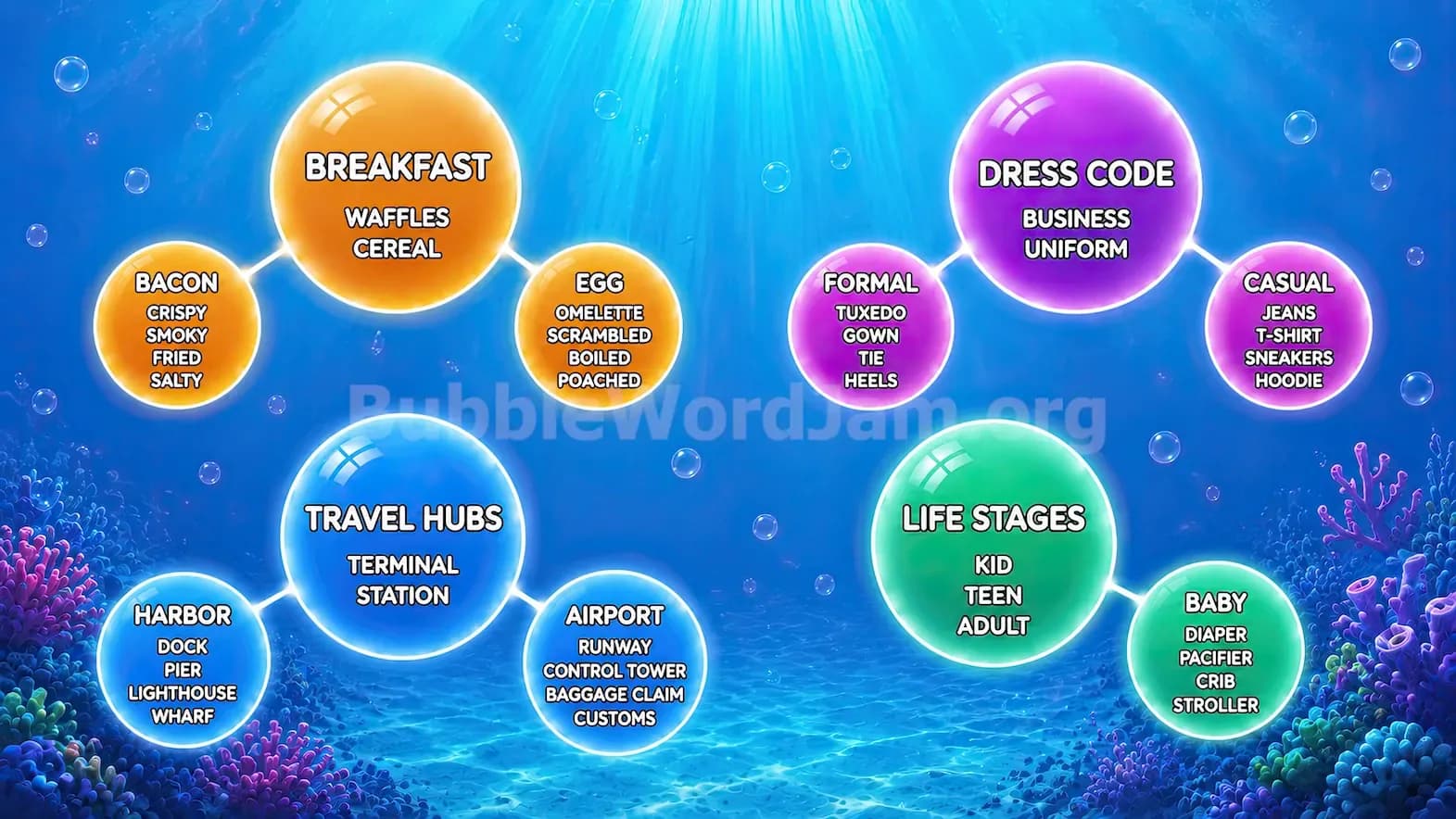
This is where mode-first solving saves moves. When you spot airplane, helicopter, glider, and balloon, merge the flight vehicles together. When you spot runway, customs, baggage claim, and control tower, you’re probably looking at the airport category.
Level 774 gets trickier with airport-related words like departures, takeoff, fly, and security. This is a looser, more modern travel-hub style category. It doesn’t just list objects; it mixes actions, places, and procedures. I actually like this kind of late-game transport puzzle because it forces you to think like a traveler, not just a dictionary.
The trick? Ask whether the words describe the experience of being at the airport. Departures, security, takeoff, and fly all orbit that hub. They don’t all share the same grammar, but they share the same travel context.
Road transport usually starts clean, then gets messy fast.
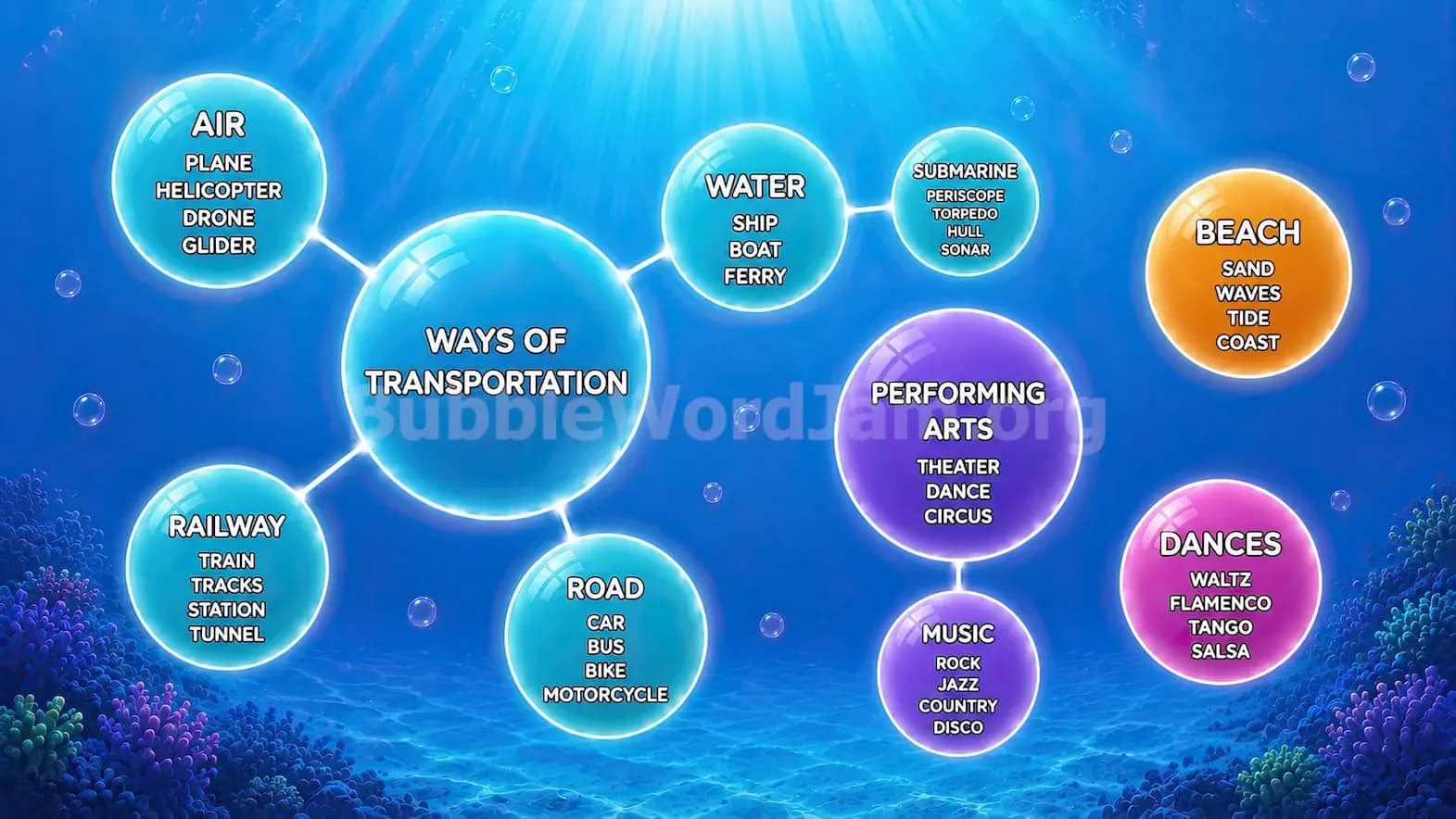
Level 54 gives one of the best training examples because it separates ways of transportation into air, water, railway, and road. Under road, you’ll see car, bus, bike, and motorcycle. That is the mode-first method in pure form. Road comes before individual vehicle parts.
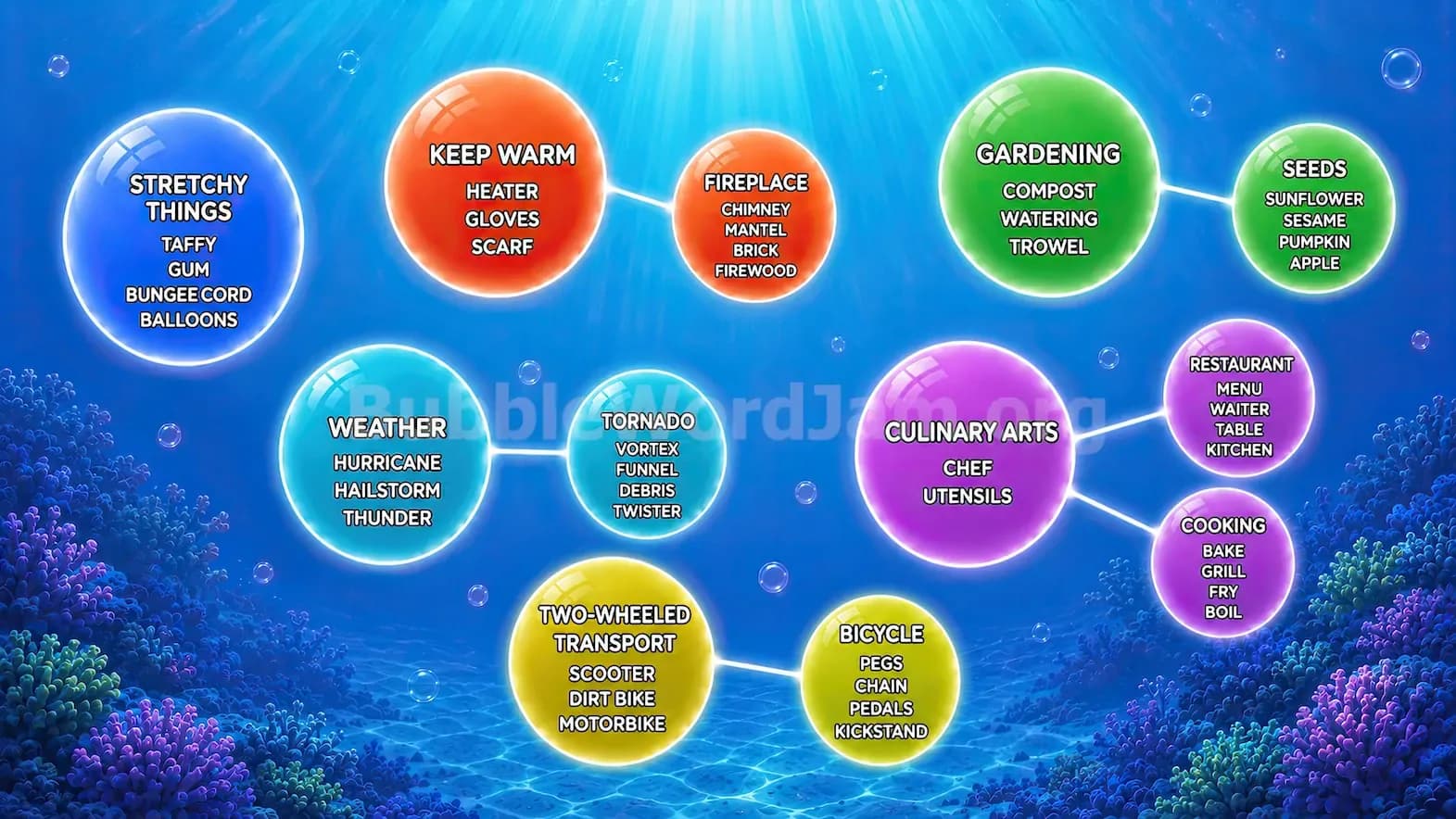
Then Level 27 adds bicycle and two-wheeled transport. Bicycle parts include pegs, chain, pedals, and kickstand, while two-wheeled transport includes scooter, dirt bike, bicycle, and motorbike. This is where players get baited. “Bicycle” appears as a vehicle, but “chain” and “pedals” are parts. You don’t want to jam a part into a transport mode category unless the category clearly asks for components.
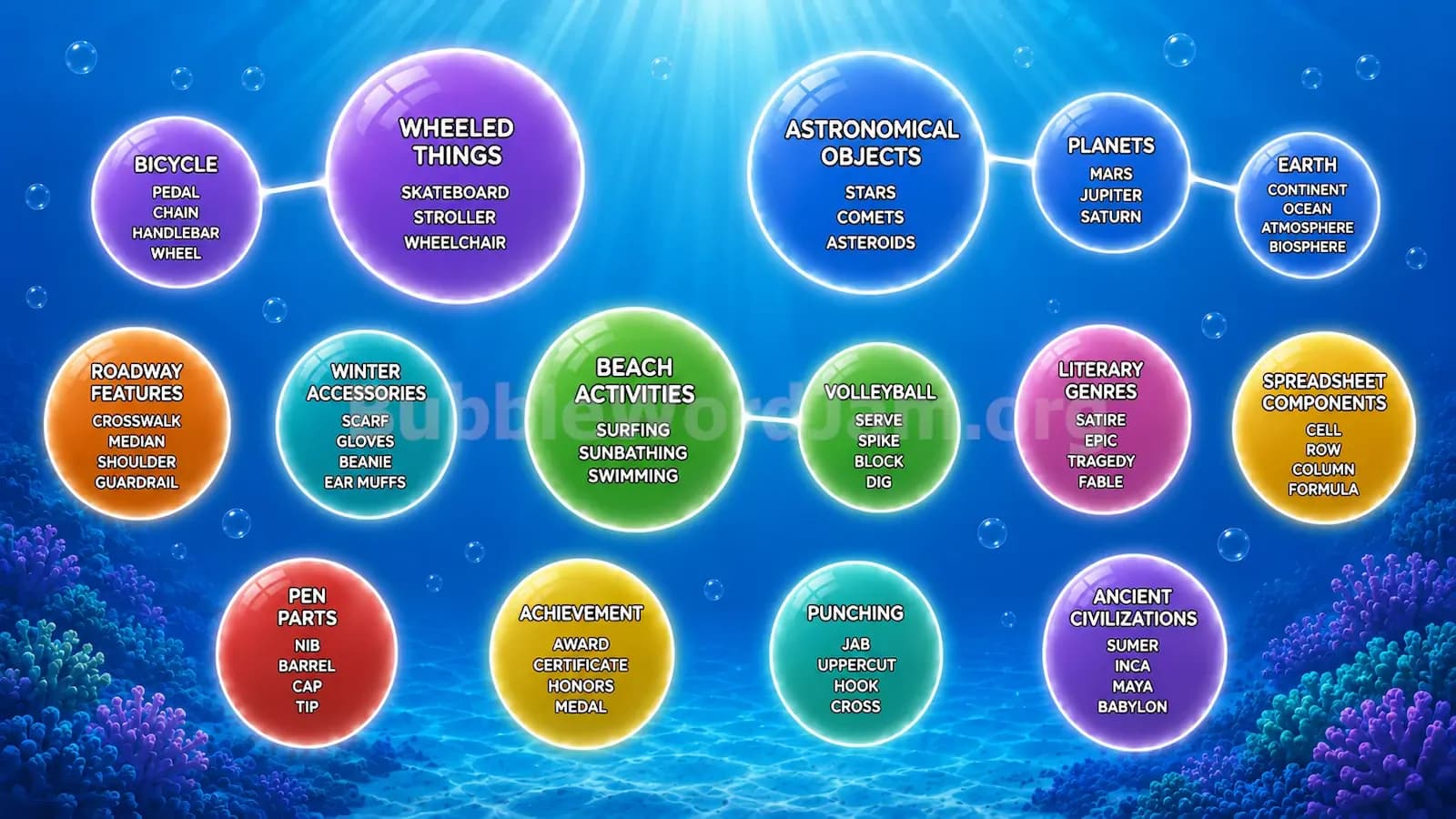
Level 140 doubles down with wheeled things and bicycle parts. Wheeled things include bicycle, skateboard, stroller, and wheelchair. Bicycle parts include pedal, chain, handlebar, and wheel. Same subject, different layer.
My rule: when the board contains both a vehicle and its parts, solve the parts second unless the parts are obvious. First identify the broad transport or object category. Then peel off the component category. It’s a cleaner loop, and it prevents the board from getting floaty.
Rail clues are usually compact, but they love nested logic. Level 54 includes railway with train, tracks, station, and tunnel. That’s a mix of vehicle, path, hub, and structure, but all four belong to the railway system.
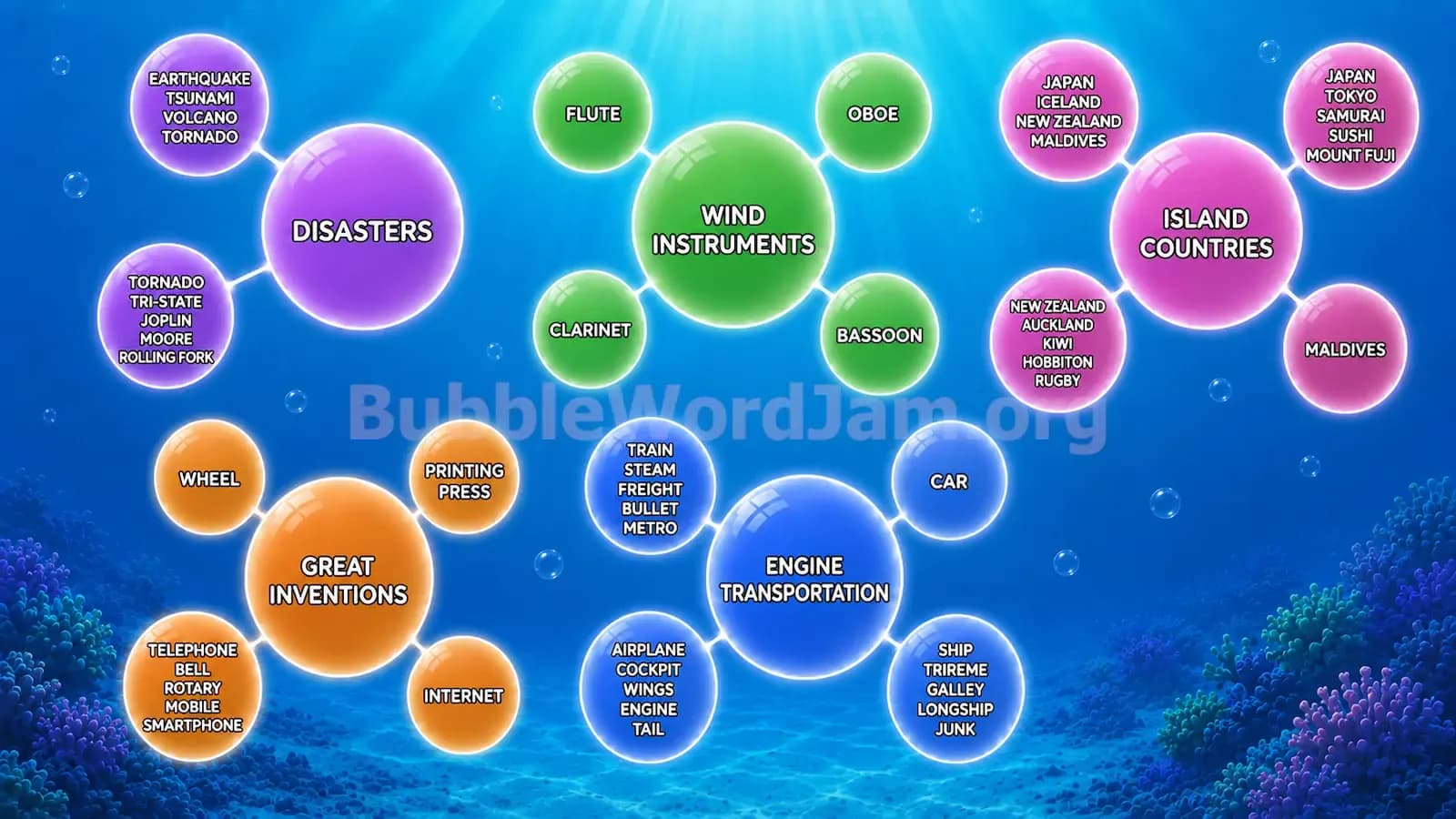
Level 120 expands the idea with train types: steam, freight, bullet, and metro. This is not “railway infrastructure.” It’s specifically kinds of trains. That’s a tighter category.
So when you see rail words, ask whether the group is about the system or the vehicle type. Train, tracks, station, tunnel? Railway system. Steam, freight, bullet, metro? Train types.
This is a subtle but important distinction. Bubble Word Jam often asks you to move from broad to narrow. Railway is broad. Train types are narrow. If both appear in the same puzzle, the narrow group usually has the cleaner lock.
Travel hubs are where transportation puzzles become more interesting. Level 39’s travel hubs category includes harbor, terminal, station, and airport. These are places where travel begins, ends, or transfers. They’re not vehicles, but they’re deeply connected to vehicles.
That means you should treat hub words as locations first. Airport belongs with harbor and station before it belongs with airplane. Harbor belongs with terminal before it belongs with ship. This feels counterintuitive at first, but once you see it, the pattern clicks.
Level 774 plays with station and ticket ideas. Station can connect to travel, but it can also branch into meanings like police station or radio station. Ticket can mean a travel pass, a theater entry, or even a paper slip. That kind of ambiguity is exactly why you should avoid snap-merging travel words just because they feel familiar.
The late-game trick is to test context. If the board also has airport, departures, security, and takeoff, “ticket” may lean travel. If the board has movie theater, popcorn, projector, and screen, “ticket” may belong elsewhere. Bubble Word Jam loves that semantic shuffle.
When a transportation puzzle starts looking crowded, I use this order:
First, collect air vehicles: airplane, helicopter, glider, drone, balloon.
Second, collect water vehicles: boat, ship, raft, ferry, barge, submarine.
Third, collect road vehicles: car, bus, bike, motorcycle, scooter.
Fourth, collect rail words: train, tracks, station, tunnel, metro.
Fifth, check for parts: cockpit, wings, engine, tail, pedal, chain, handlebar, wheel, periscope, sonar.
Sixth, check for hubs: airport, harbor, terminal, station, runway, dock, pier, baggage claim.
This method won’t solve every board instantly, but it gives you a stable route through the chaos. And in Bubble Word Jam, stability matters because each merge costs a move. A clean category is better than a clever guess.
If you want to sharpen this category, these levels are the strongest practice route.
Level 1 teaches the basic vehicle category with car, bus, bicycle, and truck.
Level 7 introduces water transport with barge, boat, ship, and raft.
Level 15 focuses on air transport with airplane, helicopter, glider, and hot-air balloon.
Level 27 teaches the difference between bicycle parts and two-wheeled transport.
Level 39 is excellent for airport, harbor, and travel hub logic.
Level 54 is the real mode-first masterclass: air, water, railway, and road all appear together.
Level 120 separates engine transportation from airplane, ship, and train subcategories.
Level 140 tests wheeled things against bicycle parts.
Level 774 pushes airport, station, and ticket clues into trickier late-game territory.
The biggest mistake in Bubble Word Jam transport puzzles is merging by loose theme. Ship and harbor feel connected. Airplane and airport feel connected. Bicycle and pedal feel connected. But the game usually wants role-based categories: vehicle, part, hub, route, or system.
That’s why mode-first solving works so well. It gives you a strong first pass before the puzzle starts throwing parts and places into the mix. Once you separate air, water, rail, and road, the remaining words become easier to read.
And honestly, that’s when these transport puzzles are at their best. They stop feeling like a random pile of travel words and start feeling like a satisfying little transit map. Follow the modes, respect the hubs, watch for parts, and you’ll clear these categories with way less frustration.