Master Bubble Word Jam tools and construction puzzles by linking tools, trades, materials, and machines with level examples from garages to crane sites.

Guide By Liam Stone
Updated on August 3, 2026
Liam Stone has been playing Bubble Word Jam since the mobile app first launched on the Apple App Store. He knew this game would pop, so he enjoys playing every level, collecting the answers, and running this site for other players. He loves mobile puzzle games and sometimes publishes his walkthroughs on his YouTube channel Puzzle Game Answer. Follow his channel if you are a puzzle game lover too.
Tools levels in Bubble Word Jam have a great vibe when they click. A hammer goes with a nail, a crane goes with a construction site, and an engine belongs inside a car. Easy, right? Then the game gets crunchy. Suddenly you’re staring at wood, brick, crane, carpenter, workshop, lathe, cement, blueprint, and spark plug, and the obvious match is no longer obvious.
That’s the trick with tools, construction, machines, and repairs. These puzzles don’t usually test one clean idea. They mix several connected ideas: the tool, the trade that uses it, the material it works on, and the machine that changes the whole job. I like to think of these as “making things” levels. They reward players who can see a workflow instead of just a word list.
The core technique is simple: build a chain in your head.
Tool → trade → material → machine.
Once you start using that chain, these levels stop feeling like a pile of hardware-store clutter and start feeling like a solid sorting puzzle.
Tools are sneaky because they rarely stay in one lane. A saw can point to carpentry, woodworking, construction, crafts, or a garage. A crane can be a machine, a bird, an origami shape, or a construction-site clue. That’s why guessing too early can tank your board.
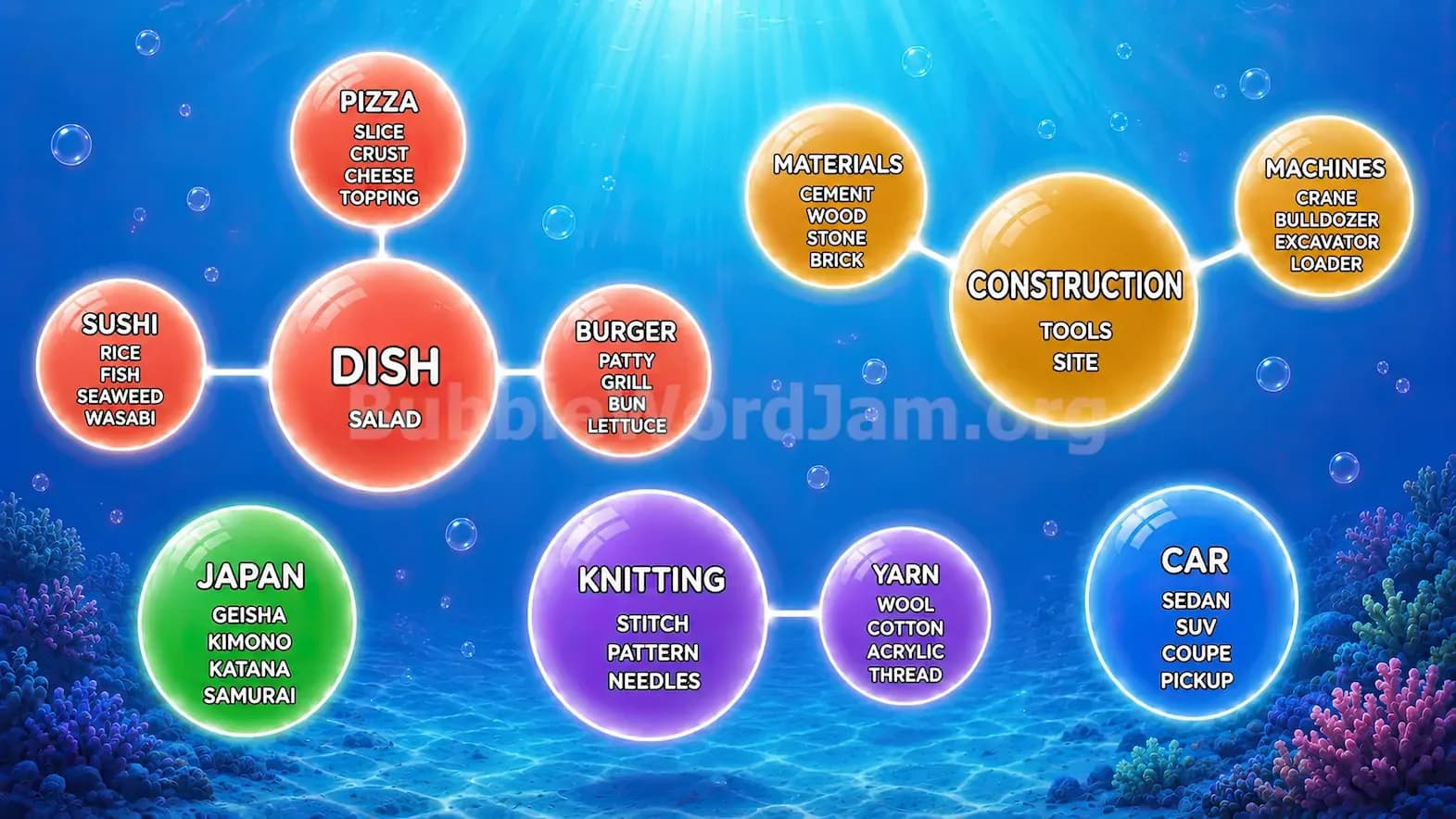
Bubble Word Jam likes to place useful decoys beside the real category. Level 48 is a clean example: “construction” connects to materials, tools, machines, and site. That means the word “materials” is not just a random noun. It is part of a larger parent category. Then “materials” opens into cement, wood, stone, and brick. “Machines” opens into crane, bulldozer, excavator, and loader. The level teaches the exact loop this guide is about: don’t only match the visible word; ask what job that word performs in the category tree.
That mindset also helps in Level 17, where construction links with crane, bulldozer, building materials, and builders. “Builders” then breaks into architect, carpenter, painter, and plumber, while building materials includes wood, tile, concrete, and brick. This is a banger teaching level because it shows how a broad workplace category can split into people, objects, and substances.
Start with the hand-held item. Hammer, wrench, screwdriver, pliers, saw, chisel, plane, router, and lathe are all tool signals. In Level 137, tools appear as hammer, wrench, screwdriver, and pliers. That is a classic garage-style grouping. No heavy abstraction, no weird profession split, just “what do I grab to fix something?”
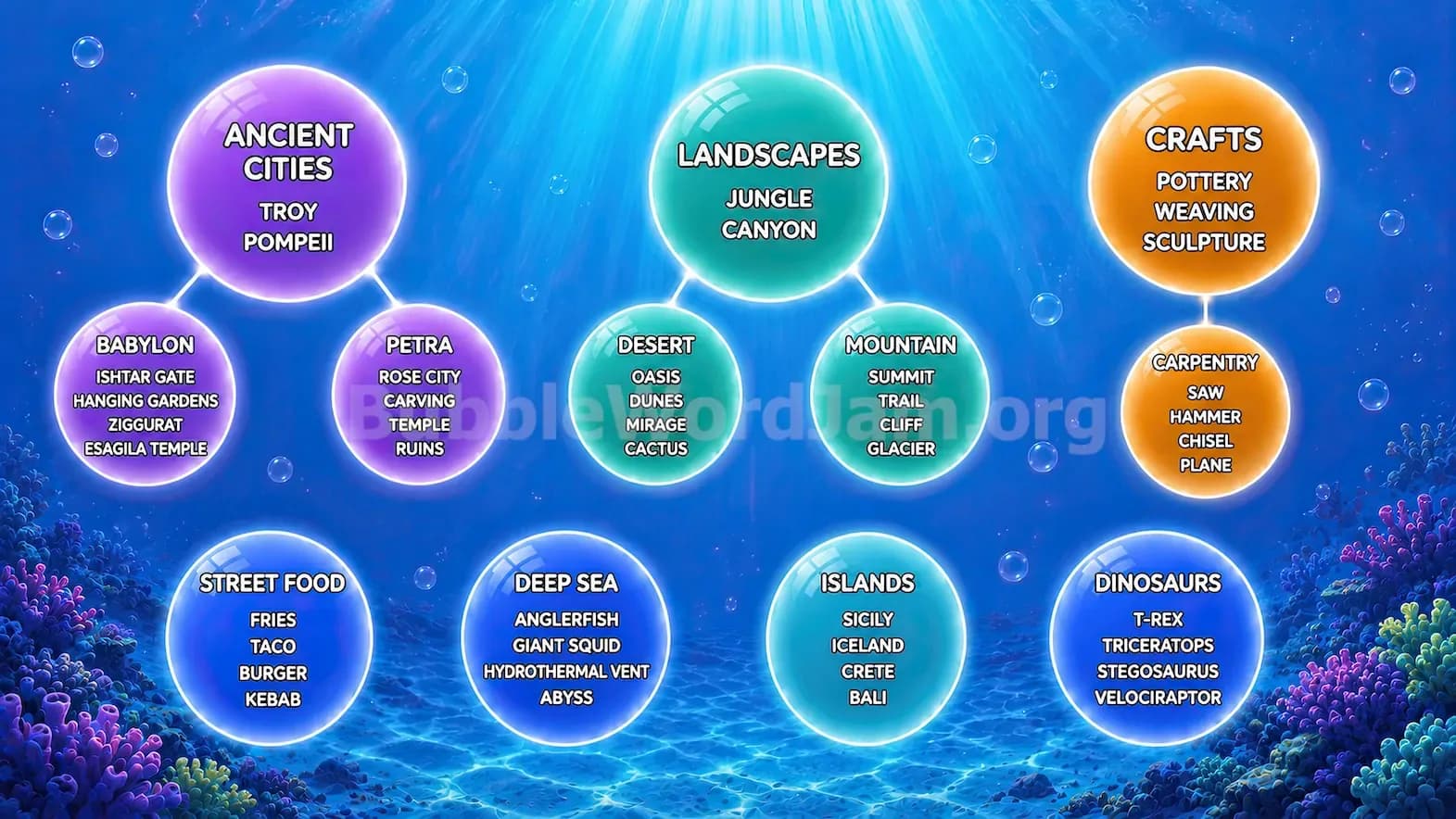
Level 45 goes one step deeper with carpentry: saw, hammer, chisel, and plane. Here, the tools are not generic anymore. They belong to a trade. When you see chisel and plane together, don’t stop at “tools.” Ask which craft owns them. The answer is carpentry, and that trade label matters.
A trade is the worker role or craft that uses the tools. Carpenter, plumber, painter, architect, blacksmith, glassblower, and woodworker all belong here. Trades can be harder than tools because they often appear as category names rather than final answers.
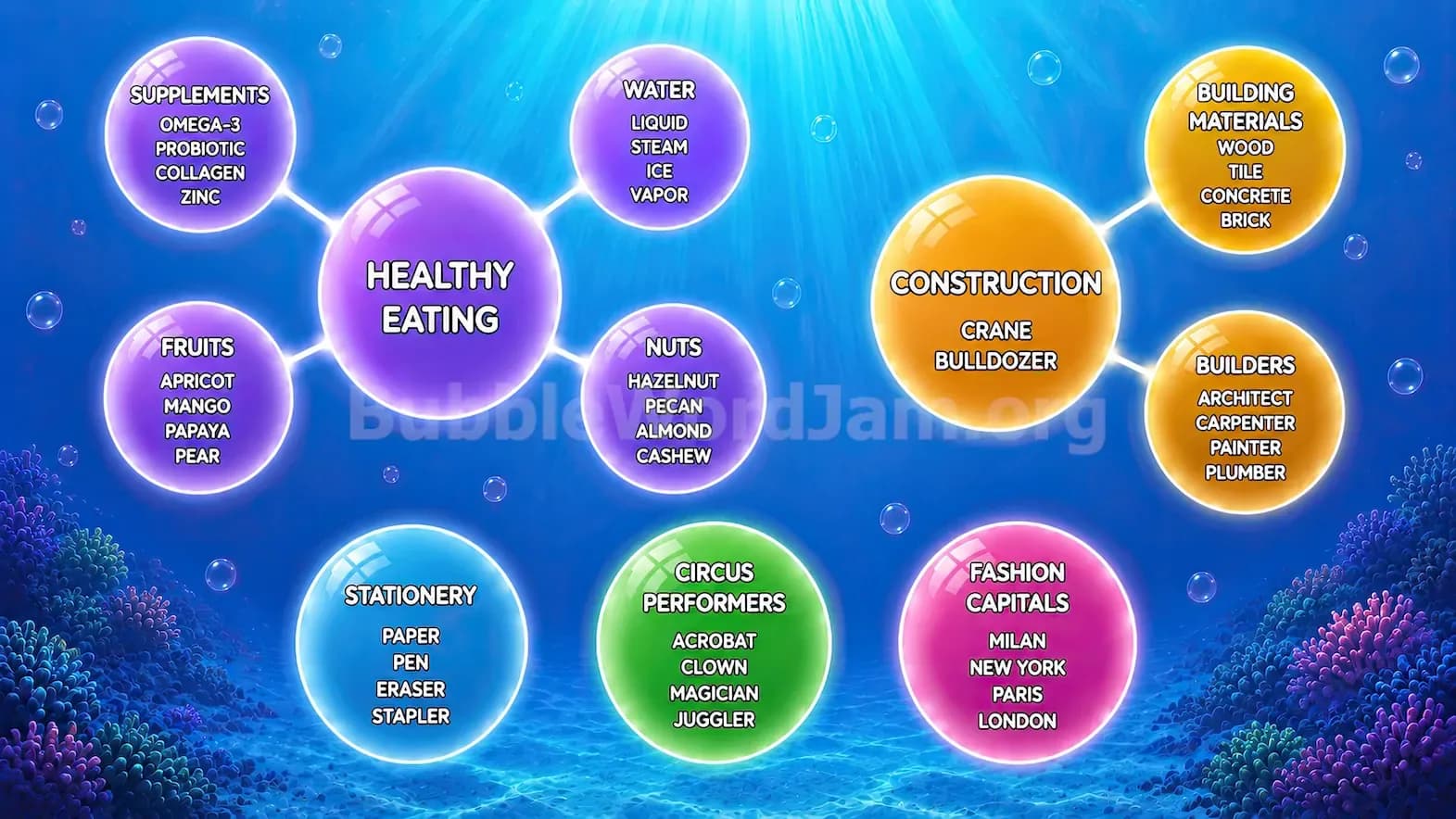
In Level 17, builders includes architect, carpenter, painter, and plumber. That level is teaching workplace logic. These are not just jobs; they are the people who belong around construction materials and machines. If “carpenter” appears near wood, saw, chisel, plane, or workshop, treat it as a trade clue.
Level 475 adds a more advanced version with blacksmith processes, glassblowing tools, pottery techniques, and woodworking joints. That level is not asking, “What is a hammer?” It is asking, “What does this craft do?” Quenching, tempering, annealing, and upsetting belong to blacksmithing. Pontil, jacks, glory, and marver belong to glassblowing. Mortise, tenon, dovetail, and rabbet belong to woodworking joints. That’s a much deeper, nerdier, more satisfying loop.
Materials are the stuff being shaped, built, repaired, or transformed. Wood, brick, cement, concrete, tile, glass, metal, textile, paper, and stone are common signals. The trap is that materials can also belong to everyday object categories. Wood might be a building material, a craft material, a furniture clue, or part of a nature category. Cement and brick, though, usually pull hard toward construction.
Level 48 gives a clean materials group: cement, wood, stone, and brick. Level 17 gives another: wood, tile, concrete, and brick. These are useful examples because the overlap is intentional. Wood and brick appear in more than one construction-flavored setup, so you can train your eye to treat them as high-confidence building clues.
Machines are the large-scale problem solvers. They lift, dig, load, power, cut, or move. Crane, bulldozer, excavator, loader, engine, transmission, steam engine, and lathe all belong in this zone, but not all in the same category.
Level 48’s machines group is crane, bulldozer, excavator, and loader. That’s pure construction equipment. Level 25 shifts into car logic: wheels, seatbelt, engine, and transmission sit under car, while engine splits into crankshaft, pistons, spark plug, and cylinder. I love this kind of split because it rewards players who can separate a whole object from its inner parts. The car is the system. The engine is the machine inside the system. The crankshaft and pistons are components inside the machine.
That hierarchy is everything.
Level 17 is one of the best early construction examples because it lays out the whole chain in a friendly way. You can move from construction to crane and bulldozer, then to building materials, then to builders.
The key move is to avoid treating every construction word as equal. A crane is a machine. A bulldozer is a machine. Wood, tile, concrete, and brick are materials. Architect, carpenter, painter, and plumber are workers. Once you sort by function, the level loses its noise.
My rule here: when a level gives you both people and objects, never merge only by “construction feeling.” Sort by role first.
Level 25 looks like a car category at first, and it is, but the real lesson is nested machinery. “Car” includes wheels, seatbelt, engine, and transmission. Then “engine” includes crankshaft, pistons, spark plug, and cylinder.
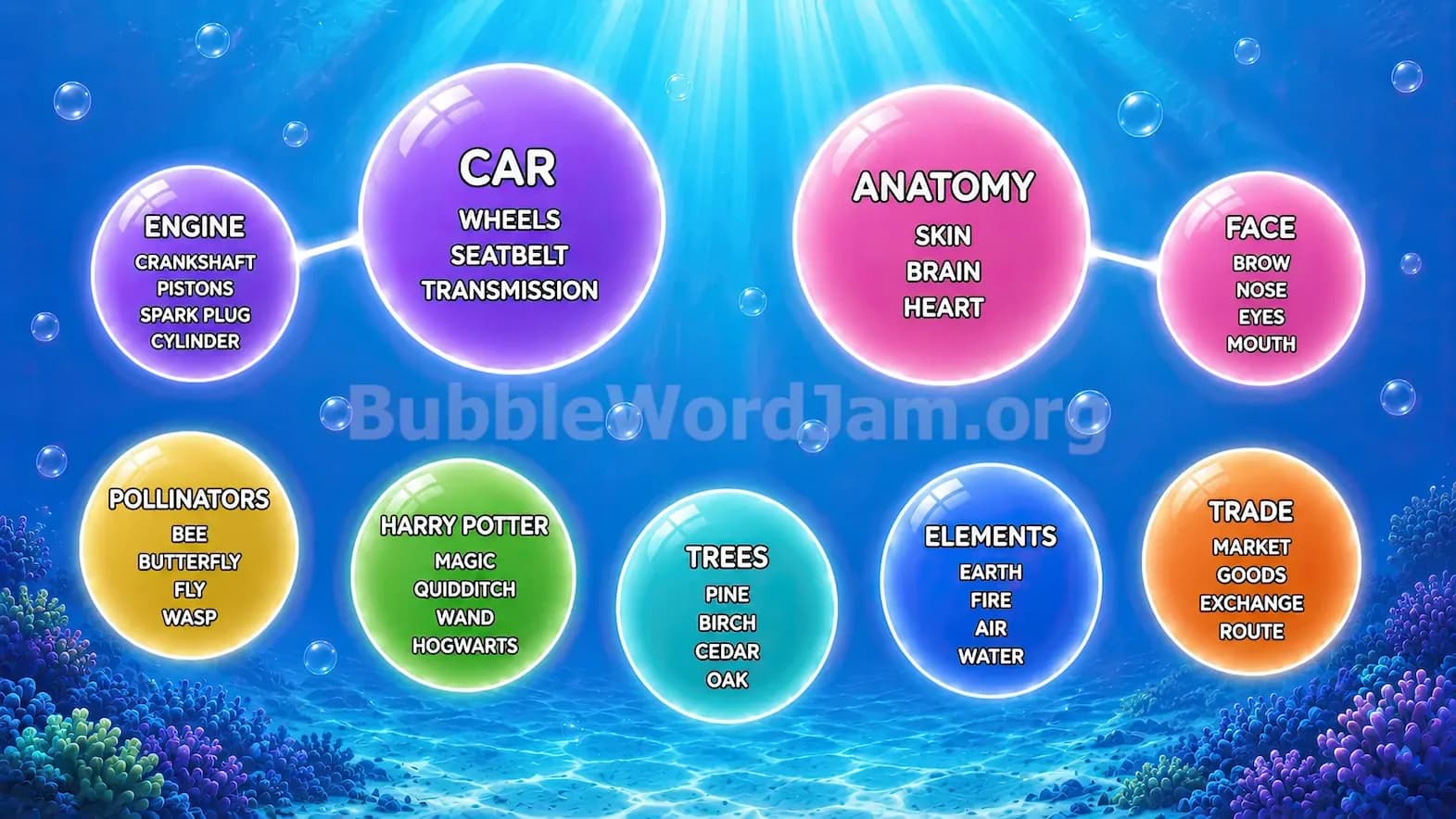
That’s a classic Bubble Word Jam move: one word can be both an answer in one group and the parent of another group. Engine belongs to car, but engine also owns its own internal parts. If you spot that structure, don’t panic. Use it. Parent-child categories are not mistakes; they’re the puzzle’s backbone.
For tool and repair themes, this matters a lot. A garage might contain tools. A car might contain an engine. An engine might contain pistons. The deeper you go, the more precise the category becomes.
Level 45 brings in crafts and carpentry. The broad category is crafts: carpentry, pottery, weaving, and sculpture. Then carpentry narrows to saw, hammer, chisel, and plane.
This is where players often burn moves. They see hammer and think “tools,” then see pottery and think “materials,” then the board turns floaty. The better route is to spot the trade category first. Carpentry is not just another word; it is the label that explains the tools.
The technique: if one word sounds like an activity or craft, check whether the surrounding words are its equipment.
Level 48 is almost a textbook construction puzzle. Construction contains materials, tools, machines, and site. Materials contains cement, wood, stone, and brick. Machines contains crane, bulldozer, excavator, and loader.
That structure is a triumph because it forces the player to think like a site manager. What is on the site? Machines. What are they working with? Materials. What broader category contains both? Construction.
When a level gives you category words like “materials” or “machines,” don’t rush to merge them with their examples. They may first need to join a higher-level construction group.
Level 137 uses a simpler but still useful repair setup. Tools are hammer, wrench, screwdriver, and pliers. Garage includes workshop, driveway, remote, and opener.
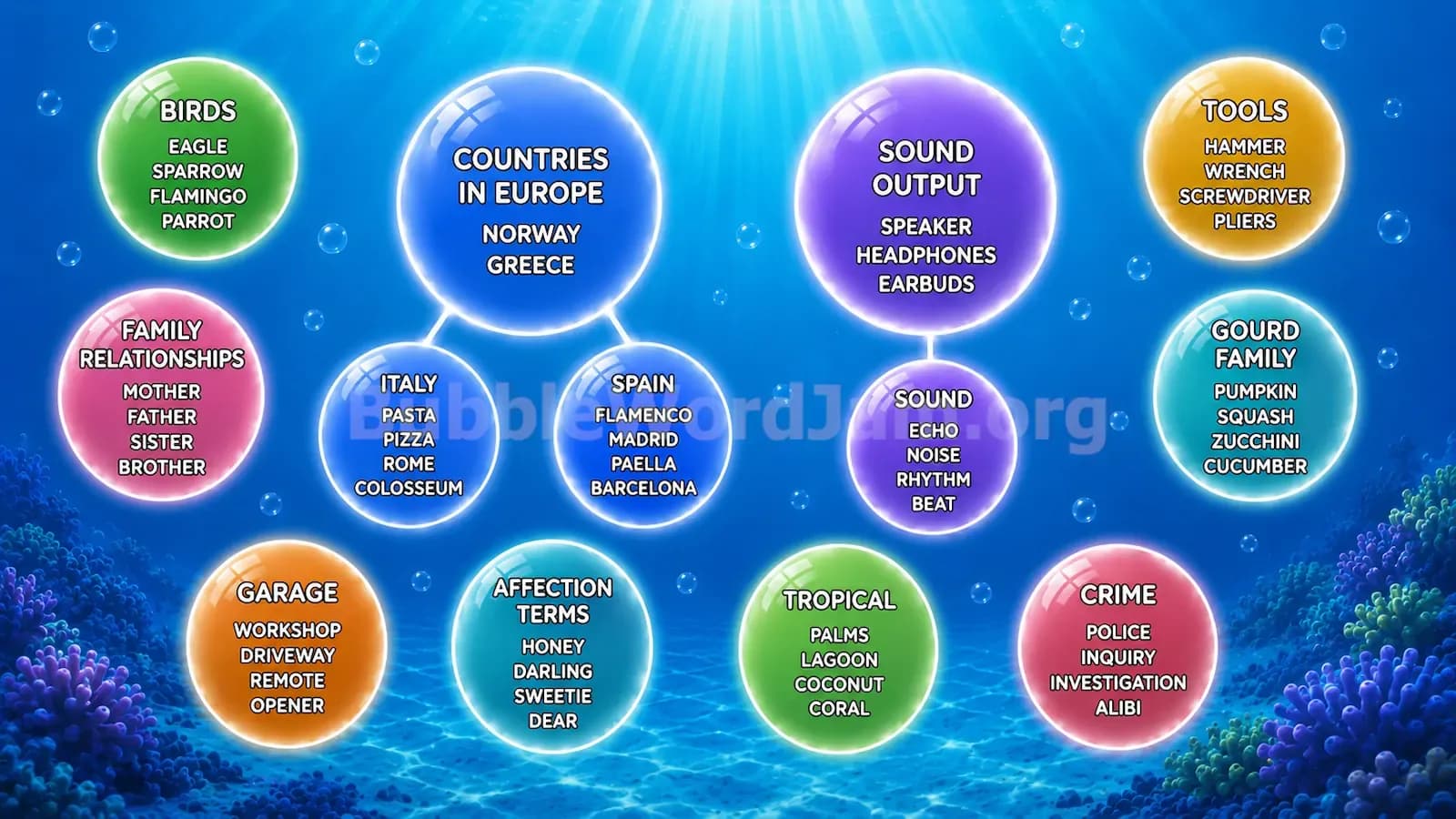
This split matters. A wrench belongs to tools, not garage, even though people store wrenches in garages. Workshop belongs to garage because it describes the place or feature. This is a common Bubble Word Jam distinction: location context versus item function.
When you’re stuck, ask: “Is this something I use, somewhere I go, or a part of the place?”
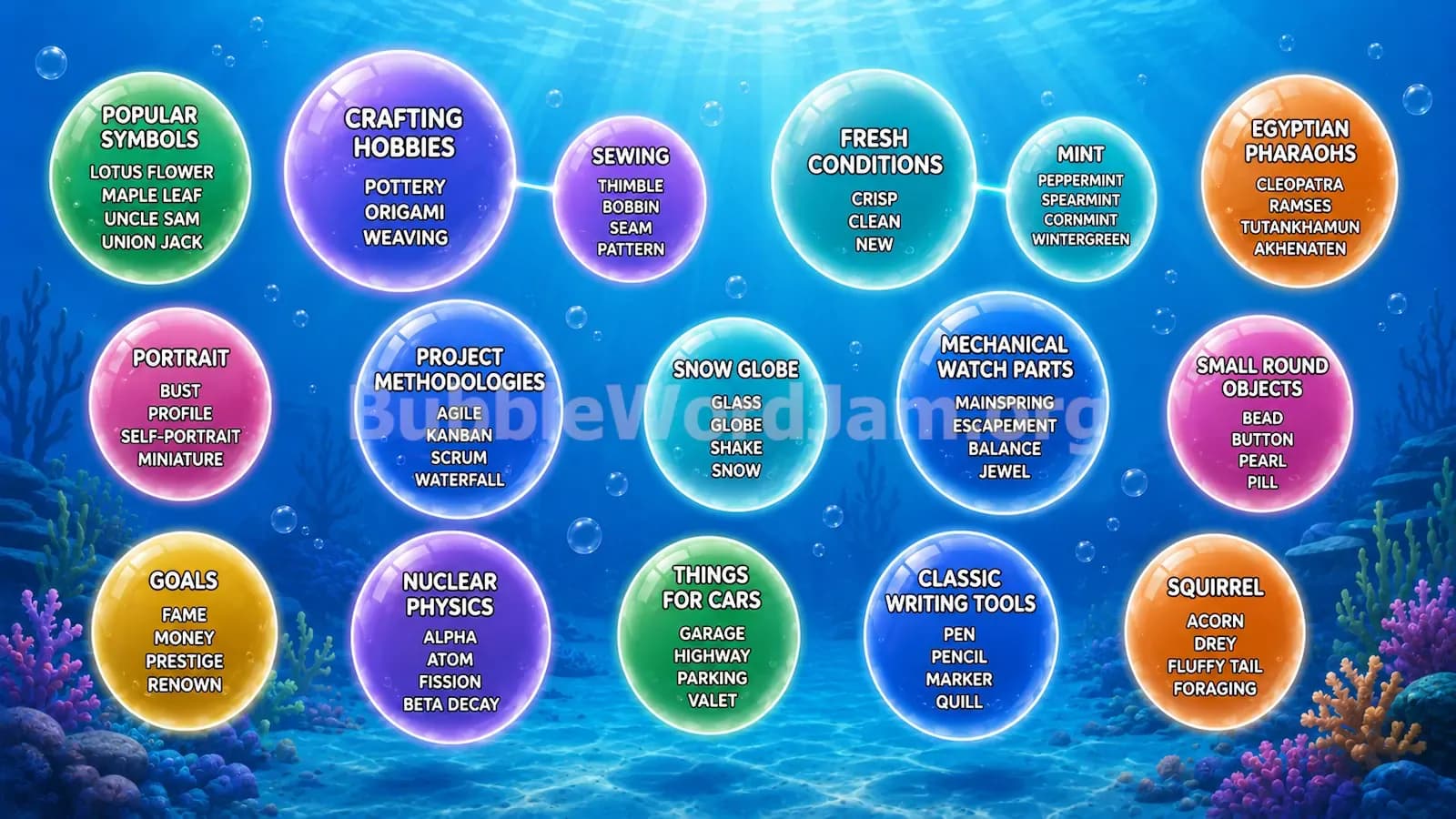
Level 435 gets more specialized with mechanical watch parts: mainspring, escapement, balance, and jewel. It also includes classic writing tools: pen, pencil, marker, and quill.
This is a good reminder that “tools” does not always mean construction tools. Writing tools and watch parts both belong to making-and-repairing logic, but they live in different worlds. The watch category is about mechanism components. The writing category is about instruments people use.
That distinction helps with advanced levels. If the words are tiny internal parts, think machine or mechanism. If the words are objects held by a person to perform a task, think tool or instrument.
Level 475 is where the category chain gets properly crunchy. Blacksmith processes include quenching, tempering, annealing, and upsetting. Glassblowing tools include pontil, jacks, glory, and marver. Woodworking joints include mortise, tenon, dovetail, and rabbet. Industrial revolution includes factory, railway, steam engine, and textile.
This level asks you to separate tools from processes and historical machines. Quenching is not a tool; it’s a process. Pontil is a glassblowing tool. Dovetail is a joint. Steam engine is a machine tied to an era.
The best play is to label each word by what kind of thing it is: action, object, connection, machine, place, or material. That quick mental tag prevents messy merges.
Level 719 is a nasty little test because “crane” has multiple meanings: origami, whooping, construction, and paper. Then construction site includes crane, helmet, blueprint, and scaffolding. On top of that, woodworking tools include chisel, plane, router, and lathe.
This is where Bubble Word Jam’s tool categories can feel like a trap, but it’s a fair trap. The word “crane” only becomes clear when you see its neighbors. If the nearby words are helmet, blueprint, and scaffolding, you’re on a construction site. If the nearby words are origami, paper, and whooping, the puzzle is playing with crane meanings.
For woodworking, chisel and plane are familiar from earlier carpentry logic, but router and lathe push it toward a more specialized workshop. That’s your clue that this is not generic tools; it is woodworking tools.
When you hit a tools, construction, machine, or repair puzzle, run this checklist before spending moves:
First, find the obvious tools: hammer, wrench, saw, chisel, pliers, screwdriver, plane.
Second, look for trades: carpenter, plumber, blacksmith, glassblower, painter, architect.
Third, isolate materials: wood, brick, cement, concrete, tile, stone, glass.
Fourth, separate machines and parts: crane, bulldozer, excavator, engine, pistons, spark plug, lathe.
Fifth, check for parent categories: construction, garage, carpentry, woodworking, car, engine, workshop, industrial revolution.
That order keeps the board readable. It also stops you from merging by vibe alone, which is the fastest way to waste moves.
Tools and construction puzzles in Bubble Word Jam are not just about naming objects. They’re about relationships. A tool belongs to a trade. A trade works with a material. A machine changes the scale of the work. A workplace ties everything together.
Once you start seeing those chains, levels like 17, 48, 475, and 719 become much easier to read. The board may still throw curveballs, especially with words like crane or engine, but you’ll have a method instead of a guess. And in Bubble Word Jam, a rock-solid method is worth more than a lucky merge.