Learn how to solve Bubble Word Jam social life categories by sorting family roles, babies, dating clues, weddings, birthdays, parties, and life events.

Guide By Liam Stone
Updated on August 8, 2026
Liam Stone has been playing Bubble Word Jam since the mobile app first launched on the Apple App Store. He knew this game would pop, so he enjoys playing every level, collecting the answers, and running this site for other players. He loves mobile puzzle games and sometimes publishes his walkthroughs on his YouTube channel Puzzle Game Answer. Follow his channel if you are a puzzle game lover too.
Bubble Word Jam loves obvious-looking categories that quietly turn crunchy. Social life clues are a perfect example. At first glance, words like mother, baby, ring, party, flowers, match, or vows feel simple. We use them constantly. We know them. We’ve lived around them.
Then the game starts mixing family roles with life stages, weddings with anniversary clues, dating with restaurant clues, and baby items with broader “life stages” answers. Suddenly, the vibe changes. What looked like a soft everyday category becomes a sneaky sorting puzzle where one bubble can point in two or three directions.
The trick is not to ask, “Do these words feel related?” Of course they do. The better question is: “What kind of relationship are these words describing?” Is it a family role? A stage of life? A romantic situation? A celebration? A wedding object? A baby item? Once you sort by context, these levels start to open up fast.
When I hit a social-life puzzle in Bubble Word Jam, I treat it like a little social map. Every clue belongs somewhere, but the game often hides the map by using warm, familiar words.
Start with relationship type. Family words usually describe people: mother, father, brother, sister, cousin, uncle. These are roles inside a family tree. They don’t need an event to make sense.
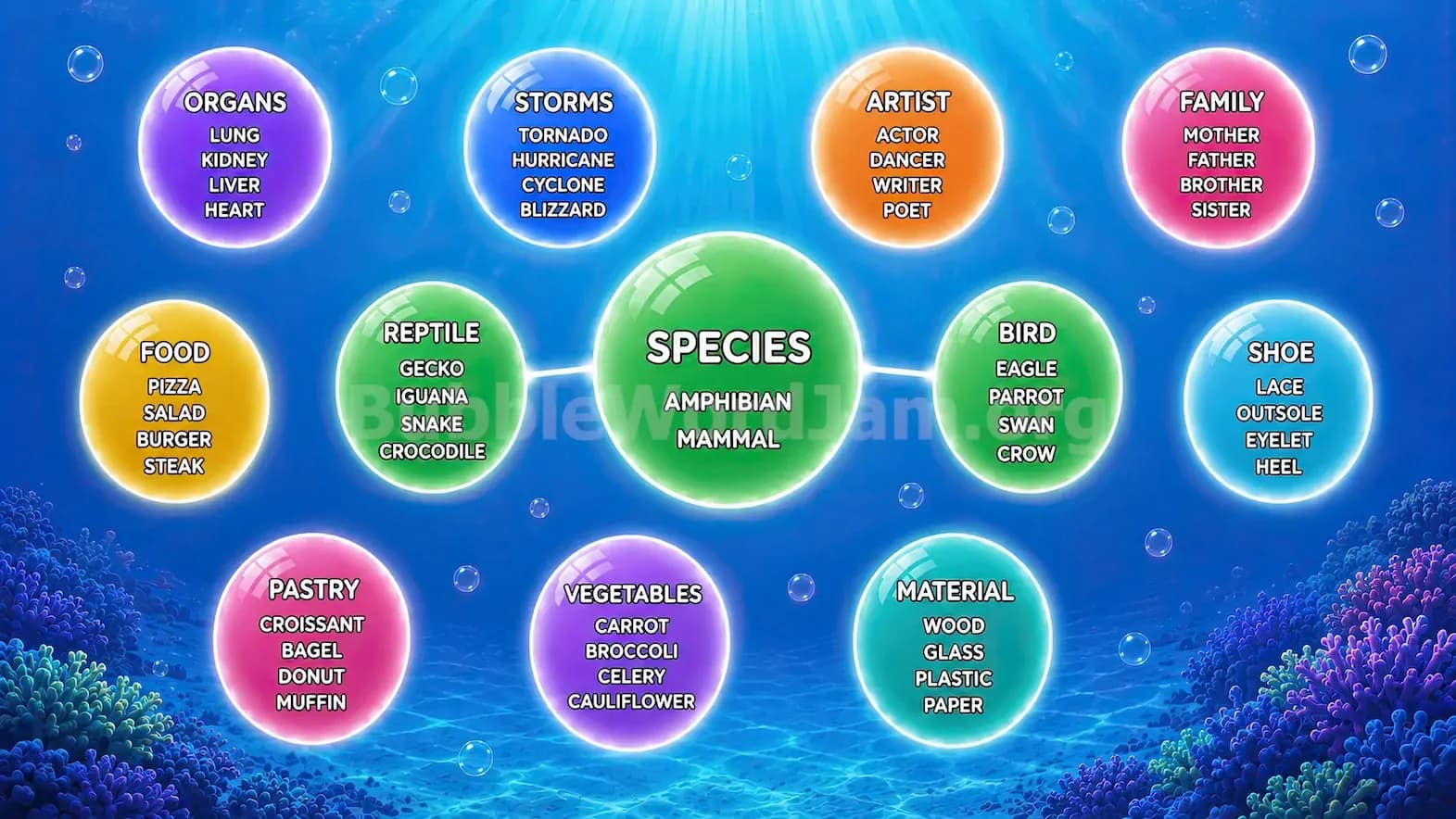
That’s why Level 8’s family group is clean: mother, father, brother, sister. It’s not asking about a party, a household, or childhood. It’s asking for family roles. No drama, no extra loop, just a rock-solid “who are these people to each other?” category.
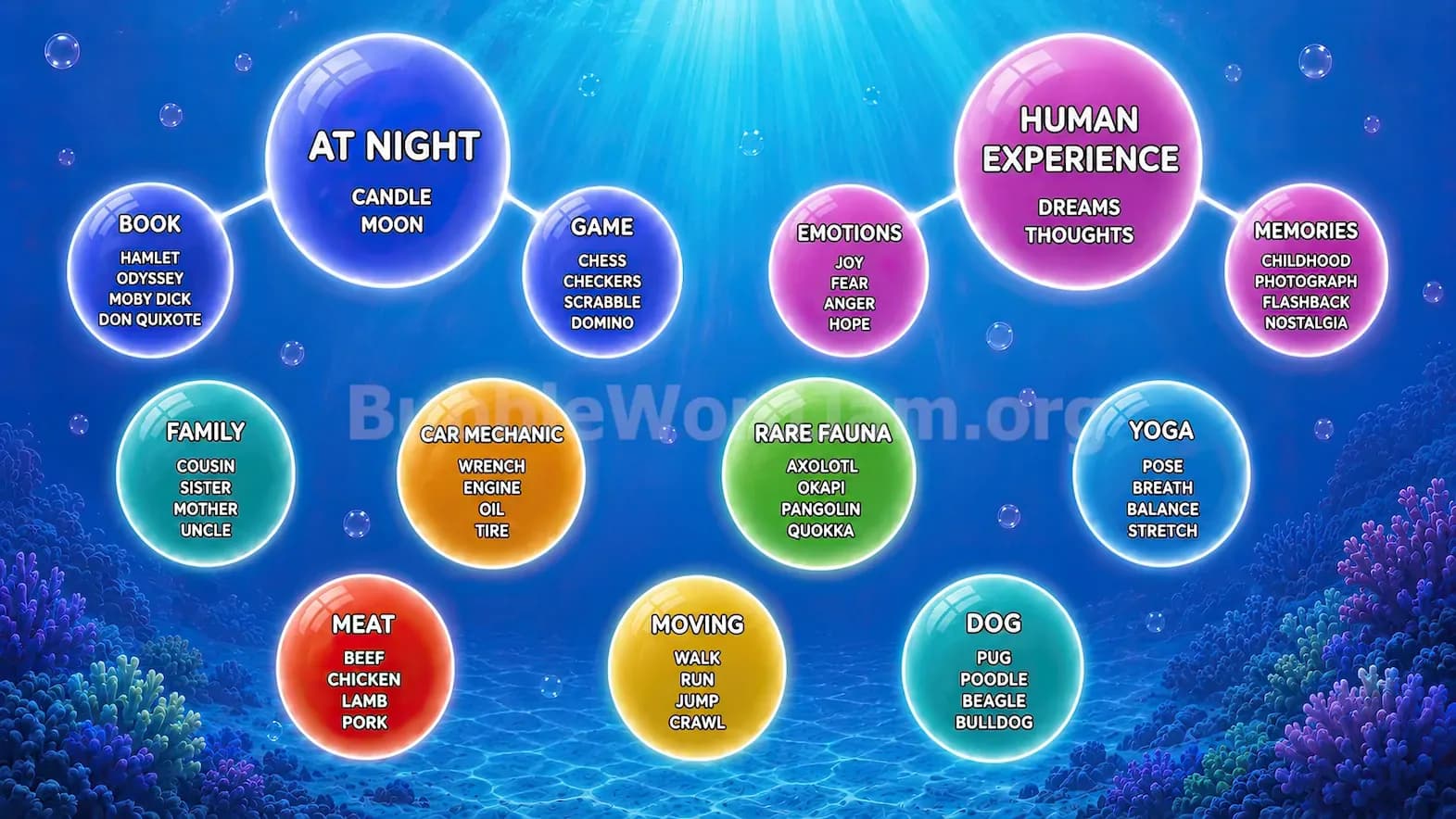
Later, Bubble Word Jam can complicate that same idea. Level 60 uses family again with cousin, sister, mother, and uncle. Notice the shift: now the list includes extended family, not just the closest nuclear-family set. That’s where some players make a bad merge. They see “mother” and “sister” and start hunting for home, childhood, or parent clues. Don’t. Keep the category anchored to relationship labels first.
This is one of the biggest social-life traps in Bubble Word Jam. Baby can be a life stage, but it can also be its own object category.
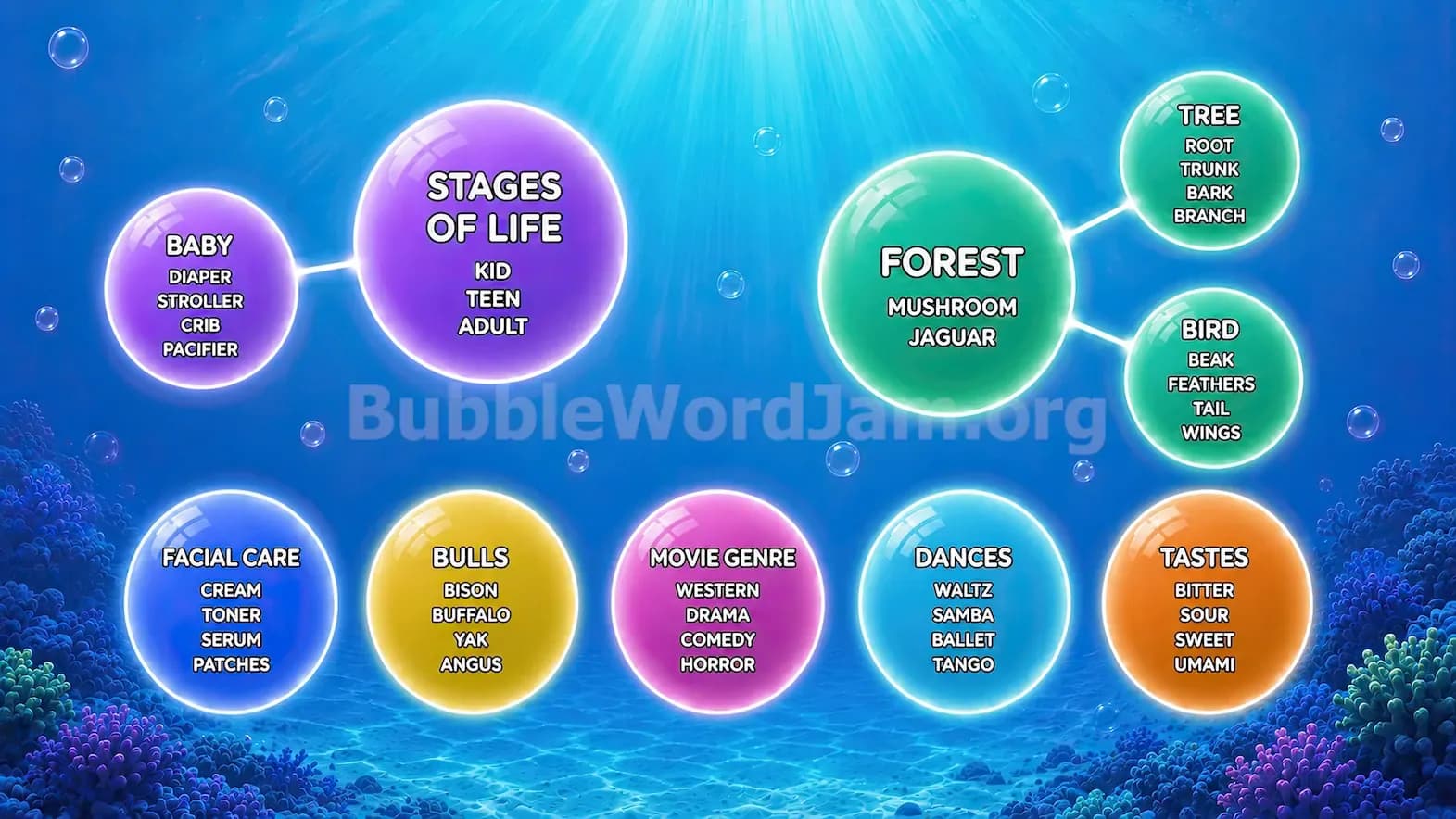
Level 9 shows the split beautifully. The “stages of life” group is baby, kid, teen, adult. That’s a timeline. It answers the question: “What order do people grow through?” In the same level, the “baby” group is diaper, stroller, crib, pacifier. That’s not a timeline. That’s a set of items linked to caring for a baby.
That distinction matters. If you merge baby with diaper too early, you may break the bigger life-stage chain. If you merge baby with kid, teen, and adult, you’re reading the word as a stage. If you merge diaper, crib, stroller, and pacifier, you’re reading “baby” as the category theme.
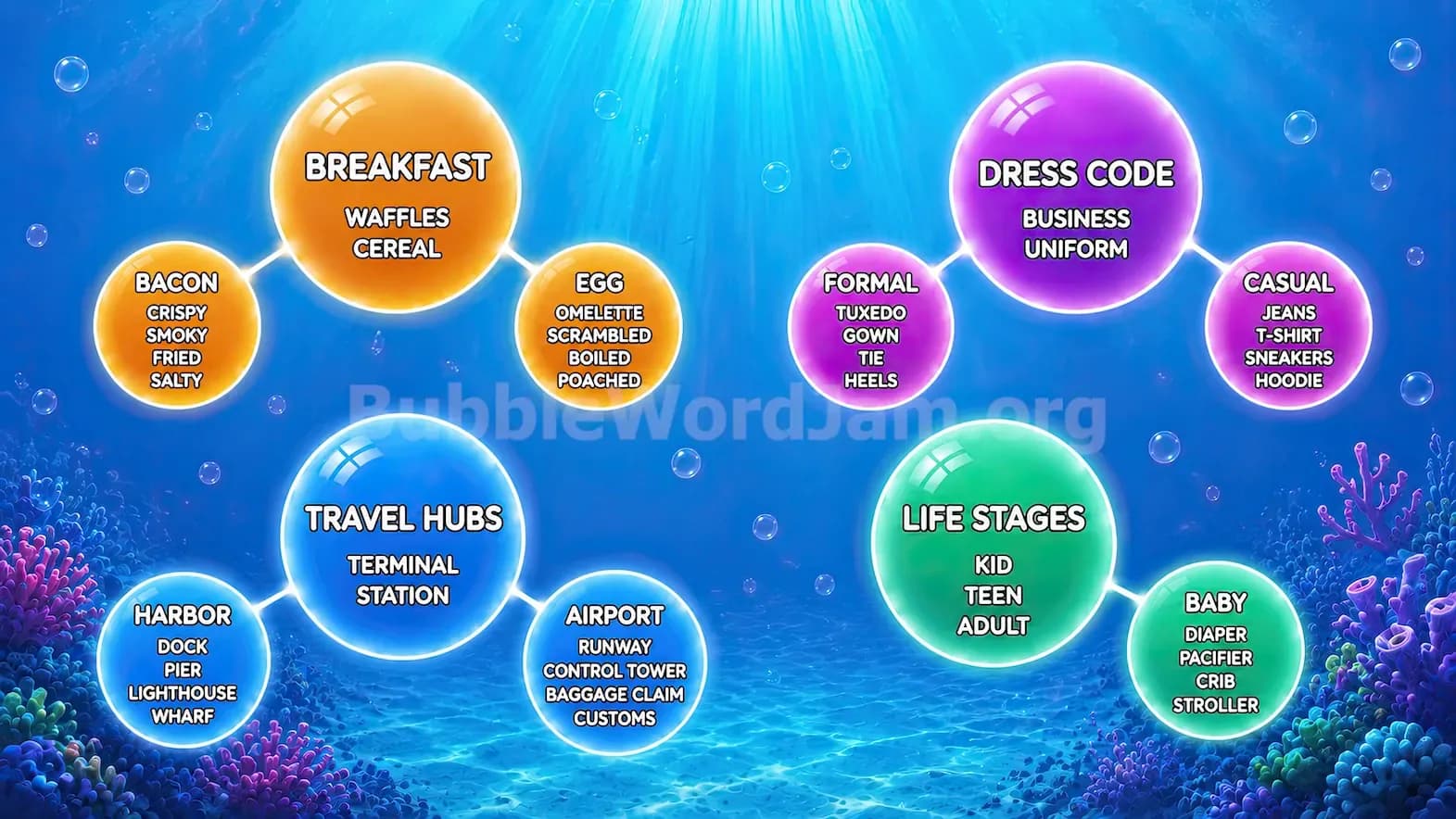
Level 39 repeats the lesson with baby items and life stages in the same puzzle space: diaper, pacifier, crib, stroller sit under baby, while baby, kid, teen, adult sit under life stages. This is Bubble Word Jam doing one of its favorite moves: placing the answer to one category inside the clue field of another. It’s fair, but yeah, it can feel a little mean.
Romance categories are softer than family categories because the clues often describe a scene rather than a fixed role. Level 58’s first date group—couple, dinner, flowers, restaurant—is a good example. None of those words alone screams “first date” with total certainty. Flowers could go with wedding or anniversary. Dinner could go with restaurant. Couple could go with romance. Restaurant could be its own category.
The win condition is the shared situation. Picture the scene: two people, dinner, flowers, restaurant. That’s a first date. The game wants the social event context, not a dictionary definition.
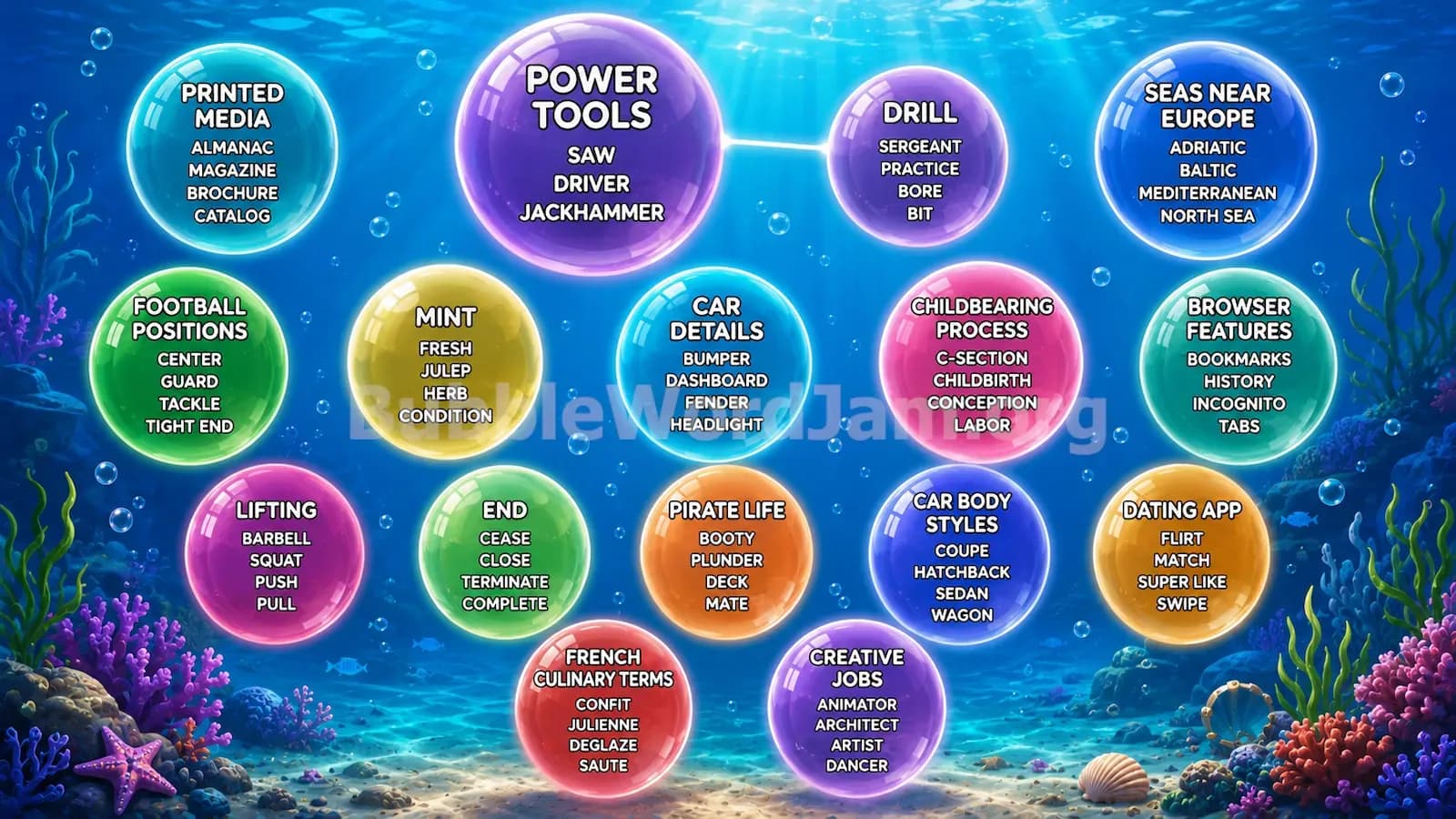
Level 425 pushes dating into modern app language with flirt, match, super like, and swipe. This is a very different relationship bucket. It’s not about the actual date. It’s about the digital loop before the date: profile, gesture, match mechanic, romantic signal. If you see swipe and super like, don’t drag them toward general romance. Lock them into dating app behavior.
A useful rule: if the words describe people meeting in real life, think date. If the words describe app actions, think dating app. That one split can save you moves.
Wedding categories are where Bubble Word Jam gets especially slippery. Wedding clues can describe people, objects, traditions, places, or the ceremony itself. If you throw every wedding-ish word into one mental bucket, you’ll tank the puzzle.
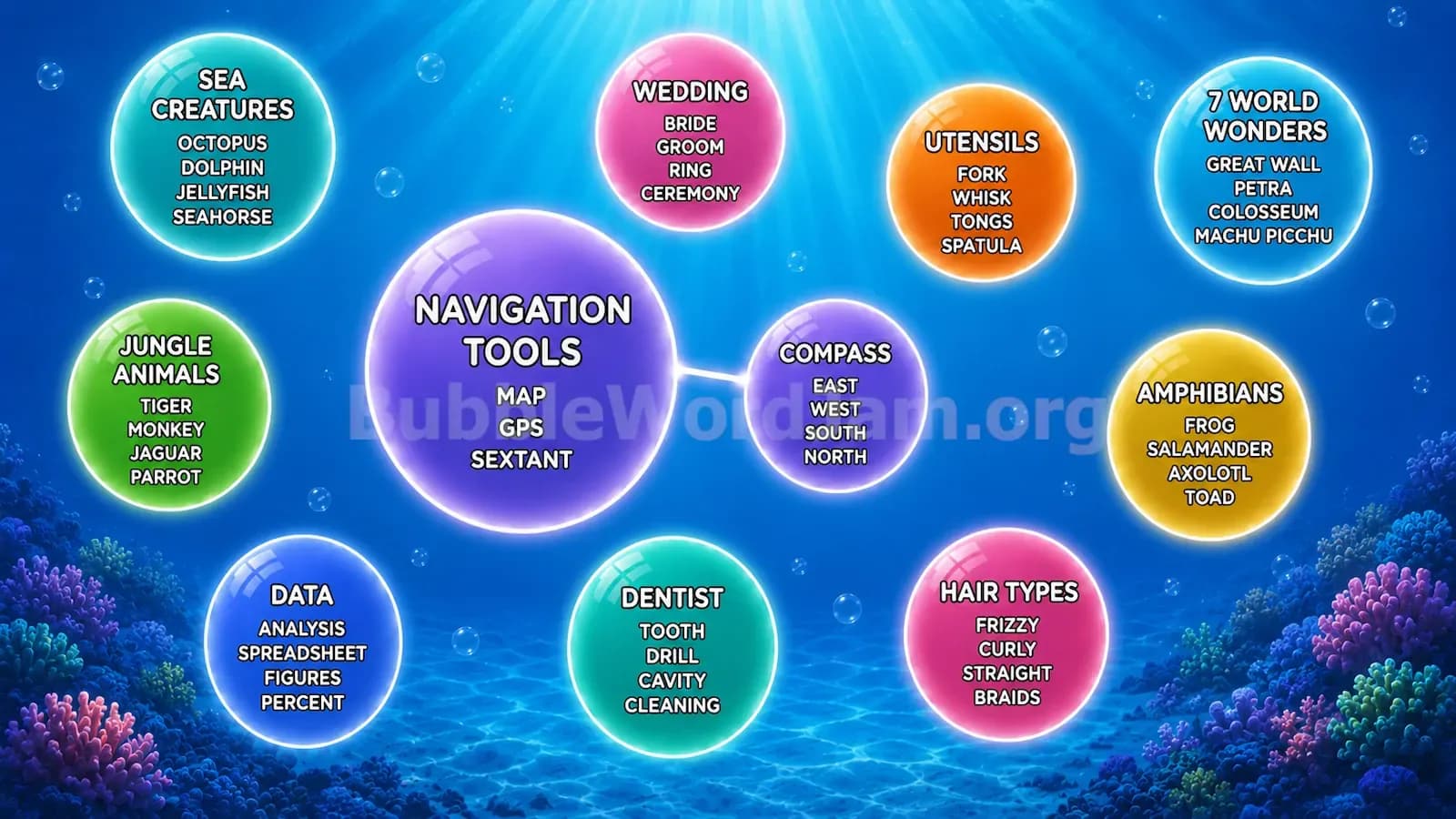
Level 121 gives a straightforward wedding set: bride, groom, ring, ceremony. That group mixes roles, an object, and the event itself, but all four point to the basic idea of a wedding. It’s broad and accessible.
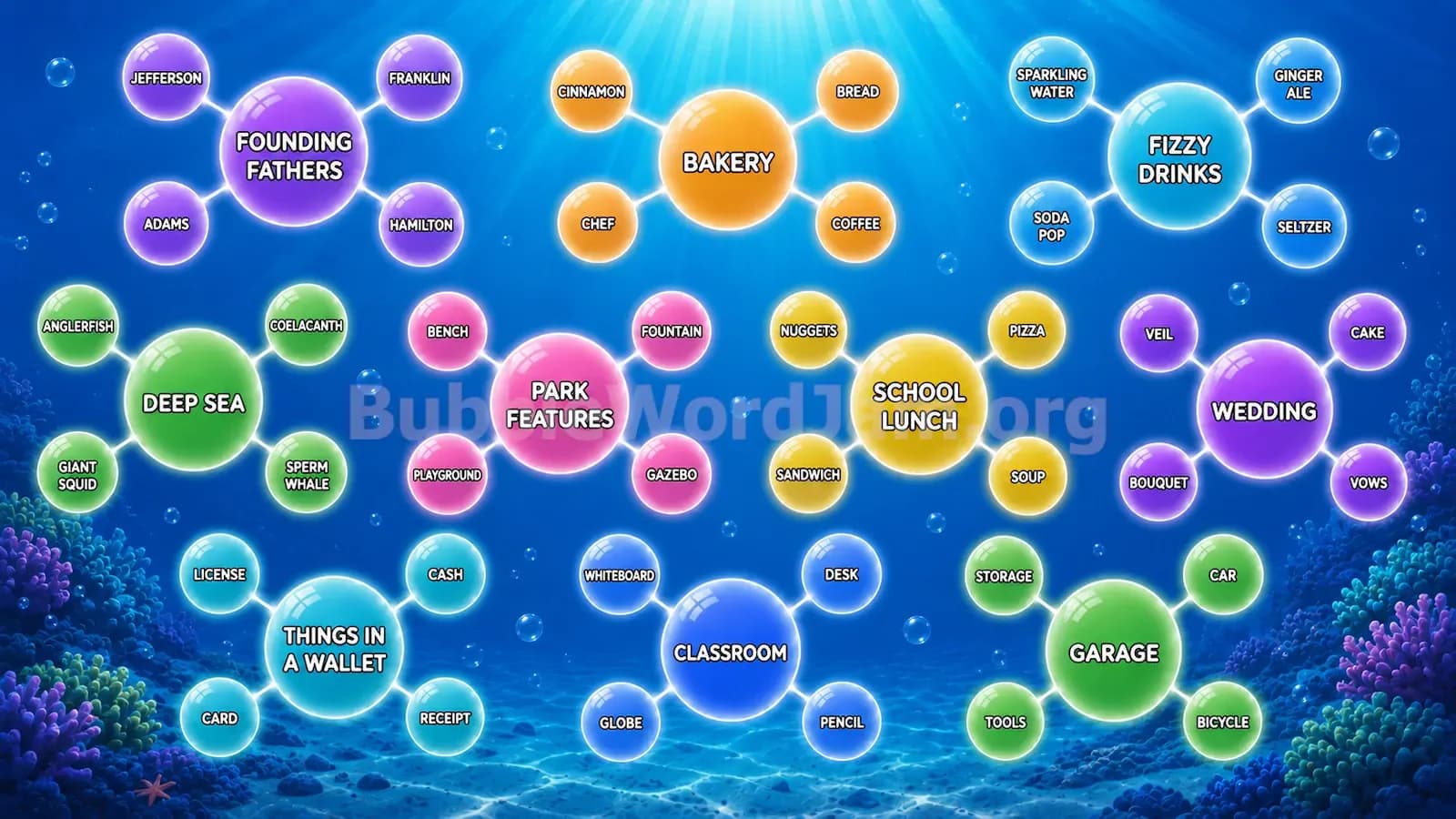
Level 301 narrows the vibe with veil, cake, bouquet, vows. These are wedding elements, but they lean more toward ceremony details and iconic objects. Level 468 gets even more specific with wedding traditions: bouquet, garter, corsage, veil. This is the level where the game expects you to know that not every wedding object is just “wedding.” Some belong to the tradition subcategory.
That’s the crunchy part. Ring, vows, bride, groom, ceremony? Basic wedding. Bouquet, garter, corsage, veil? Wedding traditions. Vow, bouquet, veil, cake in Level 783? Things found at a wedding. Bouquet, ceremony, dance, reception in Level 802? Wedding activities.
The words overlap, but the context changes. The best move is to ask what the list is doing. Is it naming people? Is it naming symbolic items? Is it naming actions? Is it naming the whole event? Bubble Word Jam usually gives you the answer through the tightest shared context.
Birthday and anniversary categories feel easy until the game puts them beside other celebration words. Level 73 is a banger teaching level because it includes celebrations, birthday, and anniversary as separate ideas.
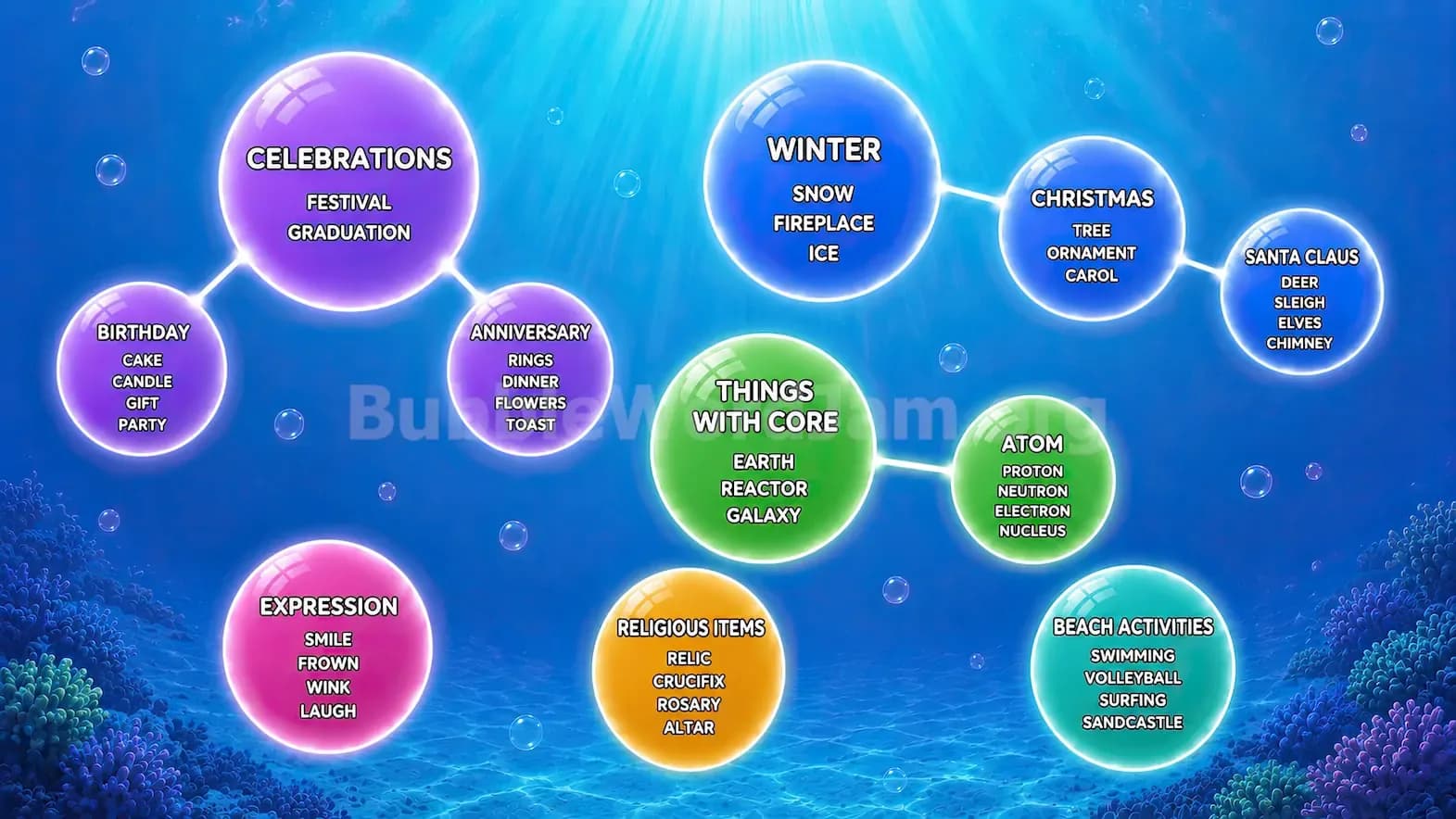
The broad celebration group is birthday, anniversary, festival, graduation. That’s a category of event types. But birthday itself breaks down into cake, candle, gift, party. Anniversary breaks down into rings, dinner, flowers, toast.
See the hierarchy? Birthday and anniversary can be answers inside the larger celebration category, but they can also become categories with their own supporting words. This is the same trick as baby versus life stages.
When you see birthday as a word, pause before merging it. Is birthday one of several events? Or are cake, candle, gift, and party waiting nearby? When you see anniversary, look for romance-coded celebration pieces: rings, dinner, flowers, toast. That little check keeps the whole board from turning floaty.
Here’s the method I use for social-life puzzles:
First, scan for people words. Mother, father, brother, sister, cousin, uncle usually mean family roles.
Next, scan for age words. Baby, kid, teen, adult usually mean life stages unless baby-item clues are nearby.
Then scan for romance context. Couple, dinner, flowers, restaurant often form a date scene. Swipe, match, flirt, and super like point to dating apps.
After that, scan for celebration objects. Cake, candle, gift, party usually scream birthday. Rings, dinner, flowers, toast lean anniversary. Bride, groom, vows, veil, bouquet, garter, and ceremony point toward wedding, but you still need to decide whether the game wants roles, objects, traditions, or activities.
This approach works because Bubble Word Jam is less about raw vocabulary and more about semantic sorting. The words aren’t hard. The categories are the puzzle.
Social-life categories are dangerous because they rely on everyday knowledge. The game knows you’ll recognize every word. That recognition creates confidence, and confidence creates sloppy merges.
Family, baby, wedding, birthday, anniversary, dating, and party clues all live in the same emotional neighborhood. They share flowers, dinners, rings, cake, photos, outfits, and guests. That overlap is the trap.
The way out is context discipline. Don’t merge because two words feel warm, romantic, or celebratory. Merge because they answer the same precise question. Who are these people? What life stage is this? What event is happening? What items belong to that event? What tradition is being named?
That’s the whole loop. When you sort by relationship type and life-event context, these soft categories stop feeling vague. They become one of the most satisfying parts of Bubble Word Jam: familiar, readable, and just tricky enough to make the solve feel earned.