Learn to solve Bubble Word Jam mythology, fantasy, and religion clues by separating folklore, pop culture, zodiac, tarot, and faith items before merging.
Guide By Liam Stone
Updated on June 15, 2026
Liam Stone has been playing Bubble Word Jam since the mobile app first launched on the Apple App Store. He knew this game would pop, so he enjoys playing every level, collecting the answers, and running this site for other players. He loves mobile puzzle games and sometimes publishes his walkthroughs on his YouTube channel Puzzle Game Answer. Follow his channel if you are a puzzle game lover too.
Mythology and fantasy clues in Bubble Word Jam can feel like one giant glowing pile of “magic stuff.” Dragon? Wizard? Thor? Tarot? Zodiac? Crucifix? Your brain wants to mash them together because the vibe matches. I get it. The words all smell like old books, candlelight, prophecies, and boss fights.
But that’s exactly where the game gets crunchy.
Bubble Word Jam doesn’t usually ask, “Is this word magical?” It asks, “Which kind of magical, mythical, fictional, symbolic, or religious category does this word belong to?” That difference matters. If you merge too early, you can tank a clean board by putting a fantasy creature into a mythology group, a religious item into a wizard group, or a pop-culture clue into a folklore set.
The trick is simple: don’t treat every enchanted-looking word as the same category. Split the board into smaller worlds first.
When I see fantasy or faith clues in Bubble Word Jam, I pause before touching anything. That pause saves moves. The game loves category overlap, and myth/fantasy/religion puzzles create some of the nastiest overlap because the same word can carry multiple meanings.
“Thor” might suggest Marvel, Norse myth, thunder gods, or fantasy adventure. “Wand” clearly screams wizard, but “spell” could belong to magic spell, wizard, enchantment, or even fantasy. “Dragon” could sit inside fantasy creatures, mythical beasts, or a dedicated dragon category. That’s the loop: the game gives you familiar words, then asks for precise sorting.
So I use a four-bucket check before merging:
Start with the most human-looking names. Bubble Word Jam often separates fairy tale characters from broader fantasy creatures.
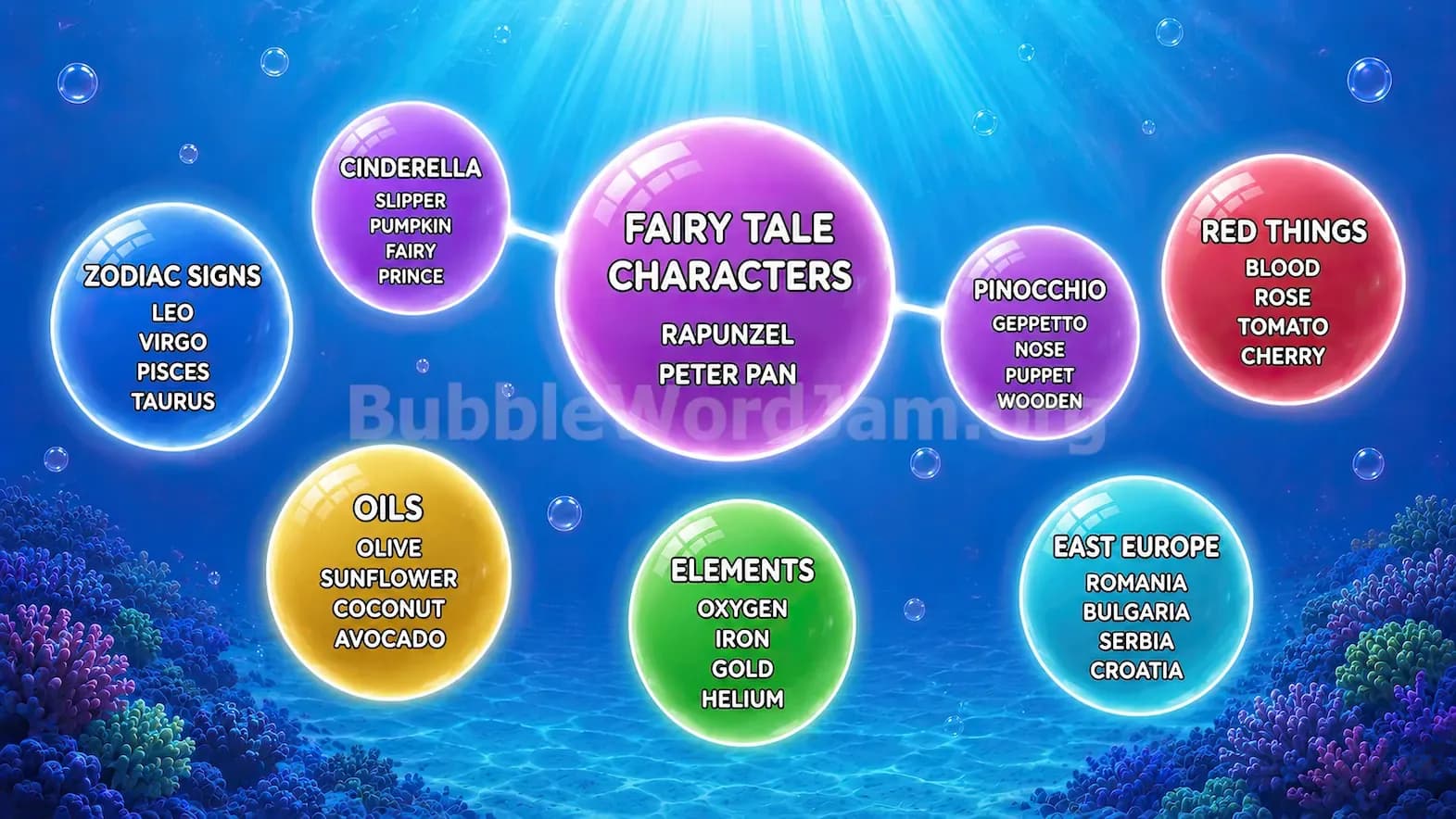
Level 21 is a clean example. You get fairy tale characters like Cinderella, Rapunzel, Peter Pan, and Pinocchio, but the puzzle also drills deeper with Pinocchio-related words such as Geppetto, nose, puppet, and wooden. Then it does the same with Cinderella through slipper, pumpkin, fairy, and prince.
That’s a banger teaching moment. “Fairy” may look magical, but in this setup it belongs to Cinderella, not a general fantasy or wizard category. “Prince” could feel royal, romantic, or fairy-tale-coded, but here it anchors Cinderella.
My rule: if a famous character appears, scan for their personal props, companions, locations, or story beats before merging them into a broad fantasy pile.
Fantasy creature puzzles are fun because they look obvious at first, then turn sneaky.
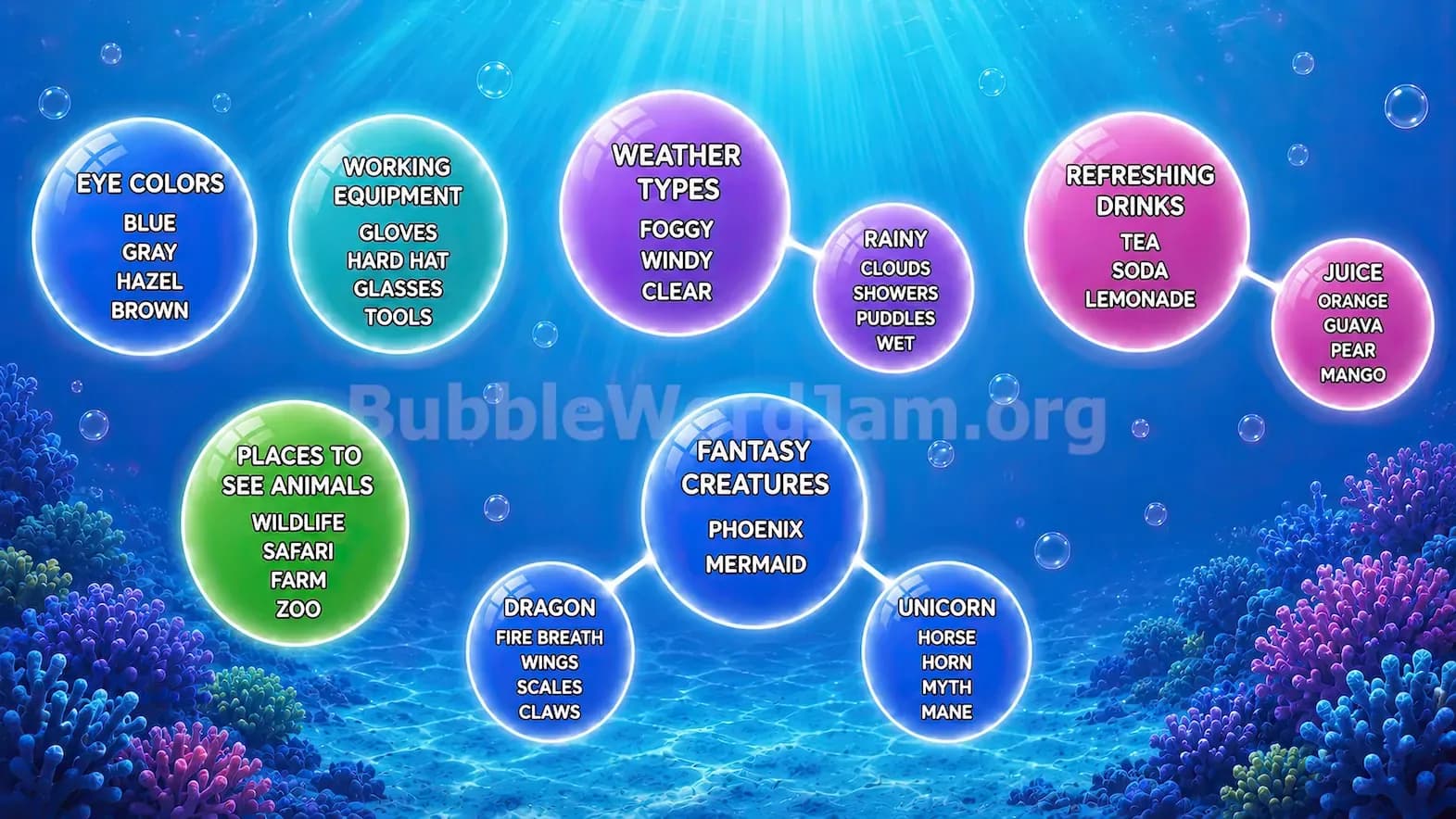
Level 22 gives fantasy creatures such as dragon, phoenix, mermaid, and unicorn. Easy, right? Not quite. The same level also has dragon clues like fire breath, wings, scales, and claws, plus unicorn clues like horse, horn, myth, and mane.
This is where impatient players lose the thread. If you see dragon and scales together, you might merge them too fast. But dragon may belong with other creatures, while scales belongs to the dragon subcategory. Same vibe, different layer.
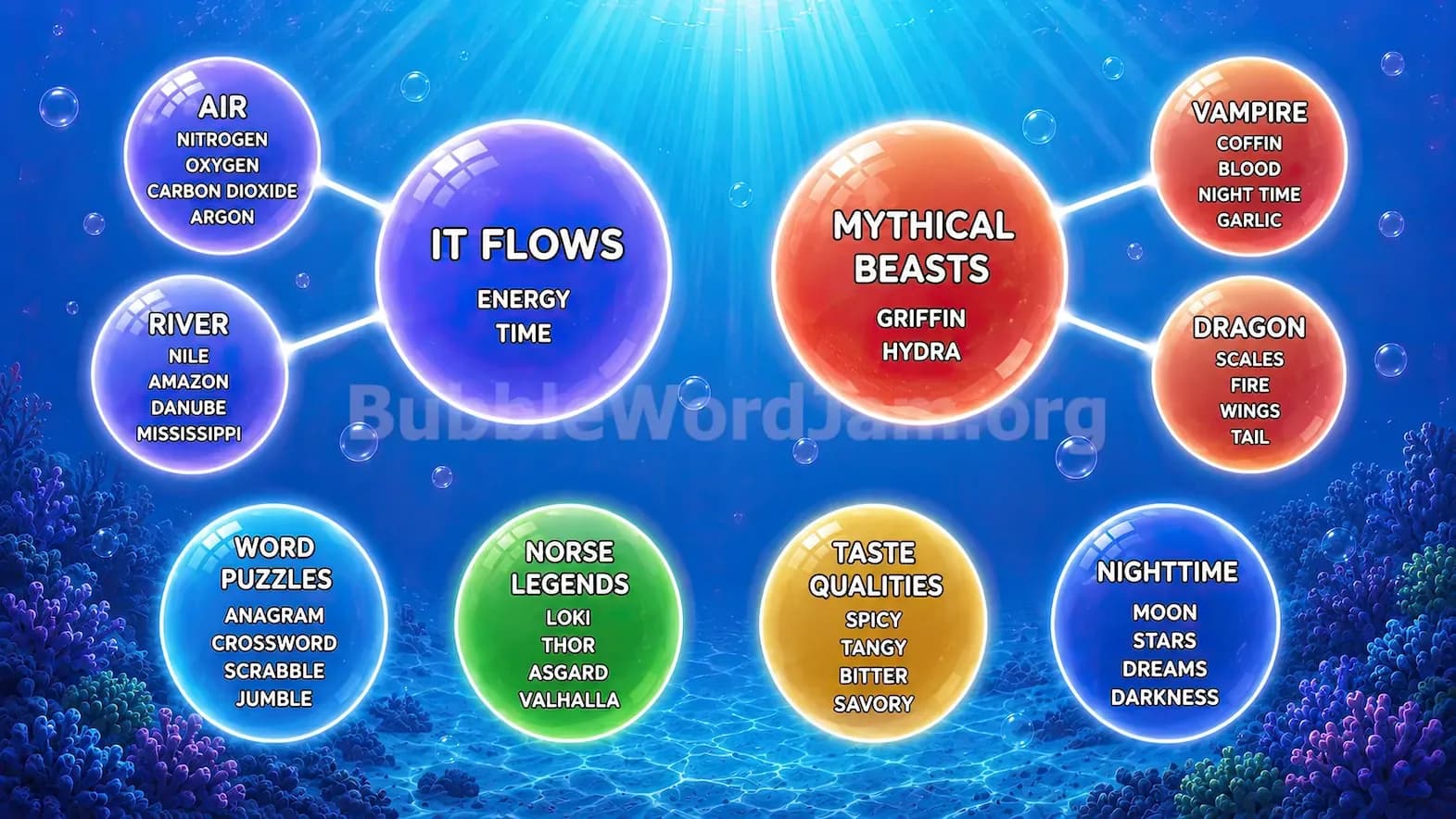
Level 52 pushes the idea further with mythical beasts: griffin, hydra, vampire, and dragon. Then it gives dragon its own supporting clues: scales, fire, wings, and tail. It also includes vampire with coffin, blood, night time, and garlic.
The technique here is hierarchy recognition. Ask: “Is this the creature itself, or a clue about the creature?” Creature names usually group with creature names. Body parts, powers, weaknesses, and accessories usually group under one specific creature.
Mythology clues have a different flavor from fantasy creatures. They often use named gods, legendary places, or cultural myth systems.
Level 52 includes Norse legends with Loki, Thor, Asgard, and Valhalla. That group is not the same as mythical beasts, even though both feel ancient and supernatural. Loki and Thor are named mythological figures. Asgard and Valhalla are mythic places. Griffin and hydra are creatures. The game expects you to respect that line.
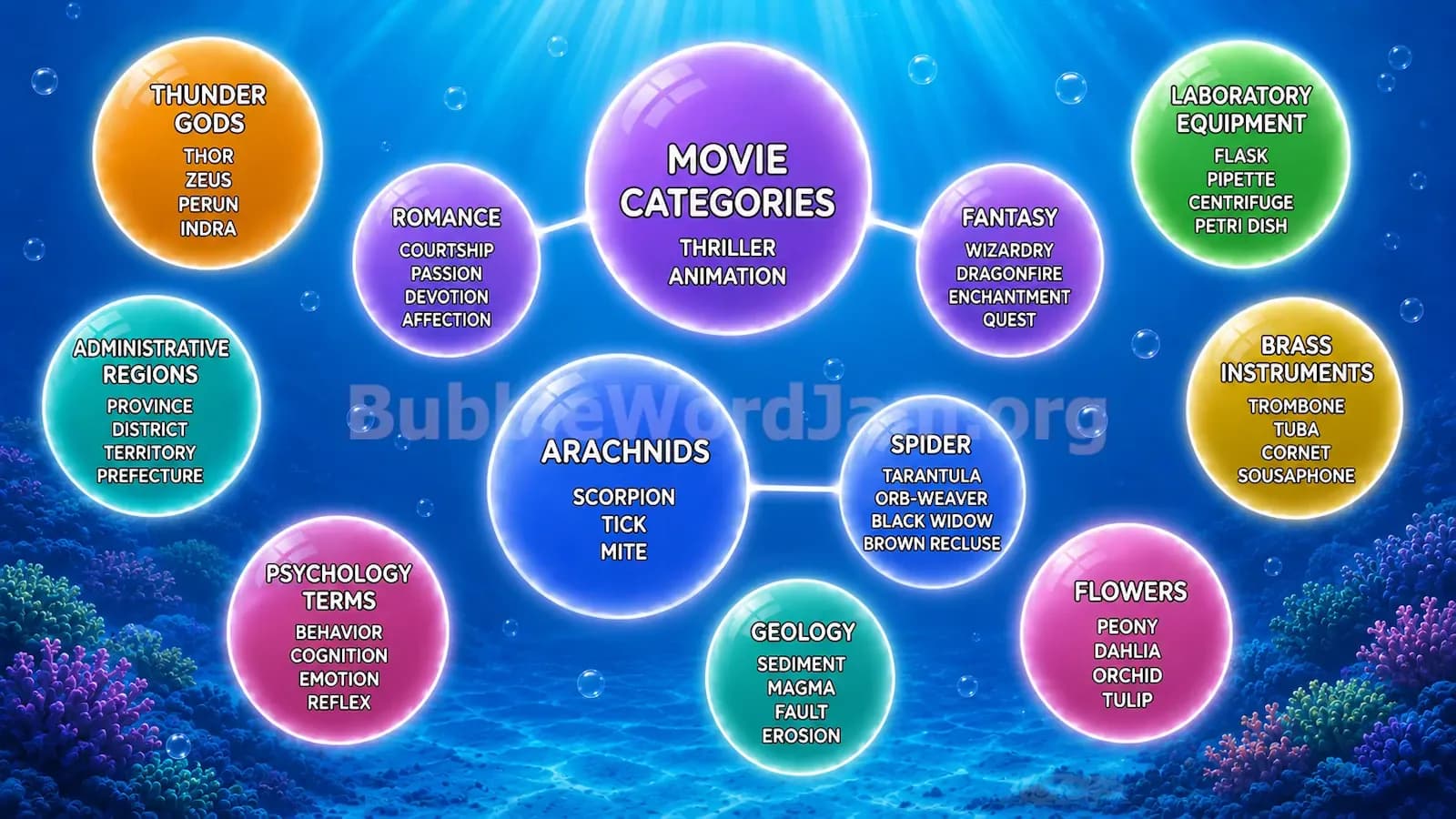
Then Level 256 brings in thunder gods: Thor, Zeus, Perun, and Indra. This is one of my favorite categories because it punishes shallow recognition. Thor and Zeus are famous, sure, but Perun and Indra confirm the real category. The answer isn’t “famous gods.” It’s specifically thunder gods.
Level 470 repeats that thunder-god idea with Indra, Perun, Thor, and Zeus, while also surrounding it with constellation names, horoscope signs, tarot card categories, and pharaoh imagery. That level is a full-on mythic traffic jam. You need to separate divine figures from astrology, tarot, and ancient Egypt.
My quick test: if the words are names from different cultures but share a power or divine role, look for a god-category label rather than a single mythology franchise.
Bubble Word Jam also loves modern fantasy franchises. These clues are not “mythology” in the old-school sense. They’re fandom categories, and mixing them with folklore is a classic mistake.
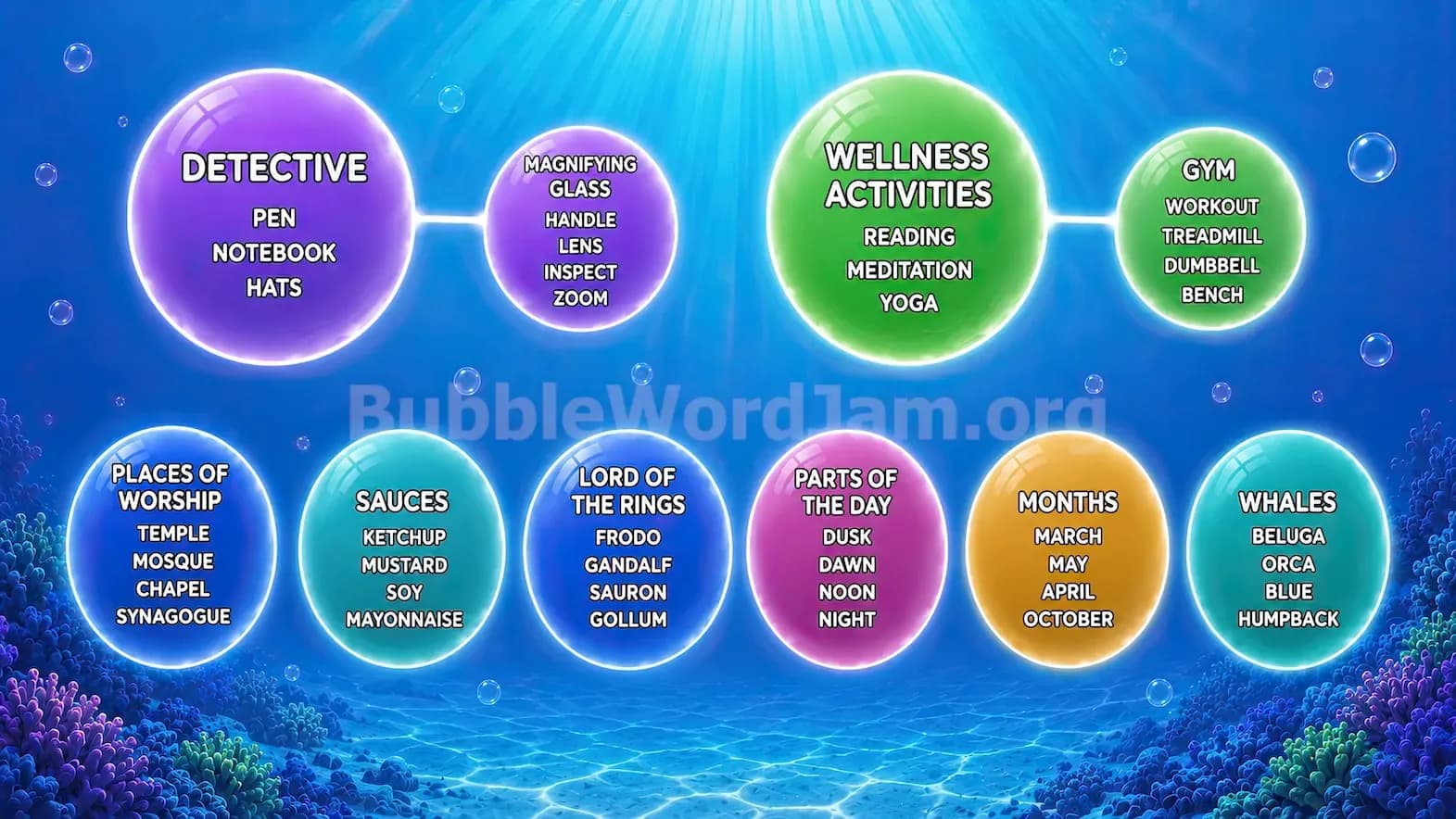
Level 53 uses Lord of the Rings with Frodo, Gandalf, Sauron, and Gollum. The same level also includes places of worship: temple, mosque, chapel, and synagogue. That pairing is clever because Gandalf and temples both carry a grand, old-world vibe, but the categories have nothing to do with each other.
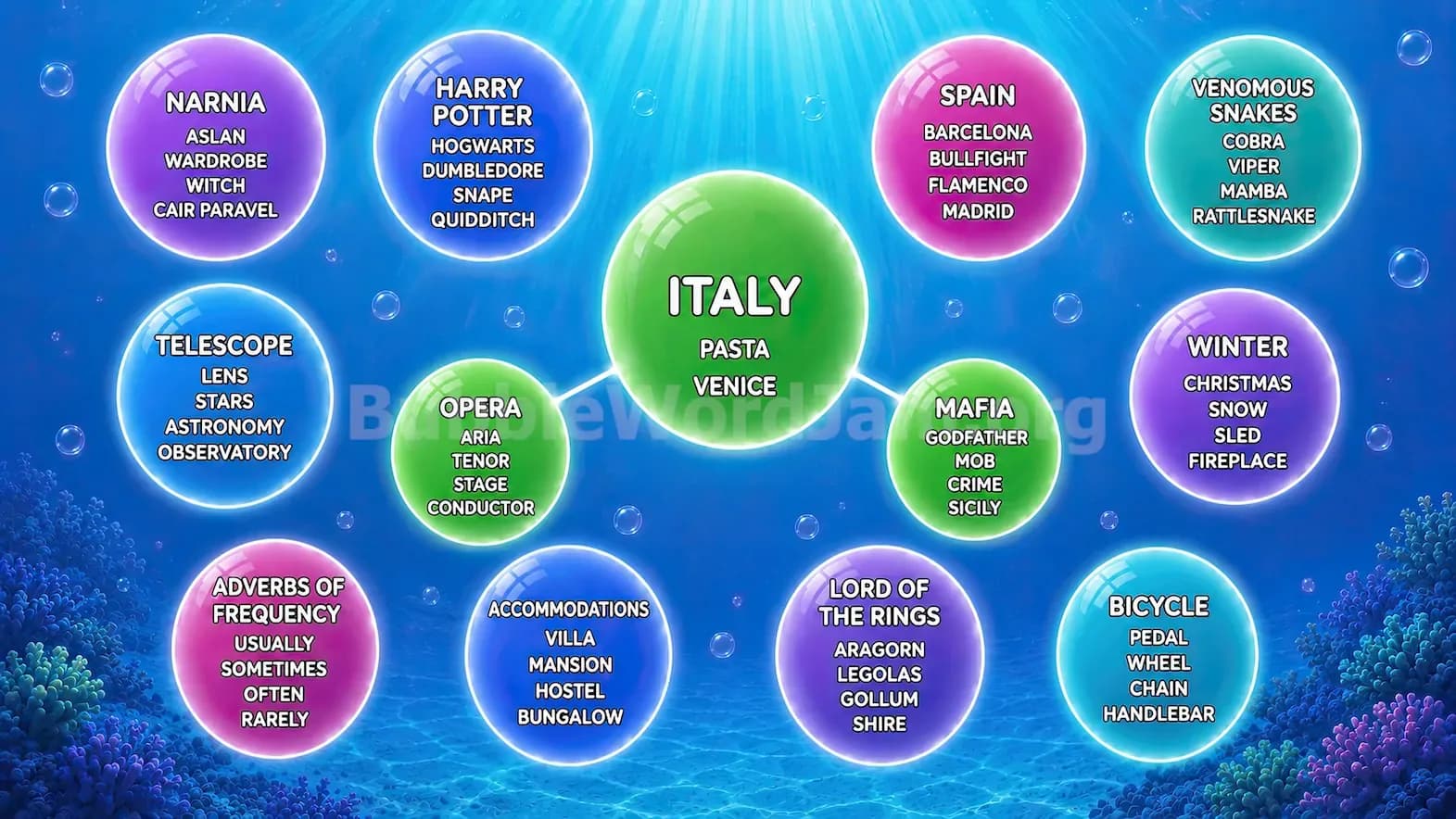
Level 65 stacks several pop-culture fantasy worlds: Narnia with Aslan, wardrobe, witch, and Cair Paravel; Harry Potter with Hogwarts, Dumbledore, Snape, and Quidditch; and Lord of the Rings with Aragorn, Legolas, Gollum, and Shire.
This is where name recognition becomes your best booster. If you spot Hogwarts, you’re not solving “magic.” You’re solving Harry Potter. If you spot Aslan and wardrobe, you’re in Narnia. If you spot Shire, Aragorn, or Legolas, you’re in Lord of the Rings.
Pop-culture fantasy groups usually cluster around proper nouns. Names, places, schools, sports, villains, and iconic objects matter more than the general magical vibe.
Religion-themed clues in Bubble Word Jam often use buildings, objects, clothing, or ceremonial items. Don’t merge them with wizard words just because they feel old or sacred.
Level 53 gives places of worship: temple, mosque, chapel, and synagogue. Those words are architectural and religious. They are not fantasy locations, even if “temple” could appear in an adventure game.
Level 605 gives religious items: altar, cassock, crosier, and crucifix. That same level also includes wizard with enchanter, spell, conjurer, and hex. This is the perfect example of why you should not merge all mystical-looking words early. Crucifix and hex both feel supernatural, but one belongs to religious objects and the other belongs to wizard magic.
The reliable clue is function. Religious categories often involve worship, ritual, clergy, symbols, or sacred spaces. Wizard categories involve spells, magical roles, enchantment, potions, robes, wands, and hexes.
Astrology and divination clues deserve their own mental shelf.
Level 21 includes zodiac signs: Leo, Virgo, Pisces, and Taurus. Level 605 uses zodiac signs again with Aquarius, Cancer, Leo, and Virgo. These are direct sign-name groups, so they’re usually easy once you spot two of them.
Level 470 complicates the board by adding horoscope with Aries, Cancer, Gemini, and Pisces, plus tarot card categories: wands, cups, swords, and pentacles. That’s a nasty but fair distinction. Horoscope signs are zodiac-based. Tarot suits are card-structure based. Both feel mystical, but they solve differently.
My rule: if the words are Aries, Leo, Virgo, Pisces, Gemini, Cancer, Taurus, or Aquarius, think zodiac or horoscope. If the words are wands, cups, swords, and pentacles, think tarot. Don’t let the shared fortune-telling vibe bait you into a bad merge.
When a Bubble Word Jam board has myth, fantasy, or faith clues, I scan in this order:
First, I pull out obvious franchise names. Hogwarts, Dumbledore, Frodo, Aslan, Shire, and Quidditch are too specific to ignore.
Next, I separate named gods from monsters. Thor, Zeus, Indra, Loki, and Perun need a mythology check. Dragon, hydra, griffin, vampire, unicorn, and mermaid need a creature check.
Then I look for subcategory clues. Fire, wings, scales, tail, horn, mane, coffin, garlic, and blood usually describe one creature rather than joining a general creature list.
After that, I isolate religious objects and places. Temple, mosque, chapel, synagogue, altar, cassock, crosier, and crucifix belong in faith-based categories, not wizard categories.
Finally, I sort divination words. Zodiac and horoscope signs go one way; tarot suits go another.
That order keeps the board clean. More importantly, it keeps your moves from bleeding away on floaty “close enough” guesses.
Level 21 is great for fairy tale characters, zodiac signs, and nested story clues like Pinocchio and Cinderella.
Level 22 teaches fantasy creatures while also showing how dragon and unicorn can become their own smaller clue clusters.
Level 52 is a strong mythology-and-monster lesson with mythical beasts, Norse legends, vampire, and dragon.
Level 53 mixes places of worship with Lord of the Rings, making it a solid test for separating religion from pop-culture fantasy.
Level 58 focuses on wizard and magic spell categories, using charm, curse, hex, enchant, wand, robe, and potion.
Level 65 is a fantasy franchise gauntlet, with Narnia, Harry Potter, and Lord of the Rings all showing up in one packed board.
Level 256 highlights thunder gods and fantasy, forcing you to distinguish divine mythology from general fantasy language.
Level 470 is the advanced exam: thunder gods, horoscope, tarot card categories, constellation names, and pharaoh clues all compete for attention.
Level 605 is another sharp one, putting religious items, wizard words, zodiac signs, constellations, and multiheaded creatures near each other.
Mythology, fantasy, and religion clues are some of the most satisfying Bubble Word Jam categories because they reward clean thinking. The board may look like one big magical soup, but the answers usually follow tight logic: character, creature, creature part, god, franchise, religious object, worship place, zodiac, horoscope, or tarot.
That’s the whole trick. Don’t solve by vibe alone. Solve by category role.
Once you stop merging everything that feels magical, these puzzles become way less chaotic. You’ll see the hidden structure faster, save moves, and get that crisp “aha” moment without burning a hint. And honestly? That’s the real magic loop in Bubble Word Jam.