Master Bubble Word Jam fashion and beauty puzzles by separating clothing, grooming items, fabrics, accessories, and style clues before moves run out fast.
Guide By Liam Stone
Updated on July 18, 2026
Liam Stone has been playing Bubble Word Jam since the mobile app first launched on the Apple App Store. He knew this game would pop, so he enjoys playing every level, collecting the answers, and running this site for other players. He loves mobile puzzle games and sometimes publishes his walkthroughs on his YouTube channel Puzzle Game Answer. Follow his channel if you are a puzzle game lover too.
Fashion and beauty categories in Bubble Word Jam look easy at first. A hat is clothing. Lipstick is makeup. Silk is fabric. No problem, right?
Then the game starts throwing in “heels,” “perfume,” “hairstyle,” “denim,” “bracelet,” “formal,” and “casual” on the same board, and suddenly that clean little puzzle turns into a wardrobe explosion. I’ve had plenty of moments where I merged too quickly, only to realize the word I treated as clothing actually belonged to a dress-code group, a beauty-service group, or a fabric category. That’s the trap. These puzzles aren’t just asking, “Is this fashionable?” They’re asking, “What kind of fashion clue is this?”
The winning technique is simple but crunchy: sort every word into one of three lanes first. Is it worn on the body? Is it used for grooming or appearance? Or is it a material/style clue? Once you start playing with that split in mind, fashion and beauty levels become much less floaty.
The most reliable first move is to look for words that sit directly on the body. In early fashion-style puzzles, you’ll see clean examples like hat, shirt, pants, and shoes. These are pure clothing terms. They don’t need much interpretation, and that makes them great anchor words.
Bubble Word Jam loves using anchor categories because they help you stabilize the board. When you find “clothes,” think of wearable everyday items first. Hat, shirt, pants, and shoes belong together because they answer the same question: “What do I put on before leaving the house?”
But don’t let the game bait you into merging every wearable-looking word into clothing. Heels, for example, may appear as part of a “formal” outfit rather than a general shoe category. Sneakers may belong to “casual.” A belt might look like clothing, but the game often treats it as an accessory. That distinction matters.
A good rule: if the item completes an outfit but isn’t the main garment, pause before merging it into clothing. That tiny pause can save your whole run.
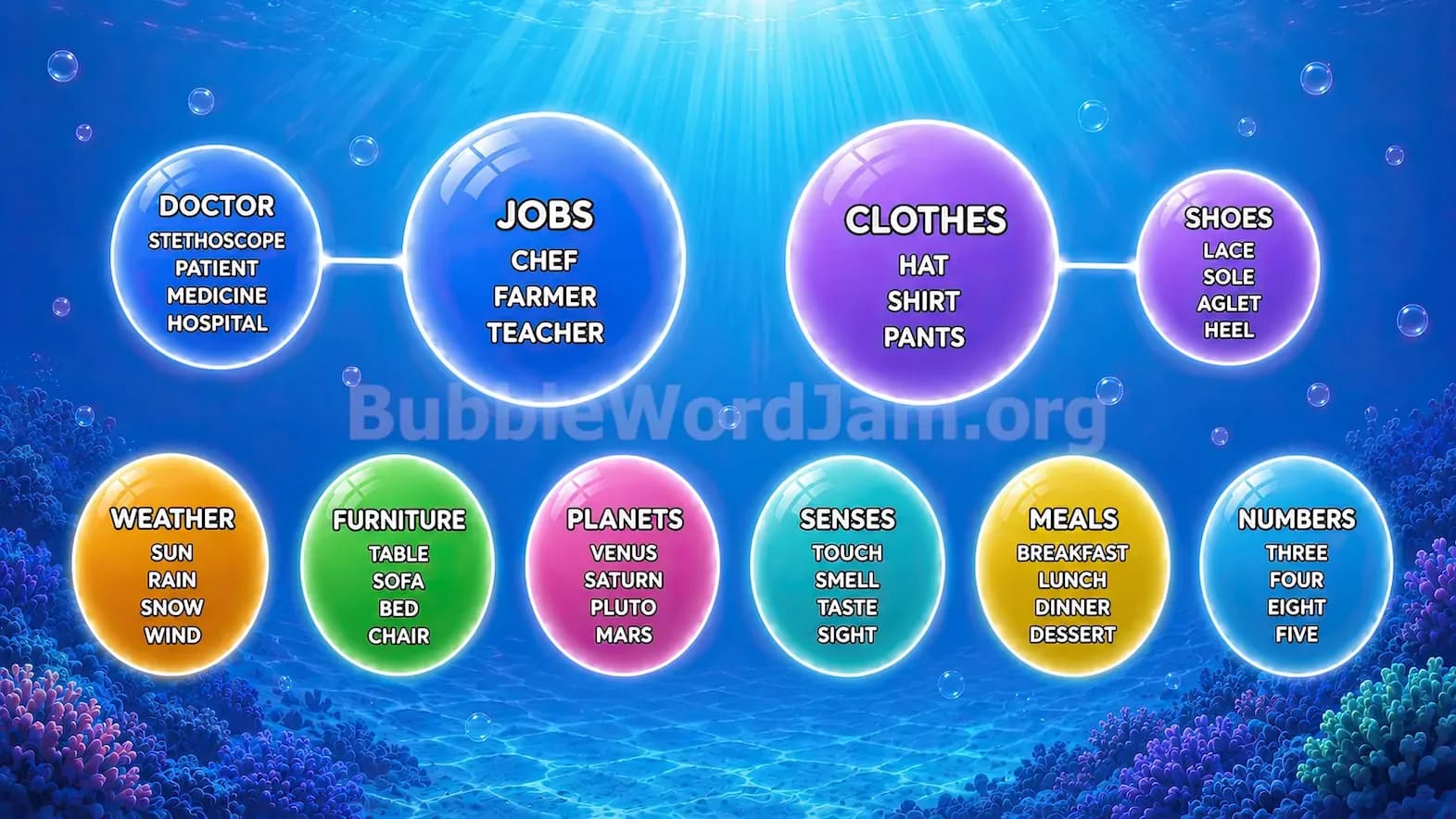
Level 4-style puzzles introduce a smart twist: “clothes” and “shoes” can appear as separate ideas. Clothing might include hat, shirt, pants, and shoes, while shoe-related clues can include lace, sole, aglet, and heel.
That’s a classic Bubble Word Jam move: one category uses the object, and another uses the parts of that object. I love this kind of design because it tests whether you’re thinking at the right zoom level. Are you sorting the whole thing, or the pieces that make it work?
When you spot shoe-part words, group them by function. Lace ties the shoe. Sole touches the ground. Aglet sits at the end of the lace. Heel supports the back or bottom. These aren’t outfit choices; they’re anatomy clues.
The same logic applies later when denim appears alongside button, fade, pocket, and rivet. Denim can be a fabric, but button, pocket, and rivet are construction details. The puzzle is asking you to recognize the difference between “what it is made of” and “what parts it has.”
Fabric categories are some of the sneakiest fashion puzzles because the words feel stylish even when they aren’t clothing. Silk, velvet, satin, denim, cotton, and linen all carry a strong fashion vibe, but they belong to the material lane.
This is where “worn on body vs. material” becomes a banger technique. A dress is worn. Silk is what the dress might be made from. Jeans are worn. Denim is the fabric. A blouse is clothing. Linen is material. Once you make that mental cut, a lot of messy boards snap into place.
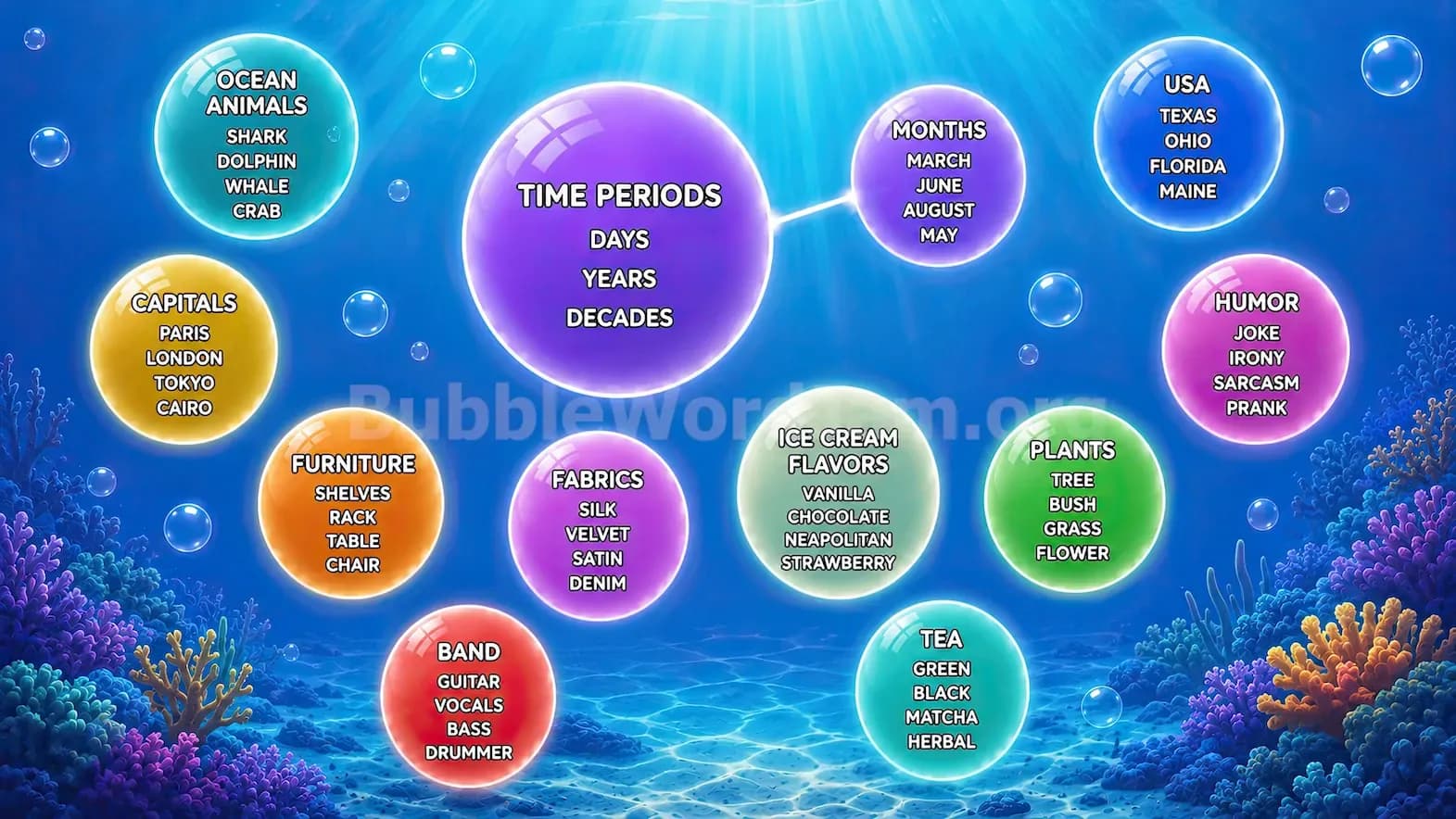
Level 12-style fabric groups use words like silk, velvet, satin, and denim. Later, Level 788-style groups expand the idea with cotton, denim, linen, and silk. Denim is especially tricky because players often think of jeans first. But when the category says fabric types, denim is not the outfit; it’s the textile.
I’d handle fabric words early because they’re usually clean matches. They rarely cross over into beauty care or dress code. If you can clear them before the board gets crowded, you create space and protect your move count.
Beauty puzzles usually split into two layers: general care categories and specific makeup items. Level 15-style groups make this clear with “beauty care” words like skincare, haircare, makeup, and nail care. These aren’t products in the narrow sense. They’re routines or service areas.
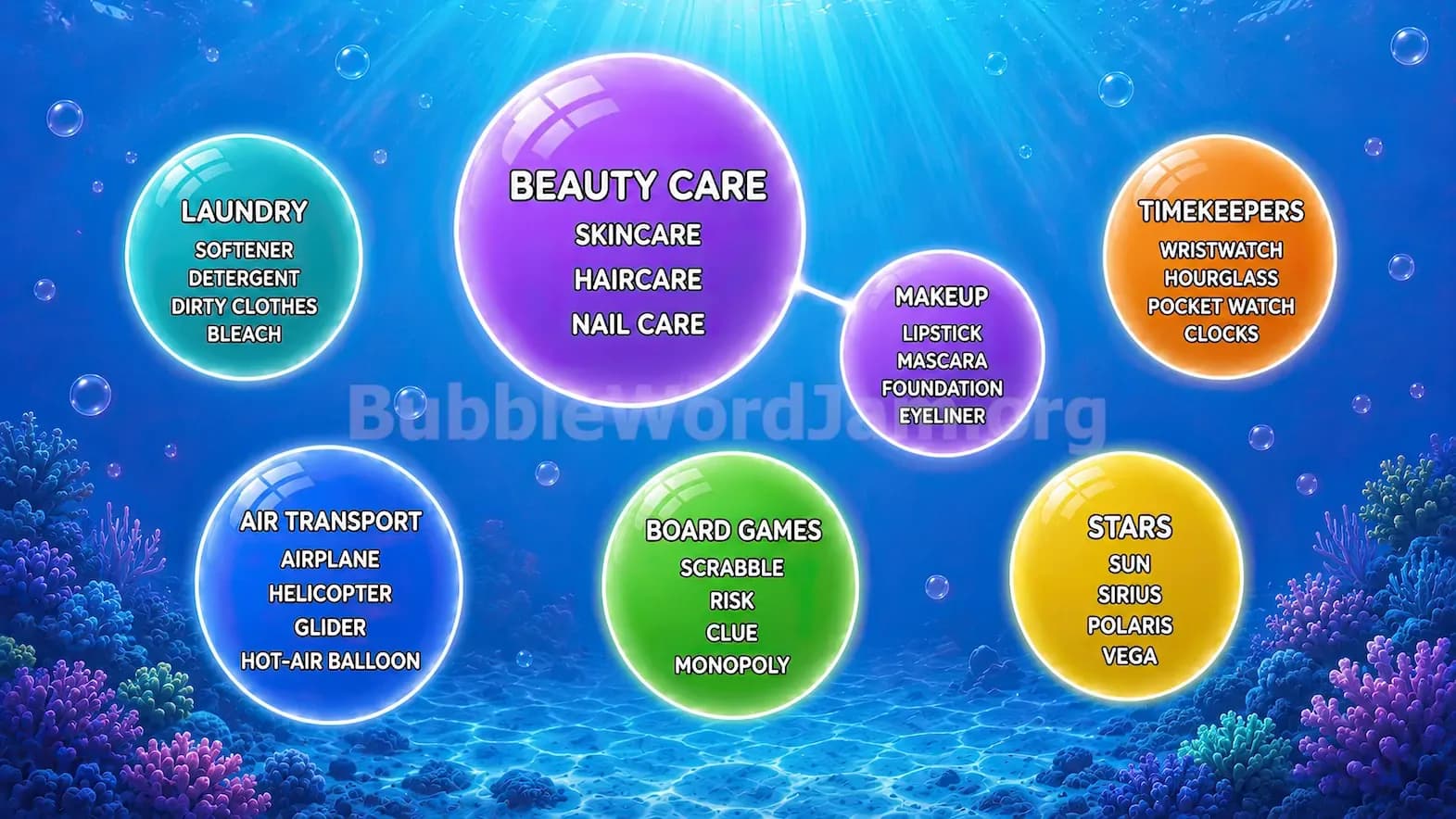
Then the game narrows the lens with makeup words like lipstick, mascara, foundation, and eyeliner. This is the grooming version of the “whole object vs. part” trick. Beauty care is the broad category. Makeup is one branch inside it. Lipstick and mascara are specific items inside makeup.
When I’m solving these, I ask: “Is this an area of grooming, or is it a product?” Skincare and haircare are areas. Lipstick and blush are products. Manicure and waxing are services. Hairstyle can be a result or a service depending on the surrounding words.
That last part is important. Bubble Word Jam doesn’t care how a word feels in isolation. It cares what team the word belongs to on this board.
Makeup is one of the most consistent beauty categories. Lipstick, mascara, foundation, eyeliner, and blush are high-confidence matches. If three of those appear together, you can usually trust the merge.
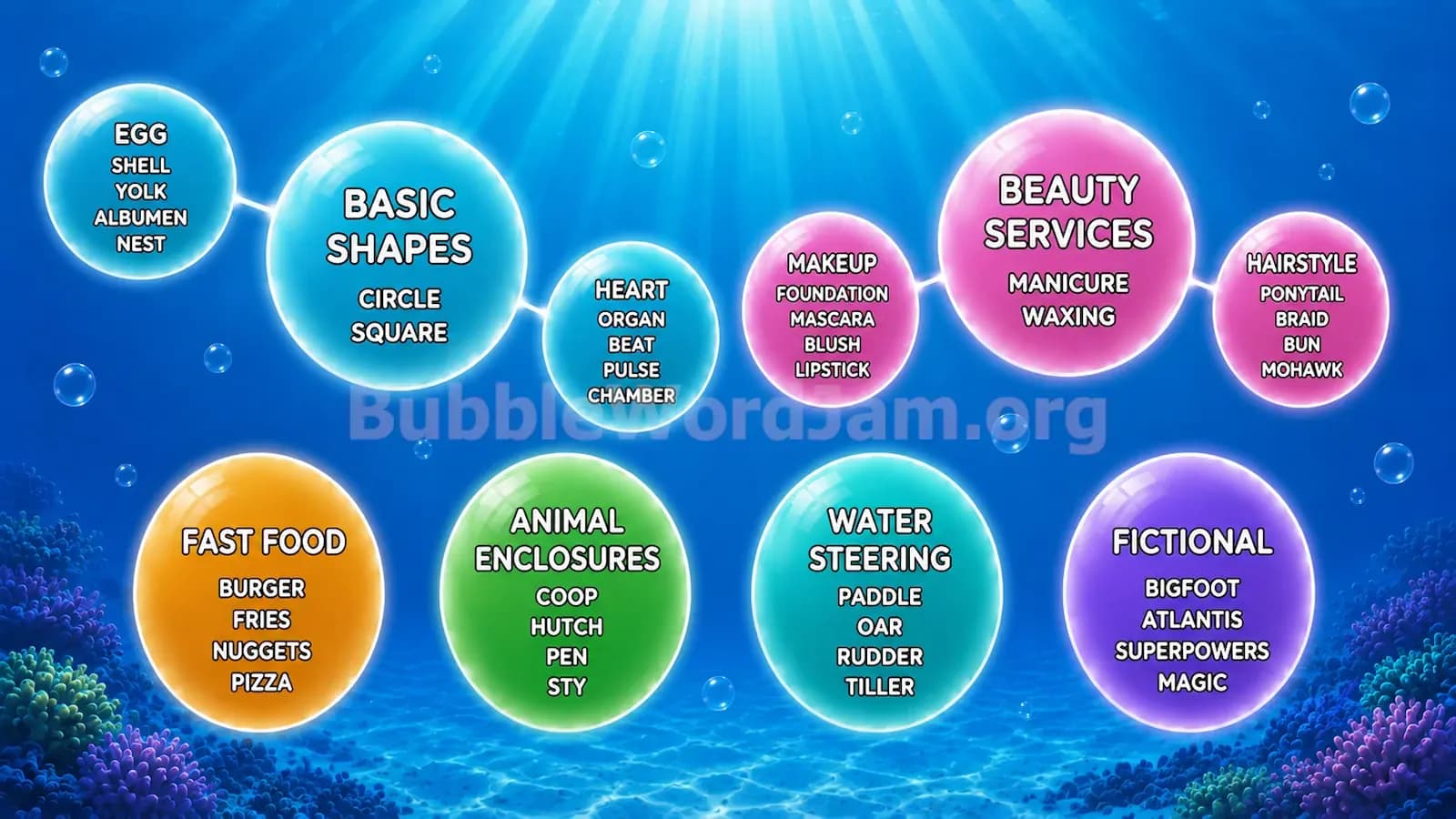
Level 15 and Level 136-style puzzles both lean on makeup as a compact category. Foundation, mascara, blush, and lipstick are all direct cosmetic products. They don’t describe a service. They don’t describe a hairstyle. They don’t describe a dress code. They are items used on the face.
This is one of those categories where overthinking can hurt you. If you see four face-cosmetic words, take the win. Save your deeper analysis for categories like fashion, accessories, or date night look, where the boundaries get messier.
Hairstyle words are a classic trap because they often sit close to beauty services. Braid, ponytail, bun, curls, bob, and mohawk all point to hair, but they don’t always belong with “haircare.” Haircare is maintenance. Hairstyle is the shape or arrangement.
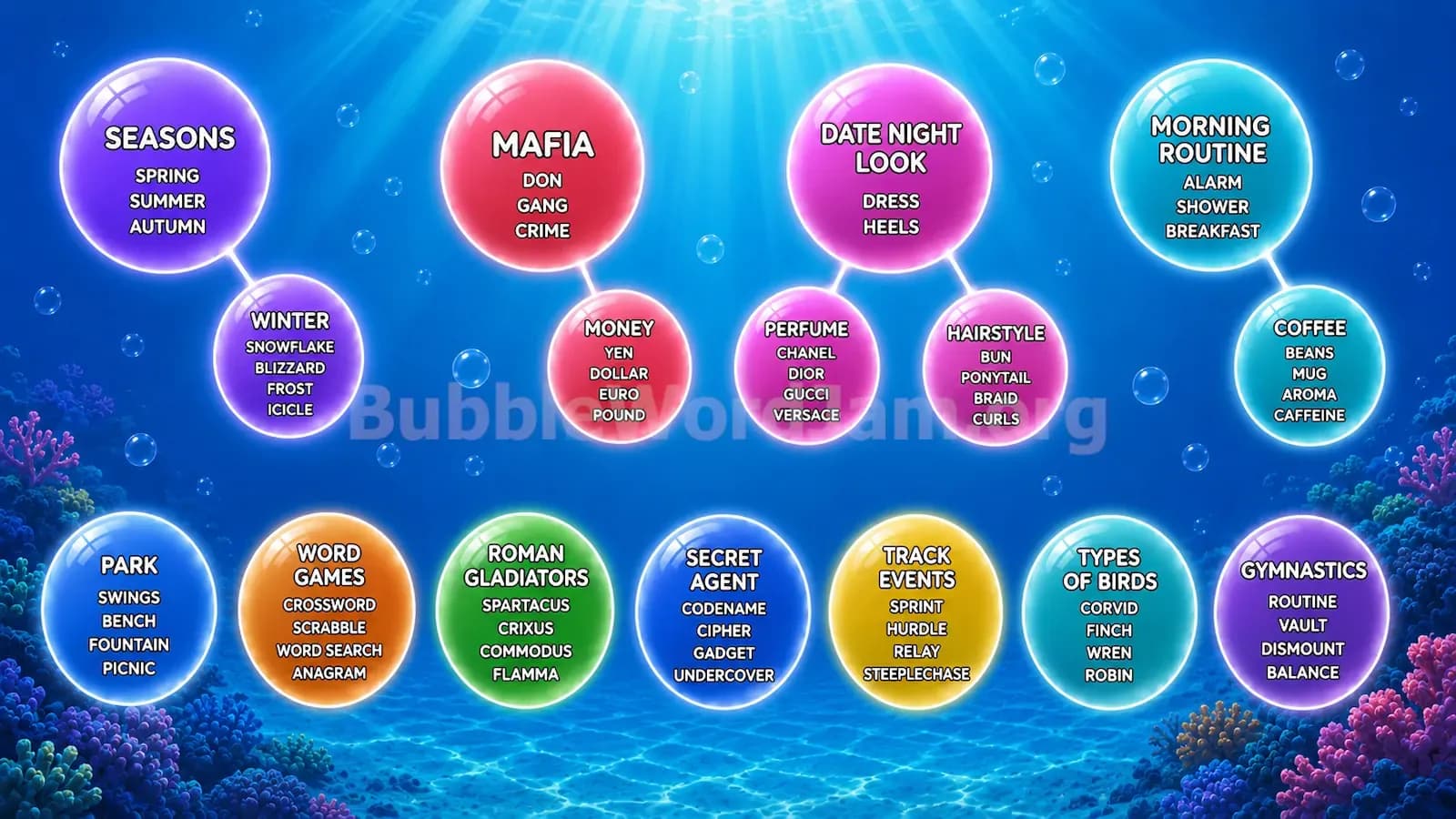
Level 125-style puzzles use hairstyle words like bun, ponytail, braid, and curls. Level 136-style puzzles may use ponytail, braid, bun, and mohawk. Level 223-style puzzles may use braid, ponytail, bun, and bob. The repeated pattern is useful: if you see multiple named hair arrangements, they probably form a hairstyle group.
The key is not to merge “hairstyle” too early with beauty services. In a beauty services group, hairstyle might sit alongside makeup, manicure, and waxing. In a hairstyle group, the answers are actual hair looks. That difference is small, but it’s the kind of small difference that makes or tanks a Bubble Word Jam run.
Accessories are the game’s favorite middle lane between clothing and style. Watch, belt, necklace, bracelet, scarf, sunglasses, jewelry, ring, and earring can all appear in fashion-themed puzzles. They are worn, but they’re not usually treated as core clothing.
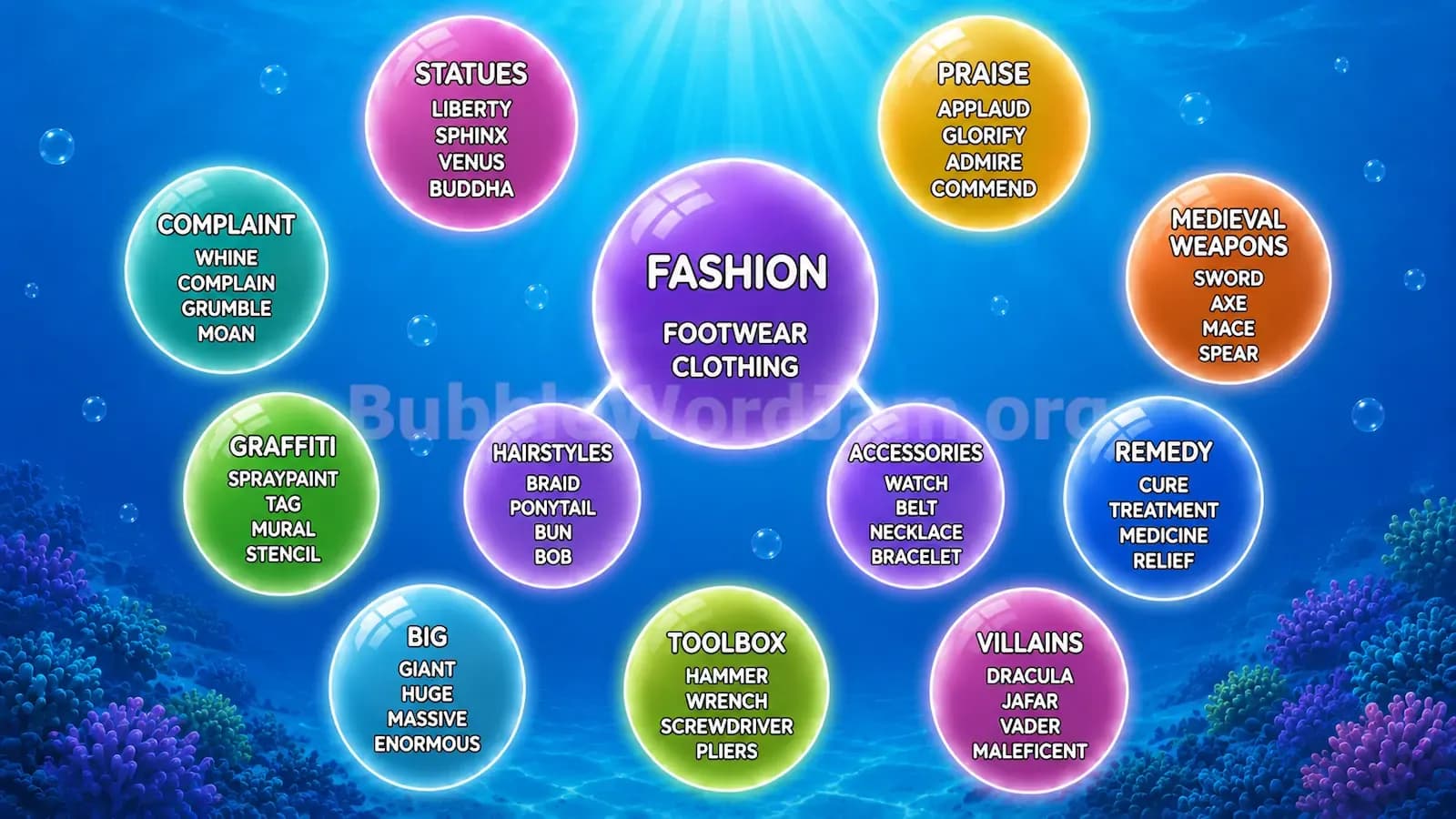
Level 223-style fashion puzzles split the big idea into hairstyles, accessories, footwear, and clothing. That’s basically the whole fashion taxonomy in one board. The game is telling you that “fashion” is the umbrella, while the real categories sit underneath it.
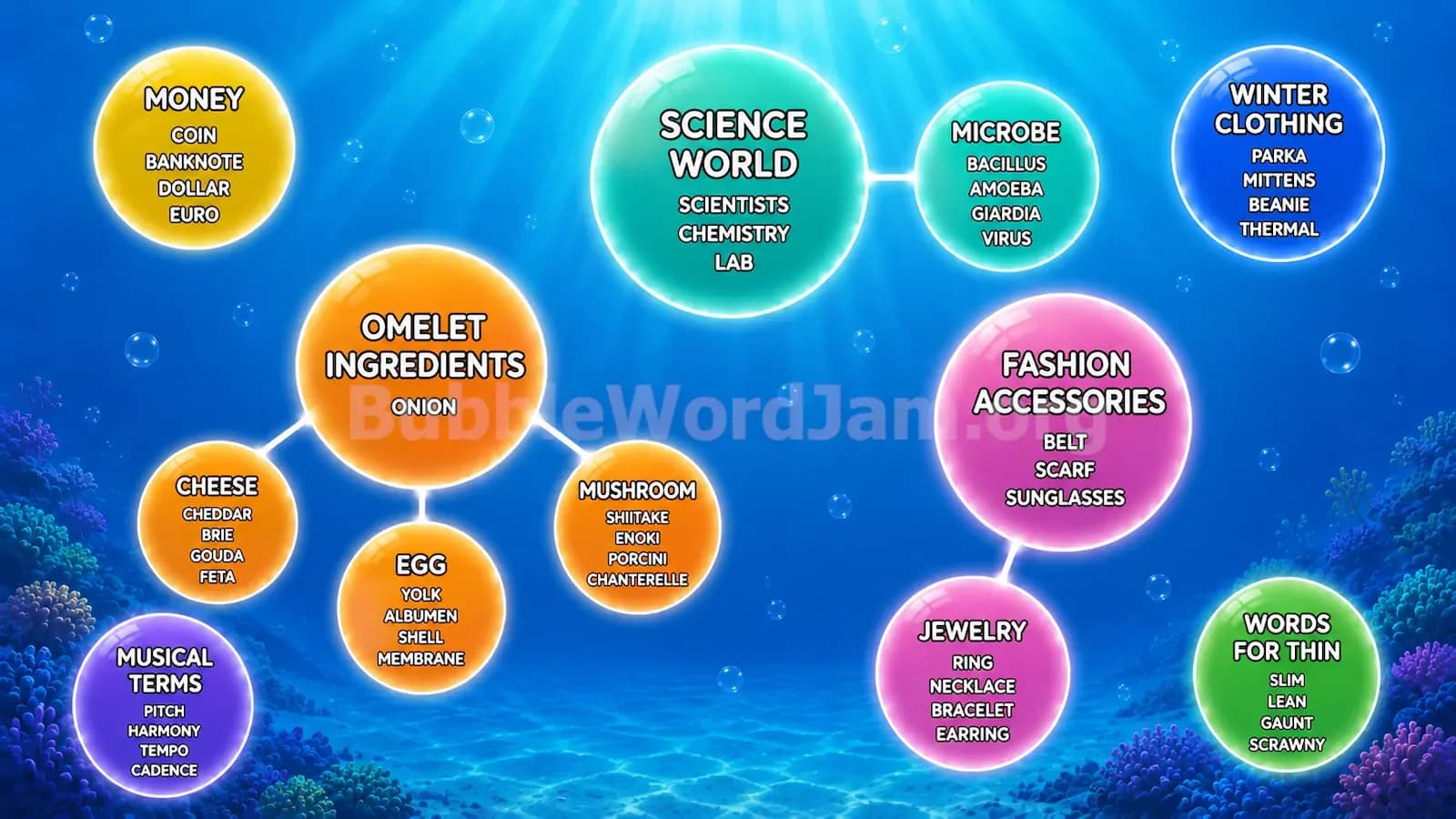
Level 278-style puzzles push accessories further with belt, jewelry, scarf, and sunglasses, then narrow jewelry into ring, necklace, bracelet, and earring. Again, Bubble Word Jam asks you to zoom correctly. Jewelry is a category. Ring is an item inside it. Accessories is broader than jewelry.
My rule: if the word decorates, supports, or finishes an outfit, treat it as an accessory unless the board gives you a more specific jewelry group.
Dress code categories are where fashion puzzles get genuinely clever. Level 39-style groups may separate casual, formal, business, and uniform as dress codes, while also giving you casual outfit words like jeans, t-shirt, sneakers, and hoodie, plus formal outfit words like tuxedo, gown, tie, and heels.
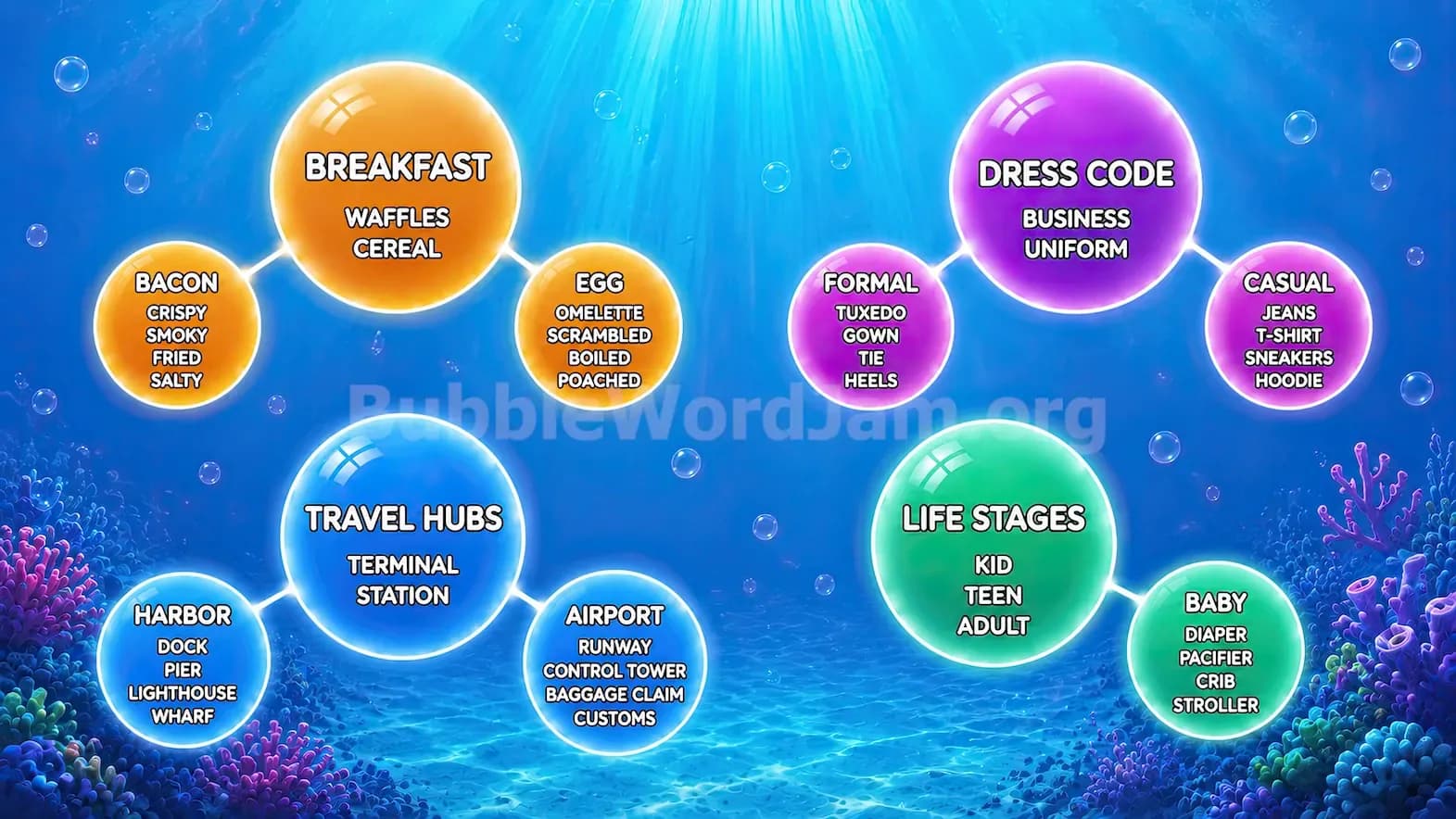
This is a great example of context sorting. “Formal” is not the same type of word as “tuxedo.” Formal is the style rule. Tuxedo is an item that fits the rule. Casual is the vibe. Hoodie is the wearable clue.
When you see both style labels and clothing items, don’t merge across type. Put the labels together first: formal, casual, business, uniform. Then build the item sets: tuxedo, gown, tie, heels for formal; jeans, t-shirt, sneakers, hoodie for casual.
It feels obvious after the fact, but under move pressure, it’s easy to panic-merge “formal” with “tuxedo.” That’s the trap.
Level 125-style “date night look” categories are fun because they combine fashion, beauty, scent, and hair into one polished outfit idea. Dress, heels, perfume, and hairstyle belong together not because they are the same object type, but because they serve the same occasion.
This is the advanced fashion pattern: occasion-based grouping. The words don’t match by physical form. They match by purpose. Dress and heels are worn. Perfume is a grooming/scent item. Hairstyle is appearance styling. Together, they create a look.
When a board has an occasion clue, ask what someone would prepare for that occasion. Date night, formal event, winter outfit, morning routine, and business look can all pull words from multiple lanes. These are not pure object categories; they’re lifestyle categories.
Denim deserves special attention because it appears in multiple ways. It can show up as a fabric type beside cotton, linen, and silk. It can also anchor a denim-specific group with button, fade, pocket, and rivet.
This is why Bubble Word Jam’s fashion categories are more than vocabulary checks. They’re relationship checks. Denim can be the material, while pocket and rivet are design details. Fade describes the worn look of denim. Button is a garment component. Together, those clues point toward denim as a concept rather than fabric alone.
When one word seems too flexible, look at the surrounding terms. If denim appears with silk and cotton, it’s fabric. If it appears with rivet and pocket, it’s jeanswear construction. The board always gives you the tell.
Here’s the clean loop I use for clothing and beauty boards:
First, grab pure materials: silk, satin, velvet, denim, cotton, linen. These are usually safe. Next, identify obvious makeup products: lipstick, mascara, foundation, eyeliner, blush. Then separate hair looks from hair services. Braid and bun are styles; haircare is a routine; hairstyle can be a service or a result.
After that, sort wearable items by role. Core clothing includes shirt, pants, dress, hoodie, and parka. Footwear includes shoes, sneakers, heels, and sometimes shoe parts. Accessories include belt, scarf, sunglasses, watch, necklace, bracelet, ring, and earring.
Finally, handle context categories such as casual, formal, business, uniform, date night look, and winter clothing. These often mix several item types, so they’re best solved after the obvious object groups are out of the way.
The best way to beat Bubble Word Jam fashion and beauty puzzles is to stop treating every stylish word as the same kind of clue. A stylist thinks in layers: garment, accessory, fabric, grooming, occasion, and finish. That’s exactly how these levels work.
Clothing answers what you wear. Beauty answers how you groom or style yourself. Fabric answers what something is made from. Accessories answer what completes the look. Dress code answers why the outfit looks the way it does.
Once you play with those lanes in mind, fashion categories stop feeling like a messy closet. They become a clean sorting loop: body, grooming, material, accessory, context. And when that final merge lands? That’s the Bubble Word Jam “aha” moment at its best.