Learn how dessert, bakery, candy, breakfast, birthday, carnival, wedding, and movie snack clues overlap in Bubble Word Jam, with key level examples inside.
Guide By Liam Stone
Updated on May 29, 2026
Liam Stone has been playing Bubble Word Jam since the mobile app first launched on the Apple App Store. He knew this game would pop, so he enjoys playing every level, collecting the answers, and running this site for other players. He loves mobile puzzle games and sometimes publishes his walkthroughs on his YouTube channel Puzzle Game Answer. Follow his channel if you are a puzzle game lover too.
Dessert clues in Bubble Word Jam look friendly at first. Cupcake? Easy. Candy? Obvious. Ice cream? Slam dunk. Then the game starts doing that classic word-puzzle thing where the obvious answer becomes a trap. Cake might belong to “birthday party,” not “dessert.” Candy might be a Halloween clue, a movie snack, or its own category. A donut might look like bakery food, but in the right level it’s really a round object. That’s the crunchy part of Bubble Word Jam: the game isn’t just asking what a word is. It’s asking what role that word plays inside this specific board.
When I see cupcake, pie, cake, candy, or ice cream in Bubble Word Jam, my first instinct is to throw everything into one sugar pile. That instinct feels good, but it can tank a level. The better move is to ask: is the game describing food type, event, place, or menu structure?
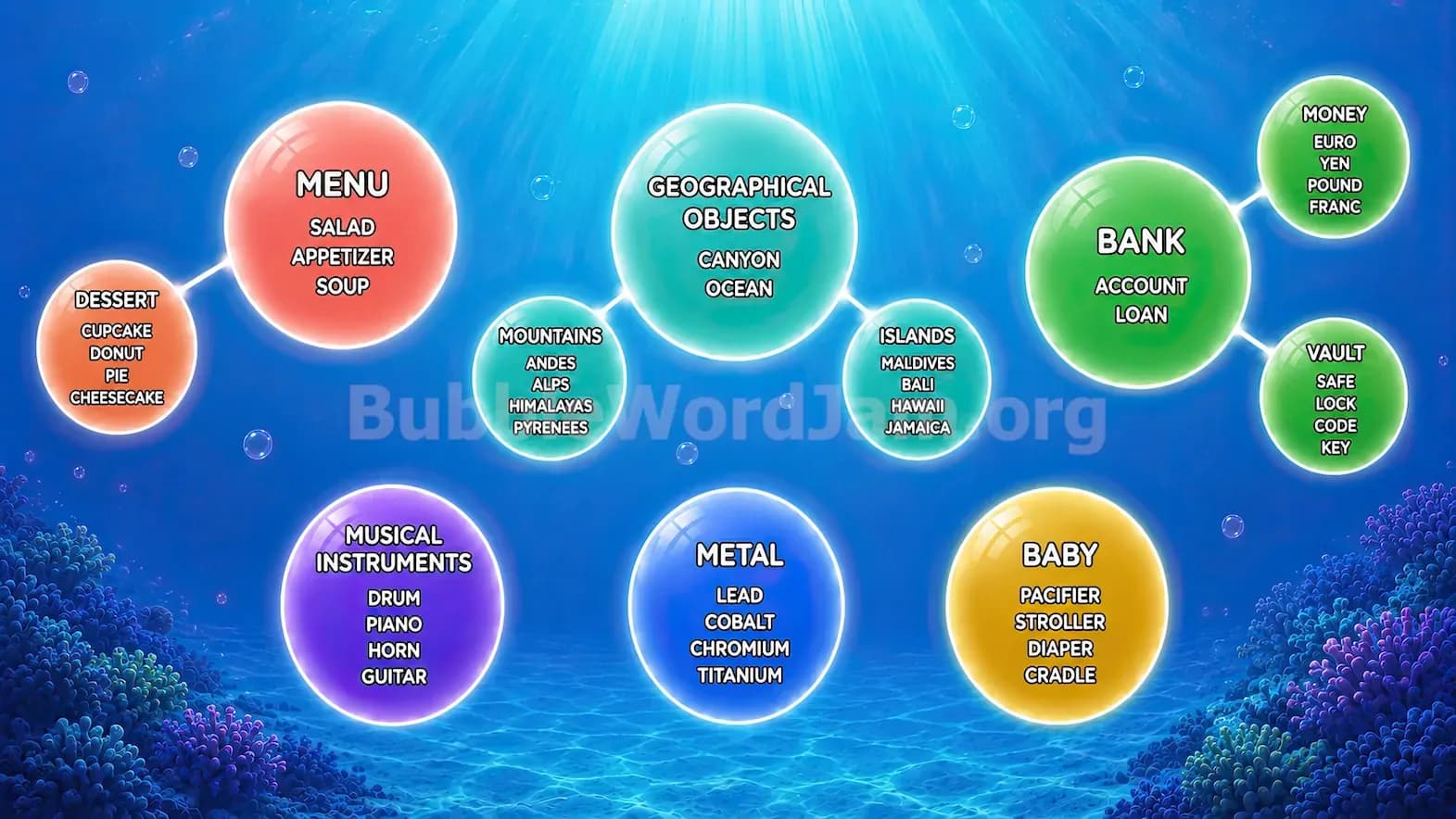
Level 18 is the clean opening example. It has a direct “dessert” category with cupcake, donut, pie, and cheesecake. But the same board also has “menu,” where dessert sits beside salad, appetizer, and soup. That means “dessert” can be both a category label and a word inside another category. Bubble Word Jam loves this trick: one answer can describe a group in one part of the board and become a member of a broader group somewhere else.
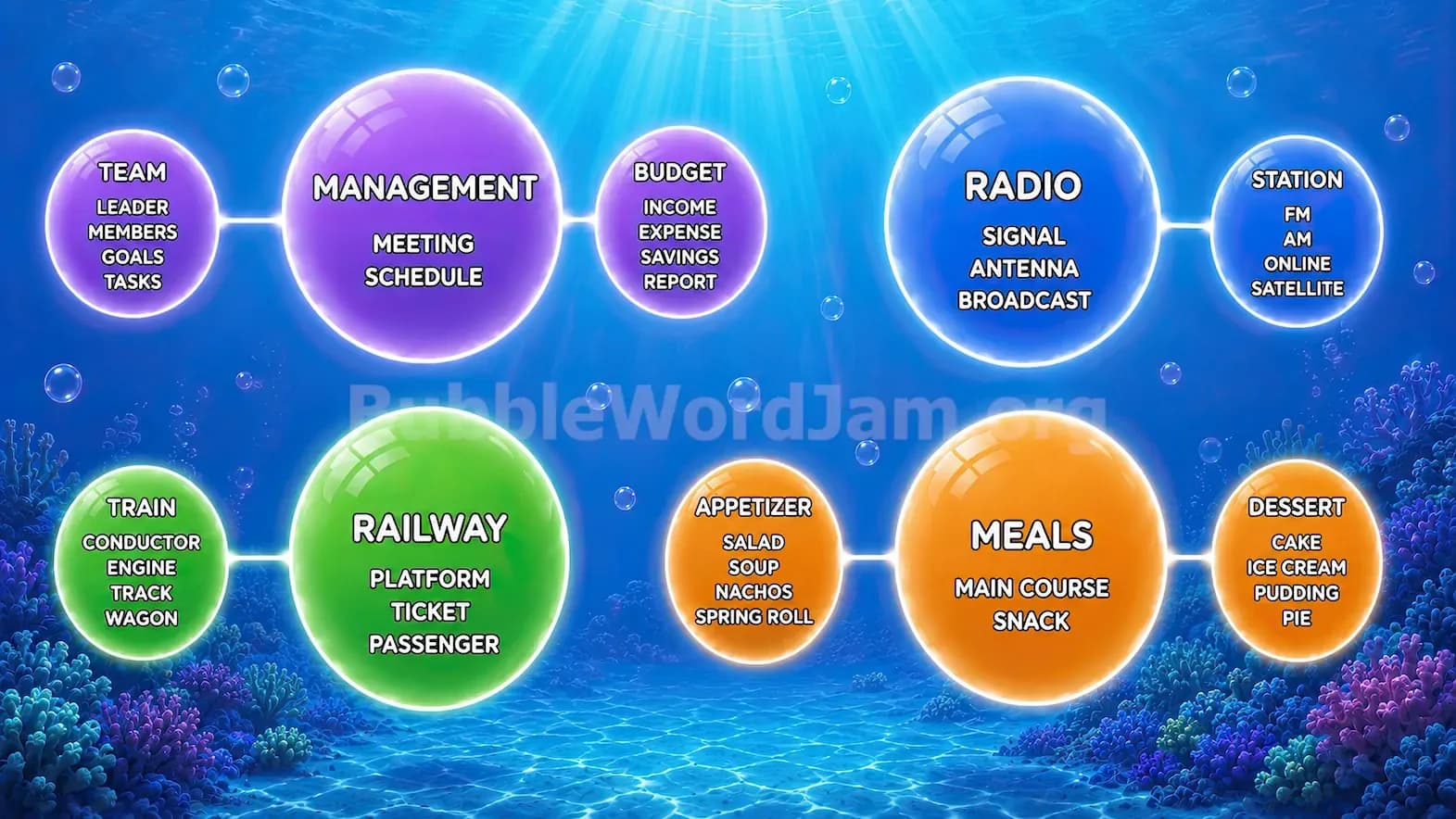
Level 62 sharpens that idea. It separates “dessert” as cake, ice cream, pudding, and pie from “meals,” which includes appetizer, main course, dessert, and snack. The technique here is to build two mental shelves. One shelf is “things you eat.” The other shelf is “parts of a meal.” Cake and pudding go on the food shelf. Dessert as a word goes on the meal-structure shelf.
Candy is one of the most dangerous sweet clues in Bubble Word Jam because it travels. It can be a category, an event clue, or a snack clue. Level 95 shows the first major version of this pattern. The level includes “halloween” with costume, pumpkin, candy, and ghost, while “candy” itself contains Snickers, Skittles, M&Ms, and Twix. That’s a banger teaching level because it forces you to separate the item from the brand family. Candy belongs to Halloween when the category is about the holiday vibe. Snickers and Twix belong to candy when the category is about specific sweets.
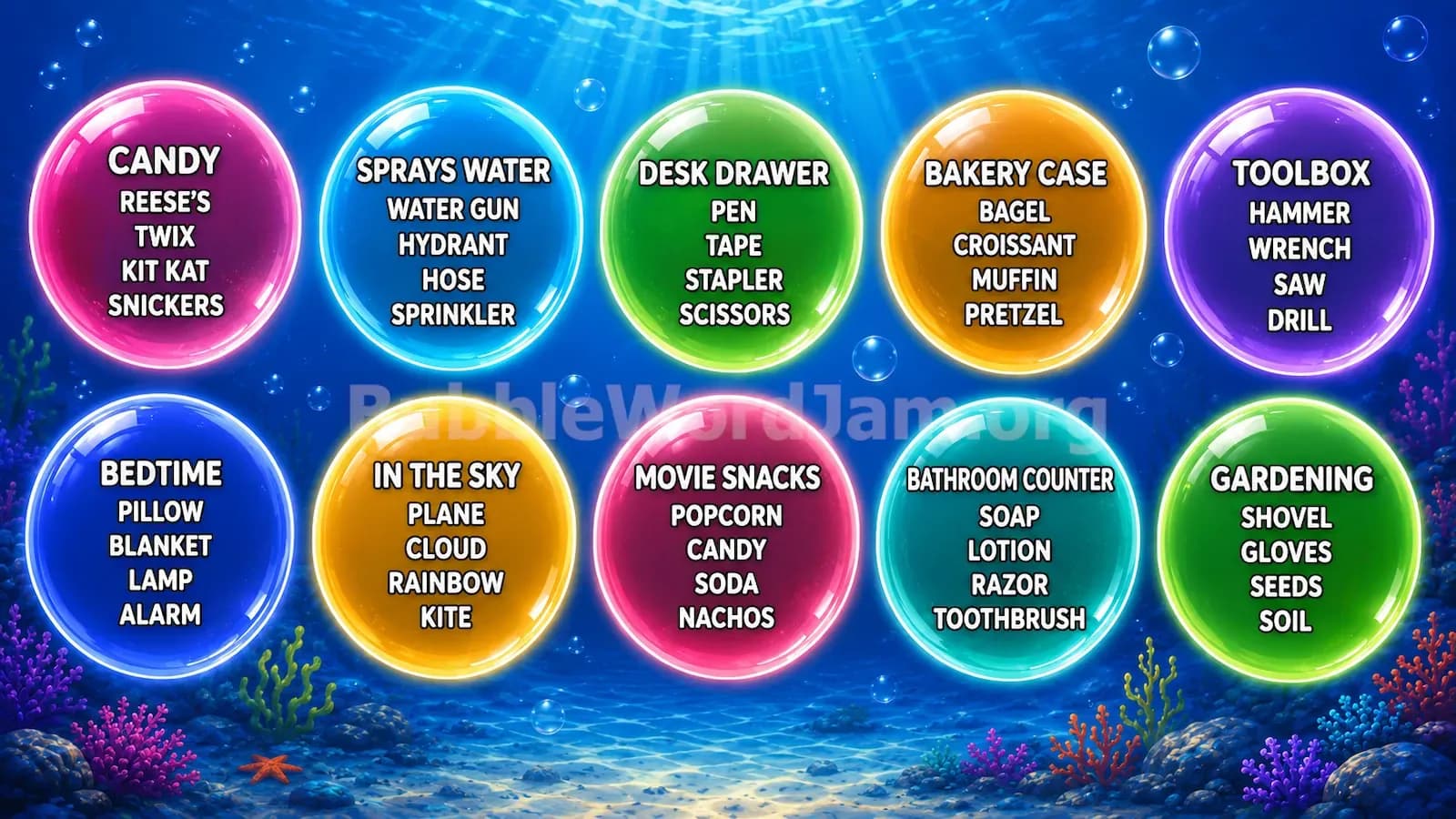
Level 387 gives candy another role. It includes “candy” with Reese’s, Twix, Kit Kat, and Snickers, but it also includes “movie snacks” with popcorn, candy, soda, and nachos. So candy is not always the destination. Sometimes it’s the bridge. When a board contains both brand-name sweets and entertainment snacks, the brands probably form the candy category, while the plain word candy may belong with popcorn and soda.
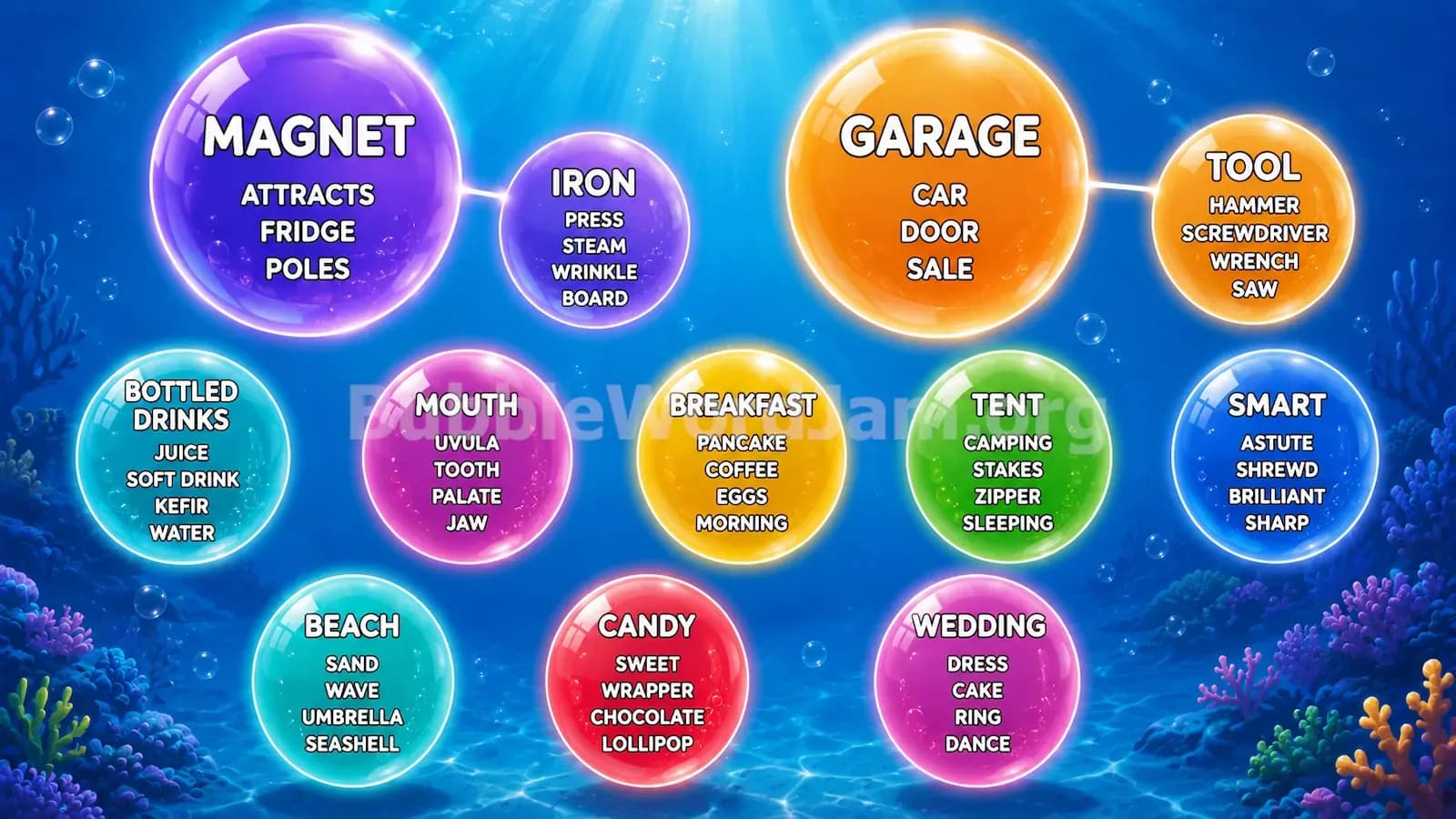
Level 418 gives candy a more basic version: sweet, wrapper, chocolate, and lollipop. That set is not about brands or holidays. It’s about the physical and flavor identity of candy. The giveaway is “wrapper.” If a Bubble Word Jam category includes packaging or texture clues, it’s probably defining the object itself, not an occasion.
Cake might be the biggest dessert trap in Bubble Word Jam. Level 97 splits “birthday party” and “cake” beautifully. Birthday party contains cake, balloons, gifts, and candles. The category “cake” contains chocolate, cheesecake, sponge, and cupcake. Notice how cake changes role. In “birthday party,” cake is a party object. In “cake,” it becomes a category that groups cake types.
The technique is to look for supporting props. Balloons, gifts, and candles scream occasion. Chocolate, cheesecake, sponge, and cupcake scream varieties. If you see event props, don’t pull cake into a generic dessert bubble too early. Let the party tell you what the cake is doing.
Level 418 adds “wedding” with dress, cake, ring, and dance. Here, cake belongs to the ceremony bundle. It’s not about flavor. It’s about the wedding scene. Level 831 sneaks in one more cake-adjacent trick through “cookware,” which includes brazier, cake pan, cauldron, and colander. Cake pan is not dessert. It’s equipment. If a sweet word attaches to a tool noun, treat it as an object, not food.
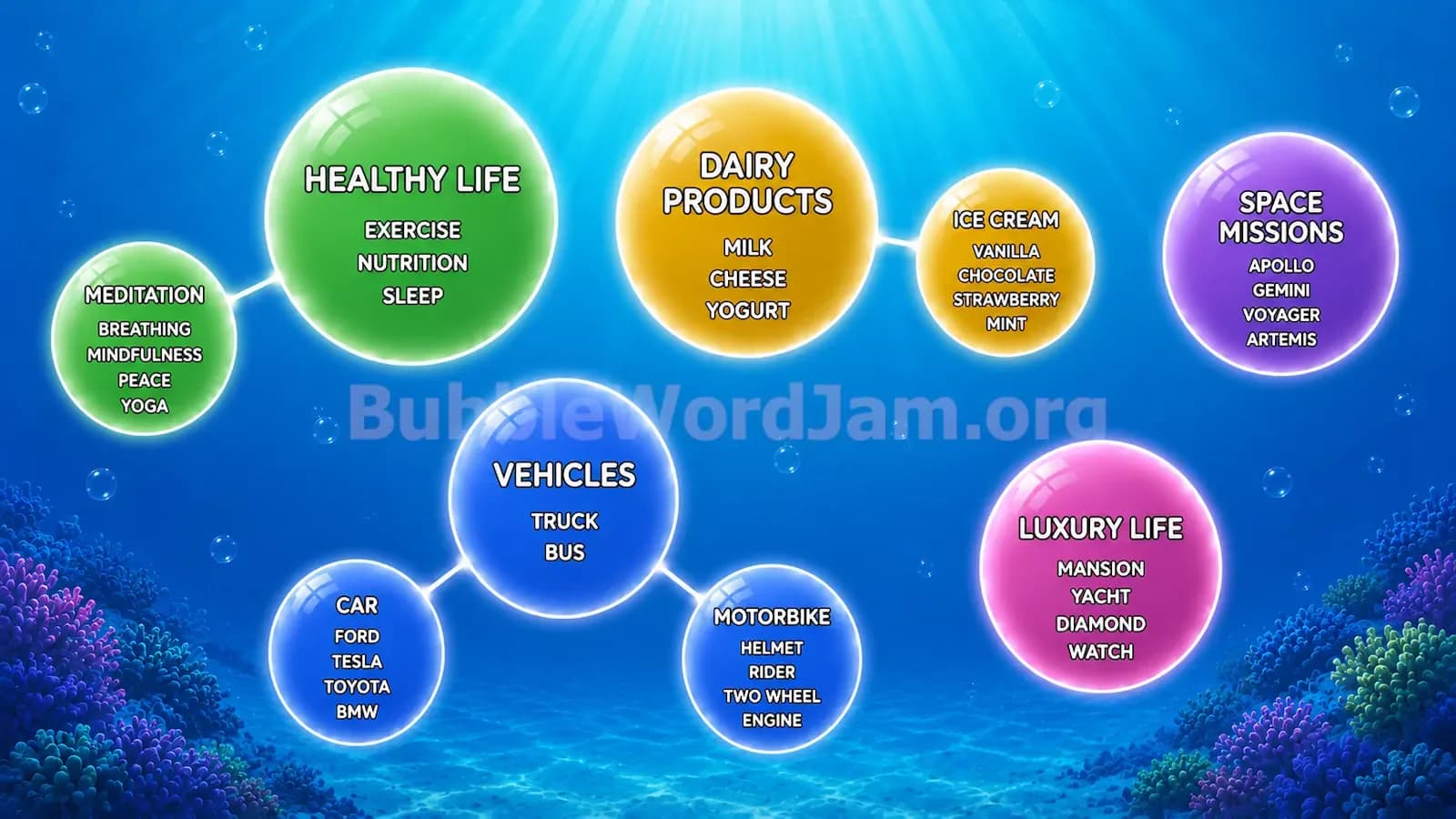
Level 108 is a perfect example of dessert brain causing bad merges. The board has “dairy products” with milk, ice cream, cheese, and yogurt. It also has “ice cream” with vanilla, chocolate, strawberry, and mint. In another puzzle, ice cream would be a dessert. In this one, ice cream is both a dairy product and a category label for flavors.
The technique is to read the clue level. Milk, cheese, and yogurt point to ingredients or food science. Vanilla, chocolate, strawberry, and mint point to flavor variants. If both levels exist at once, don’t merge flavor words with dairy words. Keep the parent item separate until the board proves where it belongs.
Bakery clues are floaty because bread-like foods appear in many settings. Level 387 uses “bakery case” with bagel, croissant, muffin, and pretzel. That’s a location-based category: imagine the display case and ask what sits inside it. The same level also has movie snacks, so pretzel could tempt you toward snack logic. But popcorn, soda, nachos, and candy define the theater set. Bagel, croissant, muffin, and pretzel define the bakery-case set.
Level 831 uses “bakery” in a different way: oven, flour, croissant, and apron. This is not a pastry list. It’s a bakery environment. Oven and apron are work-space clues. Flour is an ingredient. Croissant is the product. Together, they describe the place. That’s a more advanced Bubble Word Jam pattern because one category can mix tools, ingredients, workers’ gear, and finished food.
Level 418 brings breakfast into the sweet overlap with pancake, coffee, eggs, and morning. Pancake can feel dessert-adjacent, especially if you’re thinking syrup and sweetness, but coffee, eggs, and morning lock it into breakfast. Level 180 adds two more sneaky overlaps. “Carnival foods” includes funnel cake, corn dog, churro, and pretzel. The same level has “donut” with glaze, sprinkles, hole, and frosting, plus “round things” with wheel, ball, earth, and donut. The donut is not just food here. It’s also shape logic.
Use this loop whenever Bubble Word Jam gives you desserts, bakery items, or candy. First, mark all obvious sweets, but don’t merge them yet. Second, scan for occasion words: Halloween, birthday, wedding, carnival, movie, breakfast. Third, scan for structural words: menu, meals, bakery, bakery case, dairy products, cookware. Fourth, find anchors. Brands anchor candy. Party props anchor birthday. Ring and dress anchor wedding. Popcorn and soda anchor movie snacks. Flour and oven anchor bakery. Milk and yogurt anchor dairy.
Only after that should you merge. This saves moves and keeps the board from becoming a shambling corpse of half-right clusters. Bubble Word Jam rewards patience more than speed in these levels. The fastest-looking merge is often the mediocre one.
The dessert and bakery pattern is one of the best common-knowledge categories in Bubble Word Jam because it feels familiar but plays nasty in the details. Sweet words overlap with meals, celebrations, places, tools, flavors, brands, and shapes. Once you start asking “what is the occasion?” before “is this sweet?” the whole category gets easier. That one habit turns cupcake, candy, cake, donut, ice cream, and croissant from bait into anchors—and that’s the loop that gets you through the jam.