Learn how to solve animal categories in Bubble Word Jam by spotting species, habitats, animal families, body parts, taxonomy clues, and zoo traps fast.

Guide By Liam Stone
Updated on May 20, 2026
Liam Stone has been playing Bubble Word Jam since the mobile app first launched on the Apple App Store. He knew this game would pop, so he enjoys playing every level, collecting the answers, and running this site for other players. He loves mobile puzzle games and sometimes publishes his walkthroughs on his YouTube channel Puzzle Game Answer. Follow his channel if you are a puzzle game lover too.
Animal categories in Bubble Word Jam look simple at first. You see “lion,” “frog,” “eagle,” or “snake,” and your brain wants to slam them together immediately. I get it. That first instinct feels good. But the animal levels in Bubble Word Jam get crunchy fast because the game rarely asks only one animal question at a time. It might ask for species, animal families, habitats, body parts, zoo clues, or even animal-like descriptors in the same board.
That’s where players tank a level. They don’t fail because they don’t know what a mammal is. They fail because Bubble Word Jam loves overlap. A “bird” can be an animal group, a zoo clue, a flying thing, or part of a broader vertebrate chain. A “snake” can belong under reptiles, venomous animals, cold-blooded animals, or even a specific snake category. If you treat every animal word as equal, the board gets messy, your moves vanish, and the level starts feeling unfair.
The trick is to separate animal answers into three lanes before you merge anything: animal group, animal parts, and animal habitat. Once you learn that loop, animal categories become much faster to solve.
When an animal level begins, I always look for the highest-level category. That usually means broad taxonomy words like mammals, birds, reptiles, amphibians, fish, animals, creatures, species, or vertebrates. These are not individual animals. They are category labels hiding inside the bubble set.
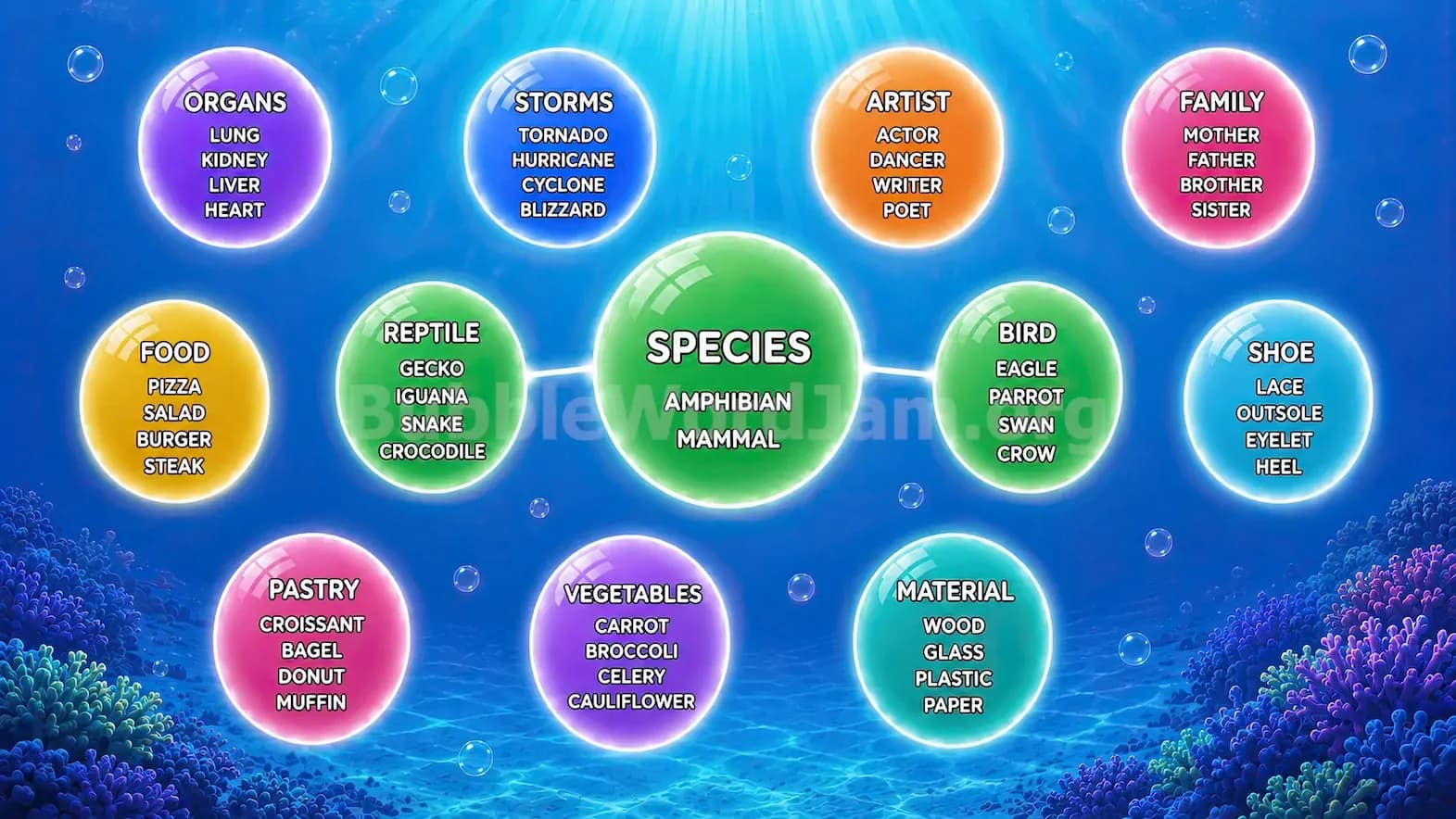
Level 8 is a perfect early example. It includes “species” as reptile, amphibian, mammal, and bird. That’s not asking you to collect animals like eagle or gecko yet. It’s asking for animal classes. The same level also has separate categories for “bird” and “reptile,” with actual examples like eagle, parrot, swan, crow, gecko, iguana, snake, and crocodile. That’s the game teaching a core rule: don’t mix category names with category members.
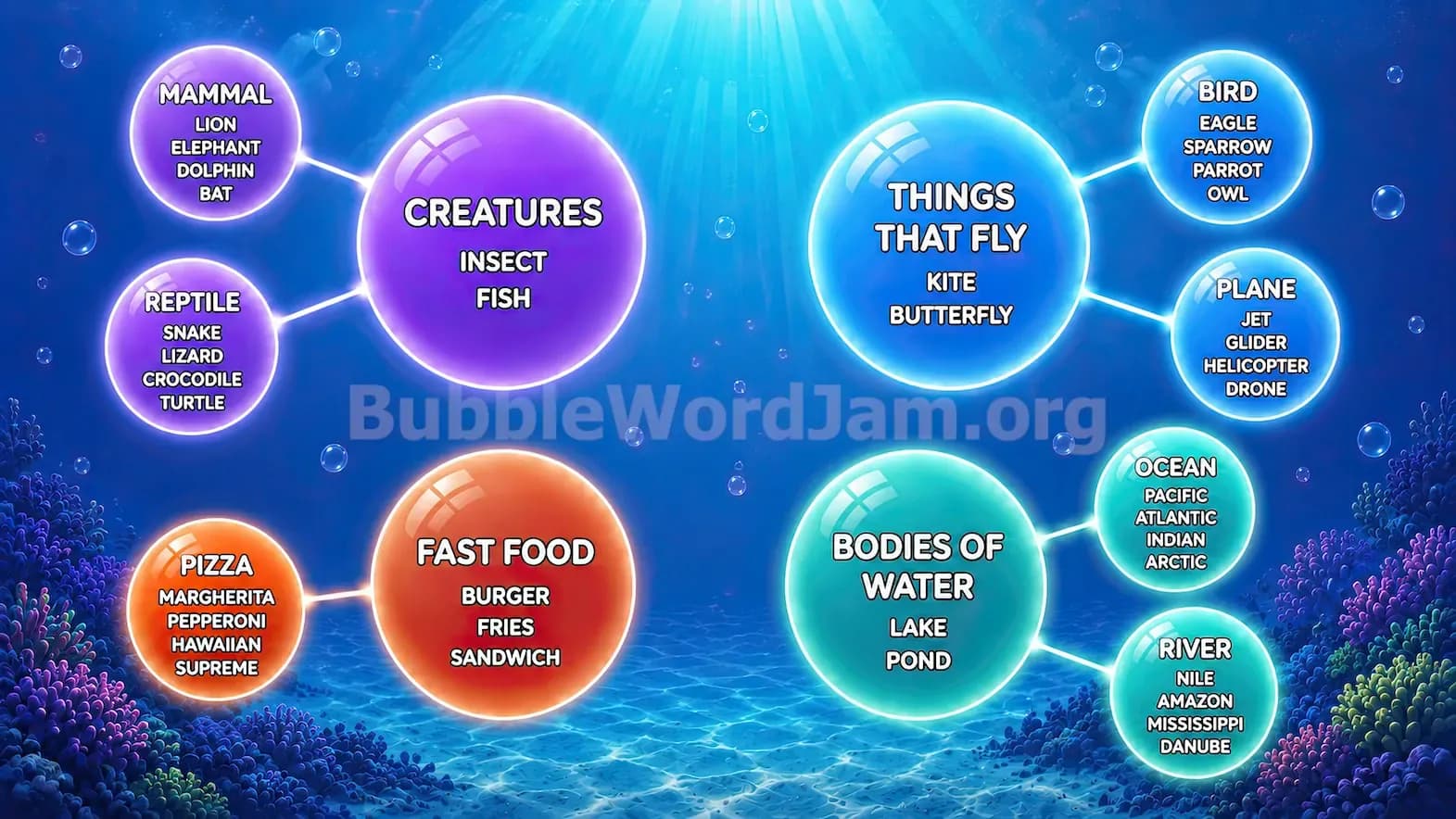
Level 32 raises the stakes. It has “creatures” as mammal, reptile, insect, and fish, but it also has separate “mammal,” “bird,” and “reptile” groups. If you merge “mammal” with lion or elephant too early, you may break the bigger “creatures” set. This is the classic Bubble Word Jam animal trap: one word looks like an answer, but it’s actually a label.
So here’s my rule: if a word can name a whole class of animals, park it mentally before merging. Mammal, bird, reptile, amphibian, and fish should make you pause. They may belong together, not with the creatures they describe.
Animal puzzles often work like a ladder. At the top, you have the broadest group. Below that, you have smaller groups. Below that, you get individual species.
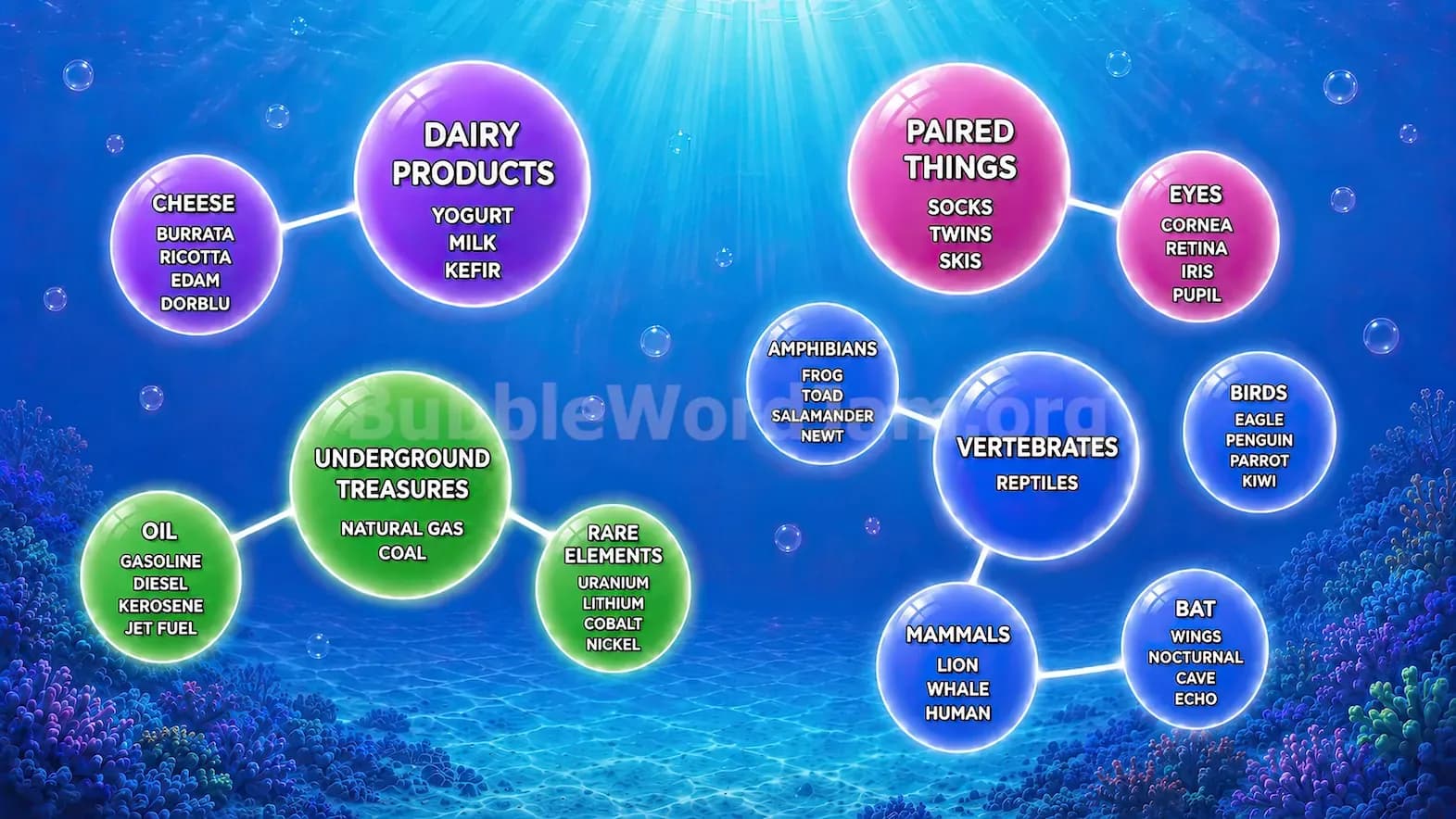
Level 51 is one of the cleanest taxonomy lessons in the game. It includes “amphibians” with frog, toad, salamander, and newt. It includes “mammals” with lion, whale, bat, and human. It includes “birds” with eagle, penguin, parrot, and kiwi. Then it includes “vertebrates” with amphibians, reptiles, mammals, and birds.
That layout is a banger for learning the animal logic. Frog is not on the same level as amphibians. Amphibians is not on the same level as vertebrates. Bubble Word Jam expects you to read the hierarchy.
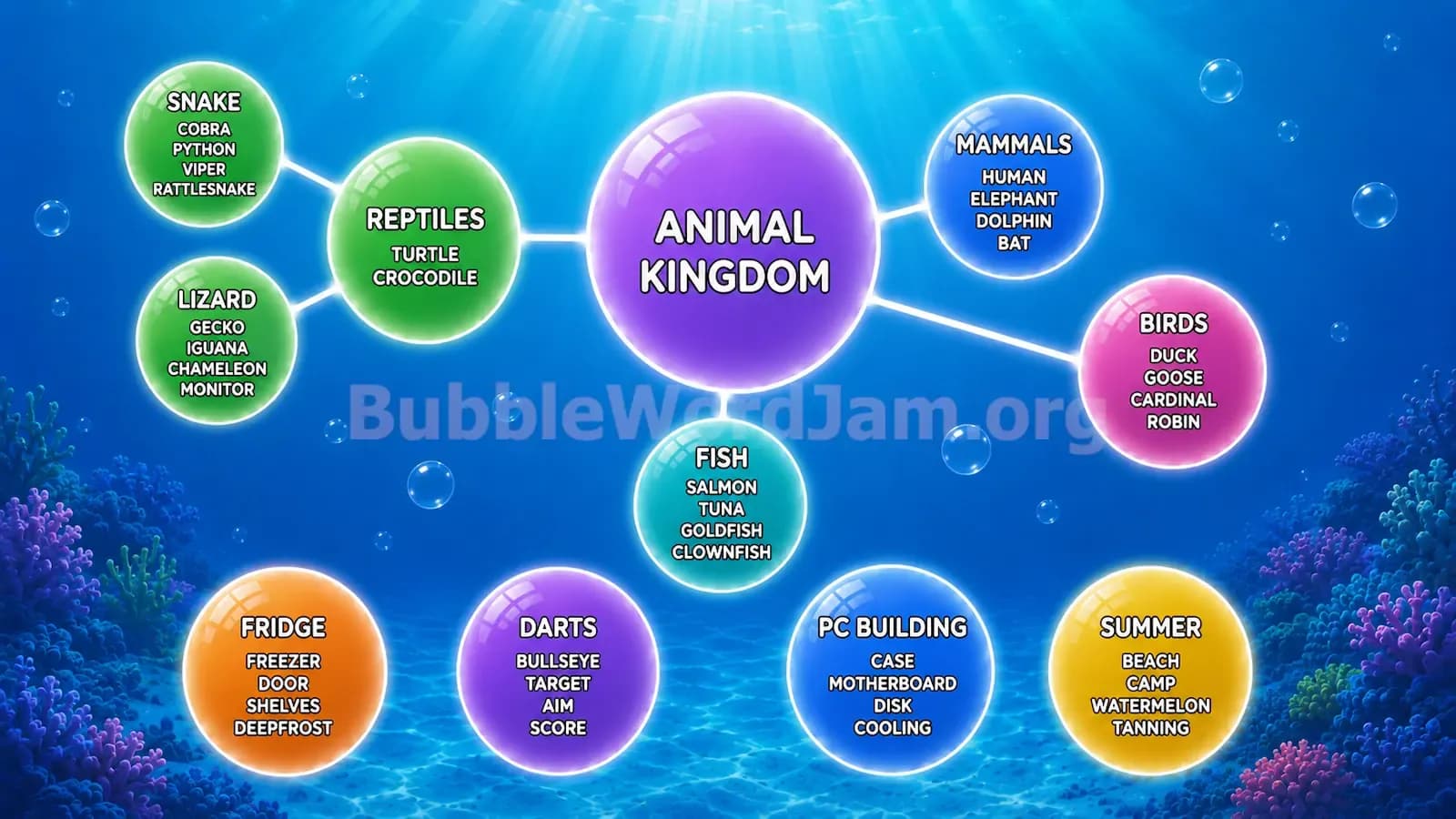
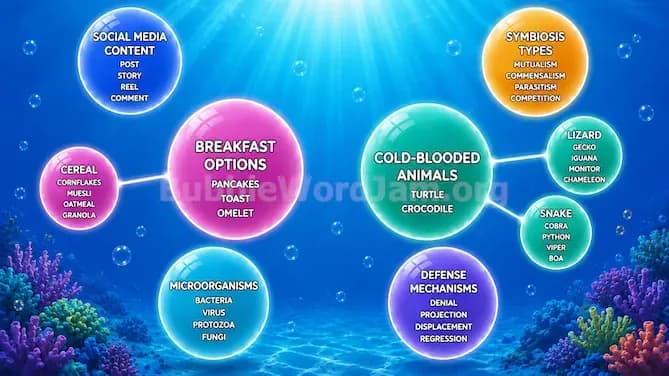
Level 79 does something similar with “animal kingdom” as reptiles, mammals, birds, and fish. Then it breaks those groups into actual animals: reptiles has snake, lizard, turtle, and crocodile; mammals has human, elephant, dolphin, and bat; fish has salmon, tuna, goldfish, and clownfish; birds has duck, goose, cardinal, and robin. It even adds smaller creature categories like lizard and snake. That’s a full animal taxonomy stack in one level.
When you see this kind of board, solve from the top down or bottom up, but don’t scramble the middle. I usually identify all the category labels first, then find the individual examples. That keeps the board from becoming a shambling corpse of half-right merges.
Animal part clues are another common trap. The game might show “beak,” “feathers,” “wings,” “tail,” “hoof,” “mane,” “fang,” or “shell.” These are not animals. They describe animals. That sounds obvious, but under move pressure, players merge too quickly.
The danger is that Bubble Word Jam often puts animal parts near animal names. If you see eagle, parrot, beak, and feather, your brain says “birds.” But the category might be “bird parts” or just “bird,” depending on the level. The technique is to ask: are these words creatures, or are they features?
Level 714 has a sneaky version of this through “leg parts,” using ankle, foot, knee, and meniscus. It also includes animal-flavored categories like “at the zoo,” “spiky,” and “has stripes.” Porcupine, lionfish, sea urchin, badger, bee, chipmunk, and clownfish can pull your attention toward animals, but not all of those groups are pure animal taxonomy. Some are based on traits.
That distinction matters. “Porcupine,” “lionfish,” and “sea urchin” belong together because they are spiky. “Badger,” “bee,” “chipmunk,” and “clownfish” belong together because they have stripes. The category is visual trait, not animal family.
A fast check helps: if the connecting idea is a body feature or appearance, don’t force a scientific group. Bubble Word Jam loves that fake-out.
Animal habitats are not animal families. Zoo, aviary, aquarium, farm, forest, ocean, safari, cave, and burrow clues usually point to location or environment. These words can include animals, but the logic is different.
Level 714’s “at the zoo” category uses aquarium, aviary, feeding time, and flamingo. Only flamingo is the obvious animal. Aquarium and aviary are places. Feeding time is an event. If you chase only species, you’ll miss the broader zoo vibe.
This is why I mentally label habitat categories as “where animals are found” rather than “what animals are.” In Bubble Word Jam, “zoo” may connect to enclosures, staff routines, or visitor experiences. “Aquarium” may connect to tanks and sea life. “Aviary” may connect to birds, cages, nests, or zoo spaces. Don’t lock yourself into biology when the level is actually asking for setting.
Some animal categories are not broad habitats or classic taxonomy. They’re family-specific. Level 469 has “equidae family” with donkey, horse, mule, and zebra. That’s a tight scientific family group. It’s not “farm animals,” even though horse and donkey could fit there. It’s not “riding animals,” even though horse and mule might fit there. The clue is biological relationship.
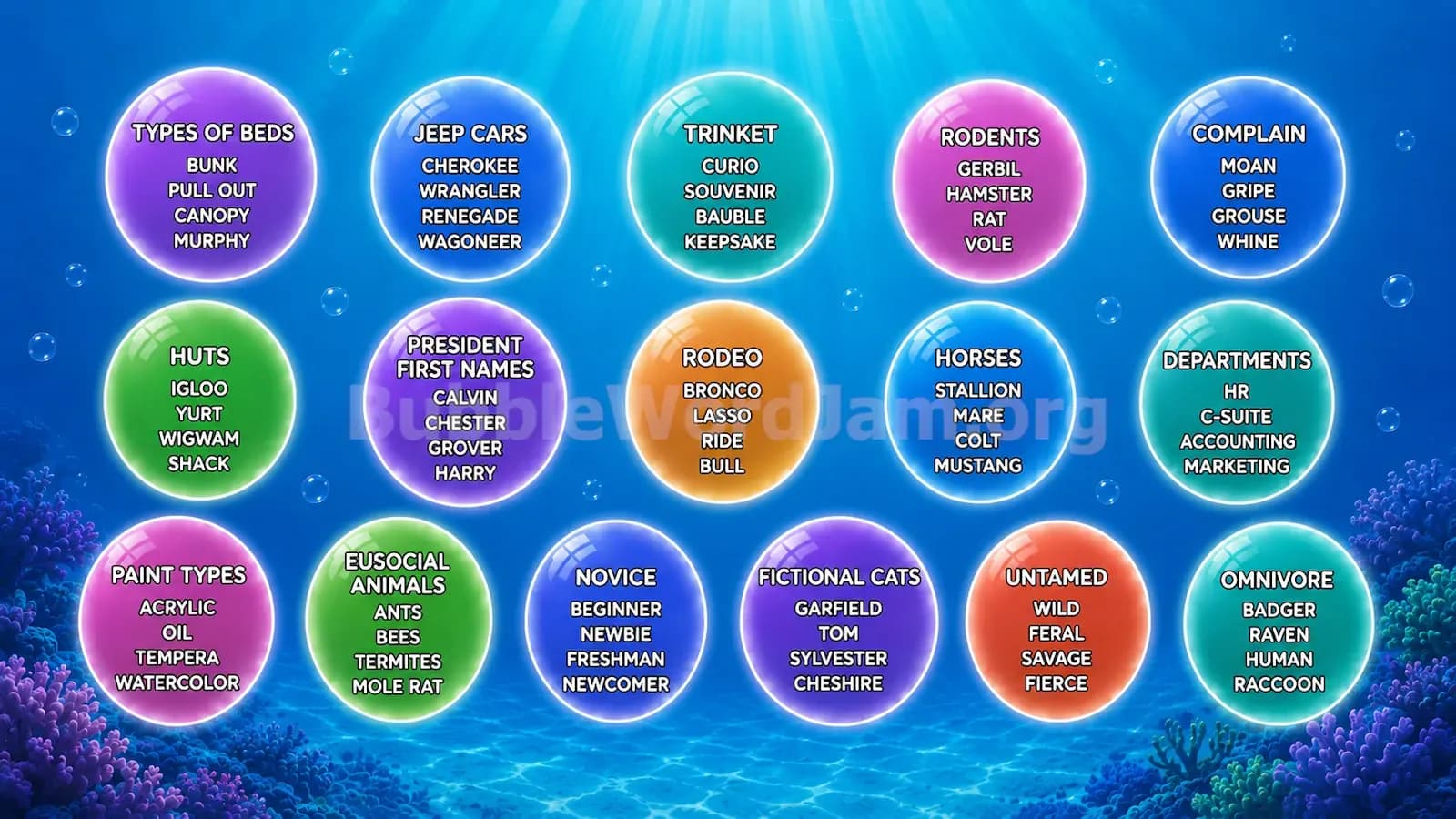
Level 325 does this with several animal-adjacent groups. “Rodents” includes gerbil, hamster, rat, and vole. “Horses” includes stallion, mare, colt, and mustang. “Eusocial animals” includes ants, bees, termites, and mole rat. “Omnivore” includes badger, raven, human, and raccoon. These are very different kinds of animal logic: family, life role, social behavior, and diet.
That’s the level where Bubble Word Jam stops being just cute bubbles and starts acting like a taxonomy quiz with a timer breathing down your neck. The move is to ask what kind of relationship connects the words. Are they the same family? Same behavior? Same diet? Same habitat? Same physical trait?
When a board has several animal words, look for the word that does not belong in the obvious group. In Level 325, ants, bees, termites, and mole rat may feel strange at first because mole rat doesn’t match the insect vibe. But the category is eusocial animals, not insects. That one oddball reveals the true category.
Same idea with Level 51. Bat can bait you into birds because it flies, but it belongs under mammals. Penguin can bait you into non-flying animals, but it belongs under birds. Dolphin can bait you into fish, but it belongs under mammals. Bubble Word Jam uses these overlaps constantly, and honestly, that’s why the animal levels are satisfying when they click.
Before making animal merges, run this quick checklist in your head:
First, identify broad class words: mammals, birds, reptiles, amphibians, fish, animals, creatures, vertebrates, species.
Second, separate individual animals from group labels. Lion goes with mammals. Mammals may go with vertebrates.
Third, watch for body parts and traits. Beak, wing, stripe, spine, hoof, and fang are clue types, not species.
Fourth, check for habitats. Zoo, aviary, aquarium, forest, ocean, safari, and farm may create setting-based groups.
Fifth, respect family or behavior categories. Equidae, rodents, eusocial animals, omnivores, and horses all play by different rules.
Animal categories in Bubble Word Jam are fun because they reward clean thinking. The game wants you to slow down just enough to see the structure, then move fast once the pattern lands. When I solve these levels well, I’m not guessing. I’m sorting the board into biology, habitat, parts, traits, and family links. That’s the whole animal-category loop.
Once you get that rhythm, levels like 8, 32, 51, 79, 299, 325, 469, and 714 stop feeling like random animal soup. They become readable. And in Bubble Word Jam, readable means beatable.